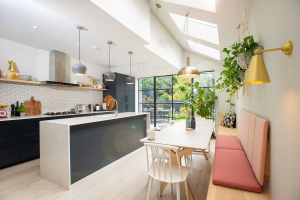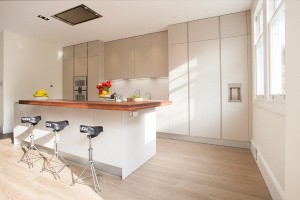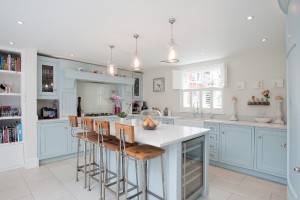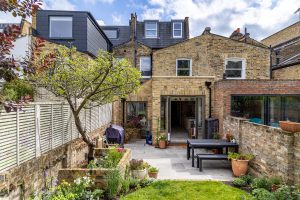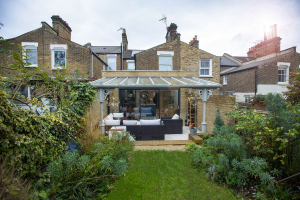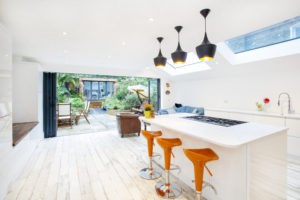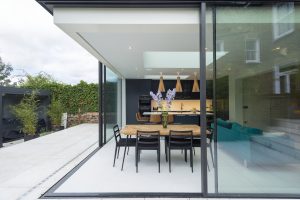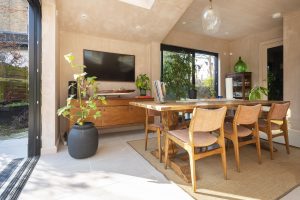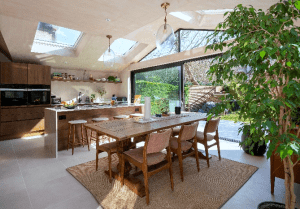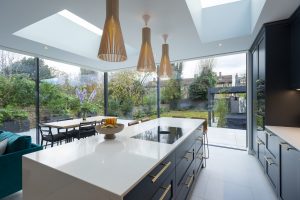
A kitchen extension in London costs roughly £80,000 to £150,000 all-in in 2026 for a typical 20 to 30 m² rear extension, at about £2,800 to £5,500 per m², including the build, the new kitchen, glazing, fees and 20% VAT. The kitchen itself usually accounts for about a quarter to a third of the total budget, from £15,000 for a mid-range fit-out to £50,000 or more for a made-to-measure one. A small rear extension starts from around £65,000; a large, high-specification kitchen-diner can pass £200,000.
A kitchen extension is the project most London families dream about: knocking through into an open-plan kitchen-diner that opens onto the garden. It is also where budgets most often go astray, because the kitchen itself is a large, separate cost that sits on top of the build. This guide sets out what a kitchen extension really costs in London in 2026, and answers the question almost no one else does clearly: how much of that budget is the kitchen, and how much should you spend on it. The figures are current, and the projects shown are our own.
How much does a kitchen extension cost in London?
A typical London kitchen extension costs between £80,000 and £150,000 all-in in 2026. The build alone runs at about £2,800 to £5,500 per square metre depending on specification, and the kitchen, glazing, professional fees and 20% VAT sit on top. The table below sets out the range by size and tier:
| Project | Size | Build rate (£/m²) | All-in total (build + kitchen + fees + VAT) |
|---|---|---|---|
| Small rear (basic) | 15 to 20 m² | £2,800 to £3,200 | £65,000 to £95,000 |
| Typical rear / full-width (mid) | 20 to 30 m² | £3,200 to £4,200 | £80,000 to £135,000 |
| Large / high-spec rear | 30 to 40 m² | £4,000 to £5,500+ | £135,000 to £200,000+ |
| Wraparound (rear + side return) | 25 to 40 m² | £4,000 to £5,500+ | £120,000 to £200,000+ |
Most London kitchen extensions are 20 to 30 m². These figures are in line with the wider market and with our guide to how much an extension costs in London, where you can compare a kitchen extension against side return, loft and double-storey projects. Be wary of national guides quoting £1,500 to £2,500 per m²: those are UK-wide build-only rates that exclude both London’s premium and the kitchen itself.
How much of the budget is the kitchen itself?
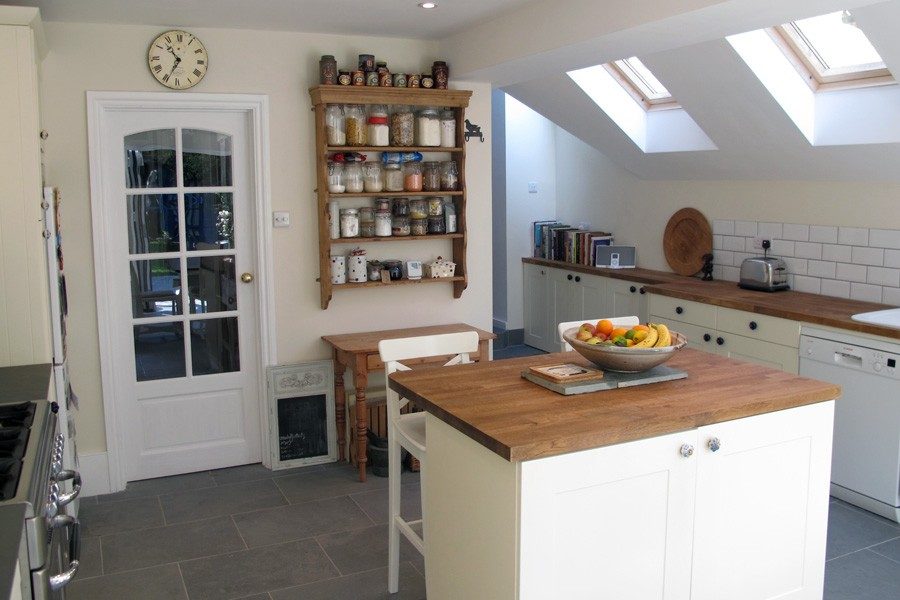
This is the part most cost guides skip, and it is where budgets slip. The kitchen fit-out, the units, worktops, island and appliances, typically accounts for about a quarter to a third of the total project cost, roughly 25 to 30%. On a mid-range 30 m² kitchen extension, that means the shell is around 60% of the budget, the kitchen about 27%, and professional fees about 10%. The kitchen is a project within the project, and it is the line homeowners most often underestimate.
A useful second rule of thumb comes from the kitchen industry itself: spend roughly 5 to 10% of your home’s value on the kitchen. On a £900,000 London home that points to a kitchen of £45,000 to £90,000, which is why made-to-measure kitchens are common here. The two measures answer different questions: the 25 to 30% tells you the kitchen’s share of the extension, the 5 to 10% tells you what the market expects for a home of your value. The fit-out tiers in London look like this:
| Line item | Budget / flat-pack | Mid-range | High-end / made-to-measure |
|---|---|---|---|
| Units / cabinetry | £1,500 to £3,000 | £3,000 to £6,000 | £6,000 to £20,000+ |
| Worktops (5 m run) | Laminate £200 to £600 | Quartz / granite £1,500 to £4,000 | Marble / Dekton £1,800 to £5,500+ |
| Island | £500 to £1,500 | £3,000 to £8,000 | £8,000 to £30,000+ |
| Appliances | £800 to £2,000 | £3,000 to £5,000 | £7,000 to £15,000+ |
| Fitting labour | £1,500 to £3,000 | £2,200 to £4,600 | Higher (made-to-measure) |
| Tier total | £8,000 to £15,000 | £15,000 to £35,000 | £35,000 to £60,000+ |
London kitchen fitting runs roughly 20 to 30% above the UK average, and cabinetry alone is usually 30 to 40% of a kitchen’s cost. One reliable way to save is to buy appliances directly from a retailer rather than through the kitchen company, which marks them up.
What does a kitchen extension cost, line by line?
A kitchen extension has more services than an ordinary room, more plumbing for the sink, dishwasher and often an island, more electrics for the cooker circuit, extractor and lighting, so first-fix services take a larger share than people expect. A realistic 2026 breakdown:
| Element | Typical cost |
|---|---|
| Design and professional fees | 7 to 15% of build cost |
| Planning application (if needed) | £548 (England householder fee, from April 2026) |
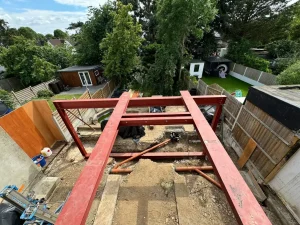
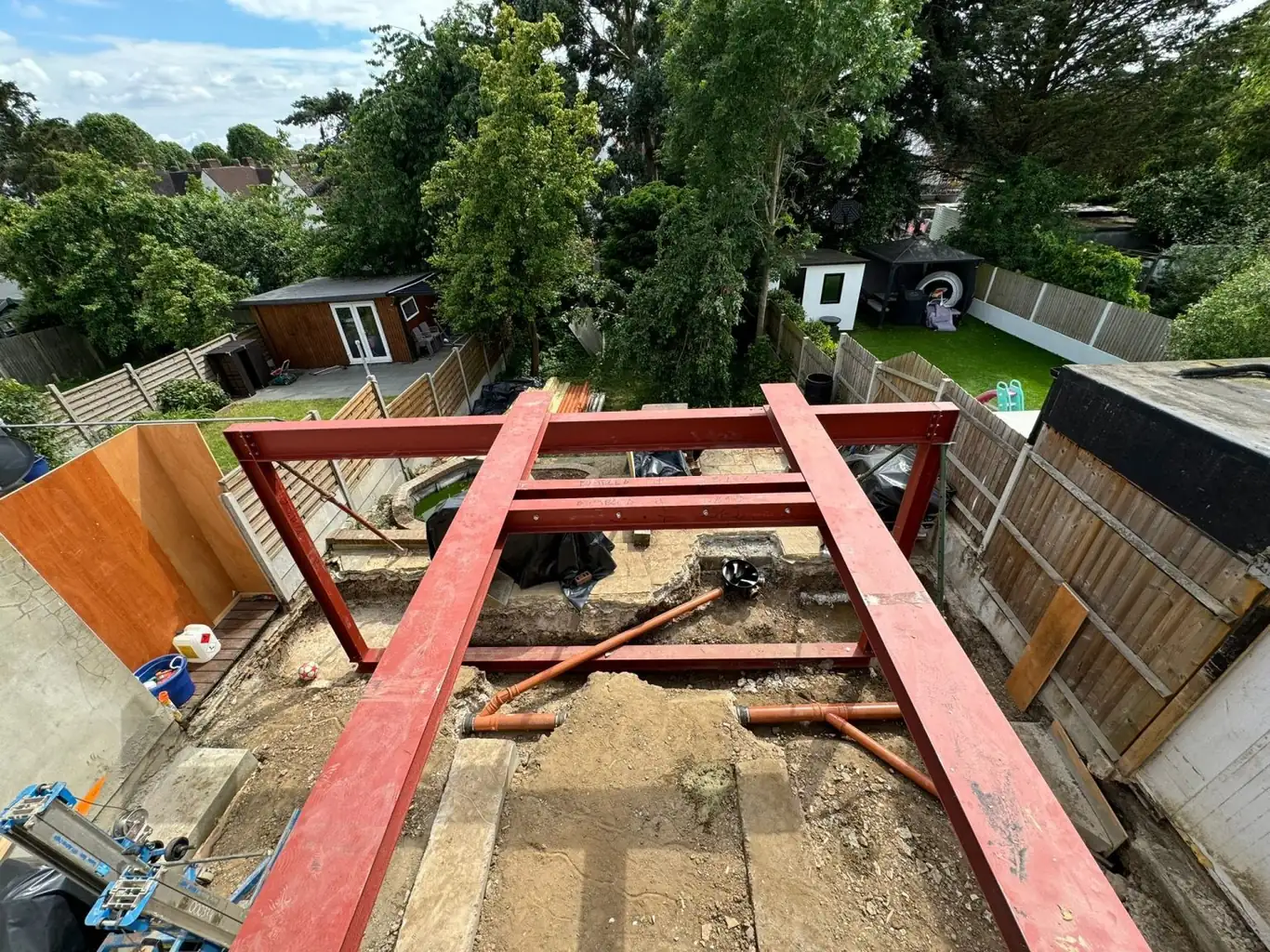
| Structural engineer and steel | £1,500 to £6,500 (knock-through beam) |
| Construction shell | about 60% of the project |
| Kitchen fit-out | about 25 to 30% of the project |
| Glazing (lantern, bifolds, sliders) | £4,000 to £15,000+ |
| Electrics and plumbing (first and second fix) | £5,000 to £10,000+ |
| Building control | £800 to £1,500 |
| Party wall surveyors (per neighbour) | £800 to £3,000 |
| VAT | 20% on the whole project |
| Contingency | 10 to 20% of the total |
Many single-storey rear extensions are permitted development and need no planning fee, but check first. For help judging whether a quote is realistic and what it should include, read our guide to getting a realistic builder’s quote.
What do the big-ticket items cost?
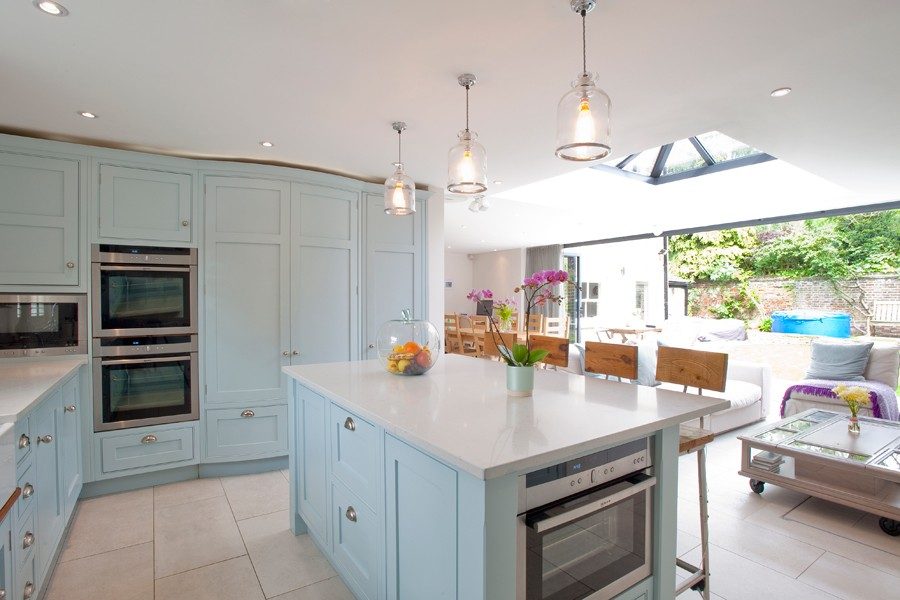
- Kitchen island: off-the-shelf £500 to £1,500, mid-range £3,000 to £8,000, and made-to-measure in London £8,000 to £30,000 or more once a sink, hob or plumbing are built in. Around two-thirds of renovating homeowners now add one.
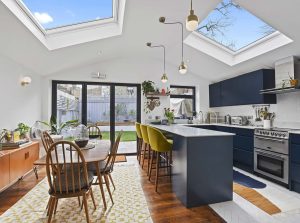
- Roof lantern over the kitchen: £1,500 to £4,000 fitted for a standard size, more for large made-to-measure aluminium. It is the most effective way to flood a deep kitchen-diner with overhead light.
- Bifold or sliding doors: aluminium bifolds £3,150 to £7,200 supply-and-fit, and £8,000 to £15,000 for wide spans, Crittall-style screens or structural glazing. Our guide to flat versus pitched roofs covers how the roof and glazing work together.
- Underfloor heating: £3,000 to £8,000 for an open-plan kitchen-diner of 20 to 40 m². It frees the walls of radiators, which matters in a room full of cabinetry and glazing.
What drives a kitchen extension’s cost up or down?
The biggest swings come from choices inside the kitchen, not the size of the room. Costs rise with made-to-measure cabinetry, stone or marble worktops, premium appliances (a single high-end fridge or oven can run to several thousand pounds), large structural glazing, a plumbed island, and relocating plumbing or gas. Costs fall when you keep the existing services layout, choose rigid units with upgraded doors, pick mid-range quartz over marble, keep the roof form simple, and avoid moving the sink and hob across the room. Knocking through a load-bearing wall to open the space onto the existing kitchen also adds a steel beam and structural work, which is worth planning for early.
Rear or wraparound kitchen extension?
A standard single-storey rear extension is the most cost-effective way to build a kitchen-diner. A wraparound combines a rear extension with a side return to wrap around the back of the house, giving the largest footprint and the biggest open-plan room, but it sits at the top of the cost range and almost always needs planning permission. If your kitchen-diner only needs depth, a rear extension is the better value; if you also want to capture the side return alongside the outrigger, the wraparound is the bigger change. The structural side of side returns is covered in our guide to side return extension costs.
Do I need planning permission for a kitchen extension?
Often a single-storey rear kitchen extension is permitted development, provided it stays within the depth, height and materials limits, in which case no planning application is needed. But many London homes are in conservation areas or covered by Article 4 directions, which remove permitted development rights and require a full application. Flats have no permitted development rights at all. Before you assume, check your address with our permitted development and Article 4 checker and confirm with your council. Where permission is needed, budget the £548 fee and an eight to twelve week determination period.
Real kitchen extension projects we have completed in London
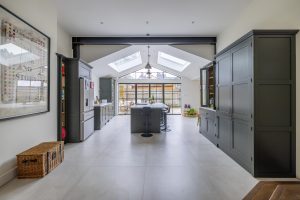
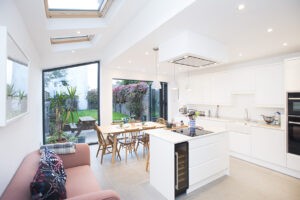
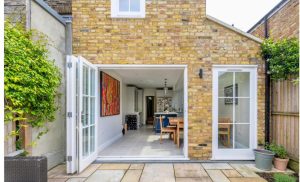
Build Team has completed more than 1,000 ground-floor extensions across 32 London boroughs, over 660 of them at kitchen-extension scale, between 20 and 45 m², with a typical size of around 31 m². A sample of completed projects:
| Plan | Street | Area | Size | Roof |
|---|---|---|---|---|
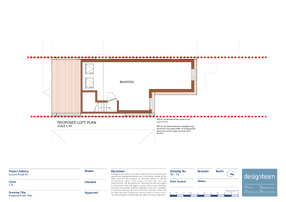 |
Sussex Road | E6 (East Ham) | 22 m² | Slate & Velux |
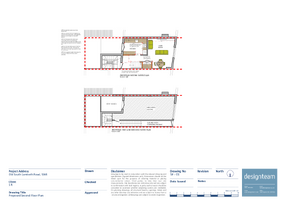 |
Old South Lambeth Road | SW8 (Nine Elms) | 30 m² | Slate & Velux |
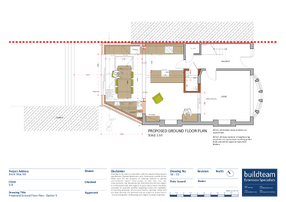 |
Brent Way | N3 (Finchley) | 34 m² | Slate & Velux |
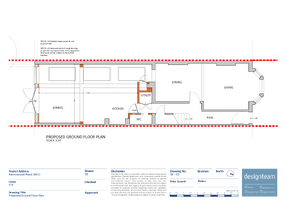 |
Ravenswood Road | SW12 (Balham) | 38 m² | Slate & Velux |
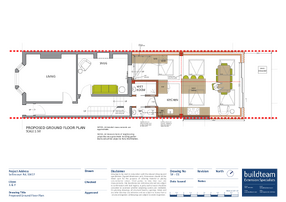 |
Sellincourt Road | SW17 (Tooting) | 42 m² | Slate & Velux |
You can browse more completed kitchen extensions, with drawings and photographs, in our design and planning database, filterable by borough and extension type.
Is a kitchen extension worth it?
The kitchen is the room that most influences a sale, and a kitchen extension is one of London’s highest-return improvements. A kitchen renovation typically adds about 5 to 15% to a home’s value, and Nationwide’s research found that adding usable floor space, with a 10% increase in floor area, adds around 5% to the price of a typical house, rising to as much as 24% where an extension adds a bedroom and bathroom too. Against the average London house move, which now costs around £32,786 in stamp duty, fees and removals with no extra space to show for it, building the kitchen-diner you want is usually the better investment. If you are working out how to pay for it, see our guide to funding and budgeting a home extension.
How to get a realistic kitchen extension quote
For a quick estimate based on your size and specification, use our online extension cost calculator. For a fixed price tailored to your home, book a free design and planning consultation and we will give you a clear, itemised quote before any work begins. When you compare quotes, make sure each one states clearly what kitchen allowance is included, because a quote that looks cheaper often simply assumes a smaller kitchen budget.
Frequently asked questions
How much does a kitchen extension cost in London in 2026?
About £80,000 to £150,000 all-in for a typical 20 to 30 m² rear extension, at roughly £2,800 to £5,500 per m², including the build, kitchen, glazing, fees and 20% VAT. A small rear extension starts from around £65,000.
How much should I spend on the kitchen itself?
The kitchen fit-out is usually about 25 to 30% of the total project, or roughly 5 to 10% of your home’s value. In London that ranges from around £15,000 for a mid-range kitchen to £50,000 or more for a made-to-measure one.
Why is the kitchen such a big part of the cost?
Because a kitchen extension is built to create a kitchen-diner, the units, worktops, island and appliances are a separate, substantial cost on top of the shell, and the room needs more plumbing and electrics than an ordinary one.
Do I need planning permission for a kitchen extension?
A single-storey rear kitchen extension is often permitted development, but conservation areas and Article 4 directions, common in London, can require a full application. Flats have no permitted development rights. Check your address before assuming.
How can I save money on a kitchen extension?
Keep the existing services layout, choose rigid units with upgraded doors, pick mid-range quartz over marble, keep the roof simple, and buy appliances directly rather than through the kitchen company.
How long does a kitchen extension take?
Most single-storey kitchen extensions take around 12 to 18 weeks on site, plus design and planning time beforehand. Made-to-measure kitchens have long lead times, so order early.
Planning a kitchen extension?
Build Team is a London design and build extension specialist, trusted by more than 1,750 London homeowners, with over 660 completed kitchen extensions across the city. Book a free consultation for a fixed price, or get an instant estimate for your home.
Or call 020 7495 6561 · email hello@buildteam.com