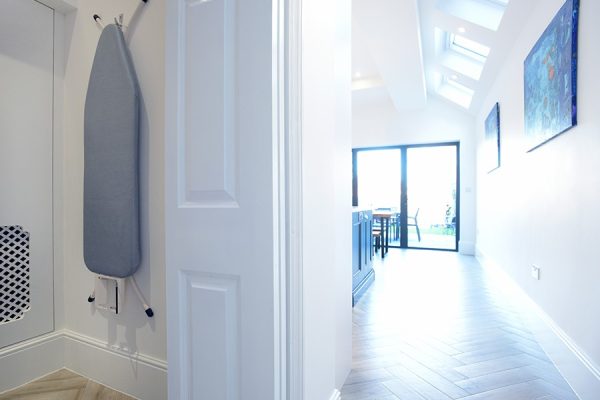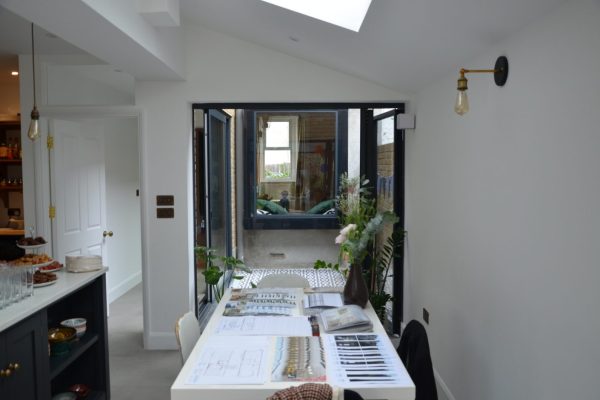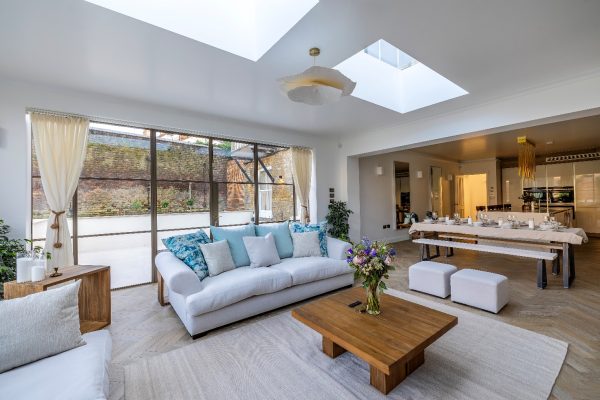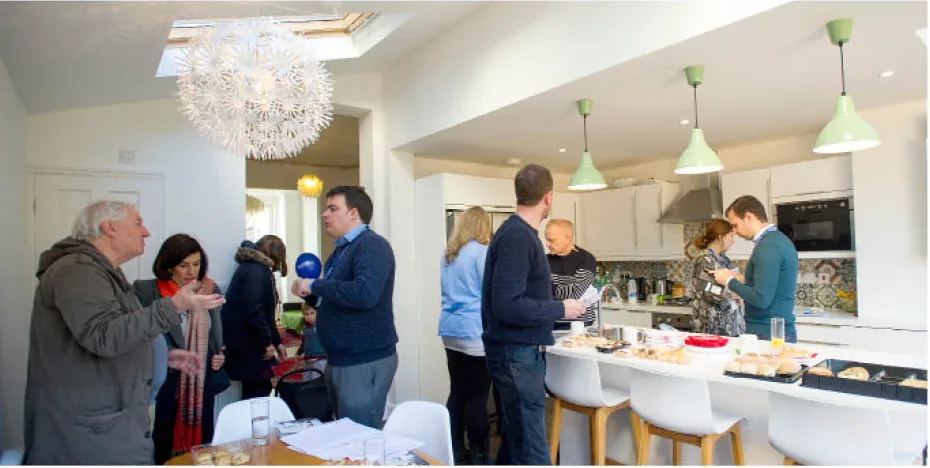
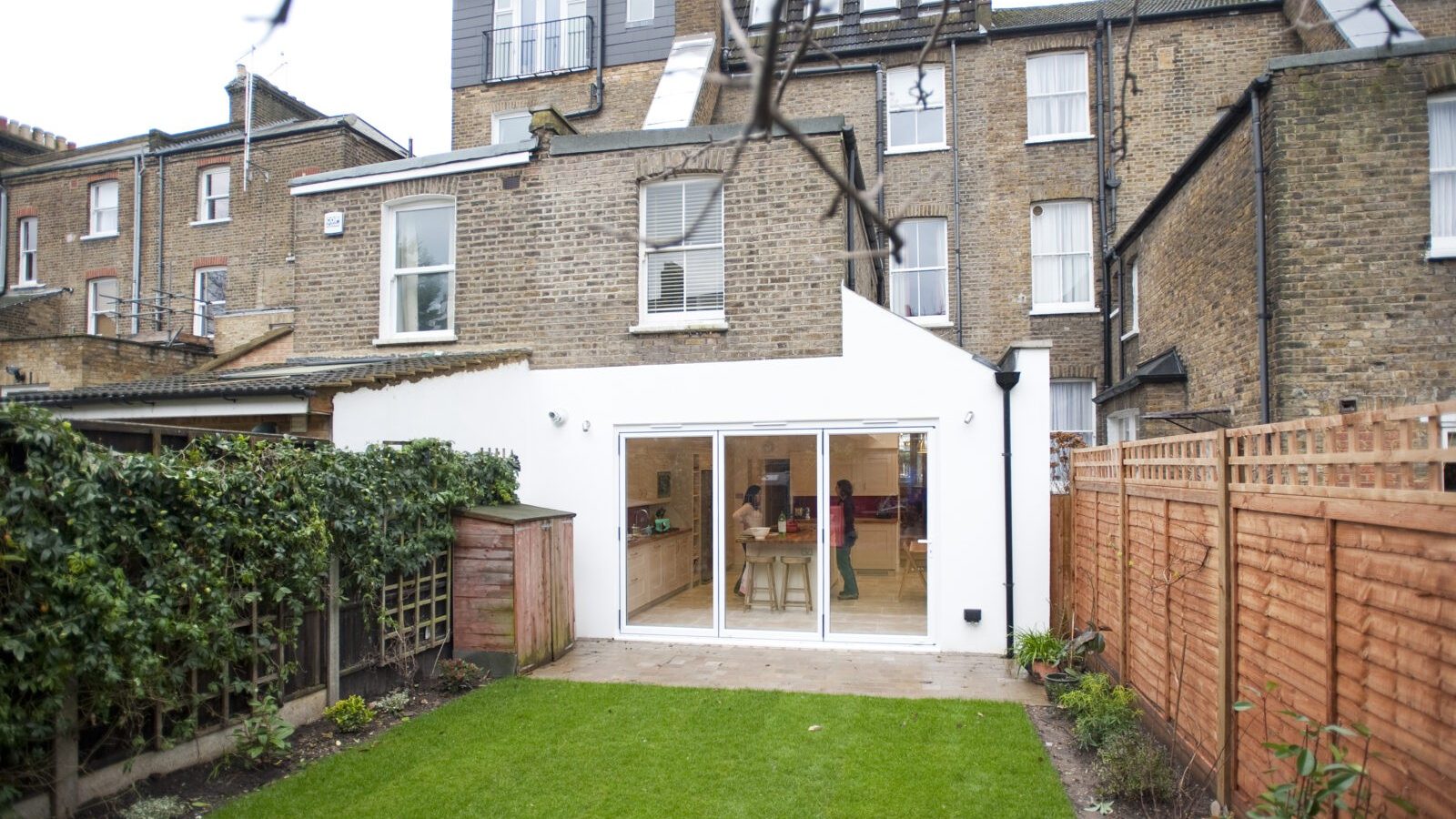
An internal window between two rooms lets daylight pass through a wall while the rooms stay separate for noise, smells and privacy. In a London terrace after an extension, it is usually the simplest way to keep the dark middle room bright without going fully open plan. This guide covers where internal windows work, how they compare with glazed screens, glazed doors and pocket doors, and the structural, safety glass and fire rules to plan for.
What is an internal window between rooms?
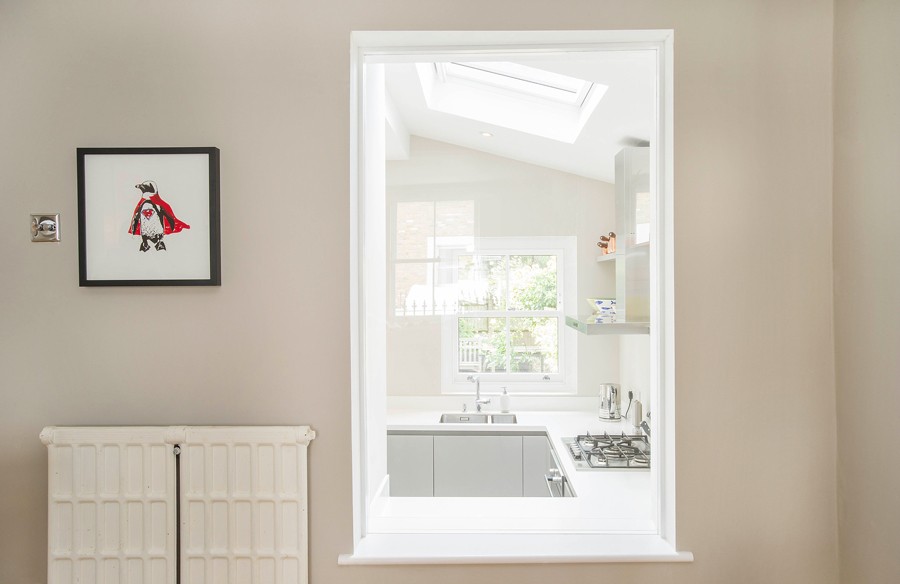
An internal window is a glazed opening in an internal wall, so it shares light and views between two rooms rather than with the outside. It can be a fixed pane, an opening sash, a full-height glazed screen or a glazed door with side panels. The point is borrowed light: a bright room passes some of its daylight to a darker one next to it.
Internal windows suit what designers call broken-plan living. Instead of knocking the whole ground floor into one space, you keep some walls and glaze them. You still see through the house to the garden, but the TV room, the study and the kitchen each keep their own sound and smell.
Why do London terraces need them after an extension?
A Victorian or Edwardian terrace has a front room, a middle room and a back addition or outrigger. Once a rear or side return extension goes on, the middle room often loses its only window, because that window now faces into the new kitchen. Without help, the middle room becomes the darkest space in the house.
An internal window or glazed screen between the middle room and the extension fixes this. The extension, with its rooflights and garden glazing, becomes the light source for the room behind it. That is why internal glazing is worth deciding at the design stage of a kitchen extension on a terraced house.
Which rooms suit an internal window?
Internal windows work best between a bright room and a darker room that you want to keep separate. These placements work well in London terraces:
- Kitchen extension and middle room: the classic case, keeping a dining room or snug bright while kitchen noise stays out.
- Kitchen and living room: a window over the worktop lets you see children in the living room while you cook.
- Hallway and front or back room: glazing in the hall wall brings light into a narrow corridor.
- Study or home office: a glazed screen gives a quiet room that doesn’t feel like a cupboard.
- Stairwell and landing: a high internal window shares light from a rooflight above the stair with a bedroom or bathroom.
- Bathroom or en suite: obscured or reeded glass placed high up borrows light without losing privacy.
If your problem is mainly a dark entrance, our guide to brightening a dark hallway covers fanlights, glazed doors and rooflights in more detail.
Internal window, glazed screen, glazed door or pocket door?
The right choice depends on whether you need to walk through, how often you want the rooms open, and how much wall you can lose. The table compares the main options.
| Option | Best for | Strengths | Watch out for |
|---|---|---|---|
| Fixed internal window | Sharing light where you don’t need to walk through | Blocks sound and smells well; keeps wall space for furniture | Needs an opening and lintel in the wall |
| Crittall-style glazed screen | Full-height separation of a study or kitchen | Slim frames let through the most light | Larger structural opening; safety glass throughout |
| Glazed hinged or double doors | Rooms you open up and close often | Flexible; light still passes when closed | Door swing takes floor space; seals matter for noise |
| Glazed pocket or sliding doors | Wide openings in tight layouts | No swing; doors disappear into the wall | Wall must be thick enough for the cassette; seal is weaker |
| Opening internal window or hatch | Kitchen to dining or garden room | Pass food and talk through it | Lets cooking smells through when open |
Crittall is a brand name, so most screens sold as “Crittall-style” are steel or slim aluminium frames with glazing bars. Painted timber frames are the other common choice in period houses. If you’re weighing a sliding option, our article on pocket doors in extensions and conversions explains the wall depth and detailing they need.
Can you keep the original rear window as an internal window?
Yes. Keeping the original rear window of the house, now inside the new extension, is one of the simplest ways to light the middle room. One of our clients chose this to keep the character of the property and get daylight into the room behind the new kitchen.
The existing opening and lintel are already there, so there’s less structural work than cutting a new hole. The old sash may need refurbishing, and any low-level glass may need upgrading to safety glass. It also gives a visual link between the original house and the extension.
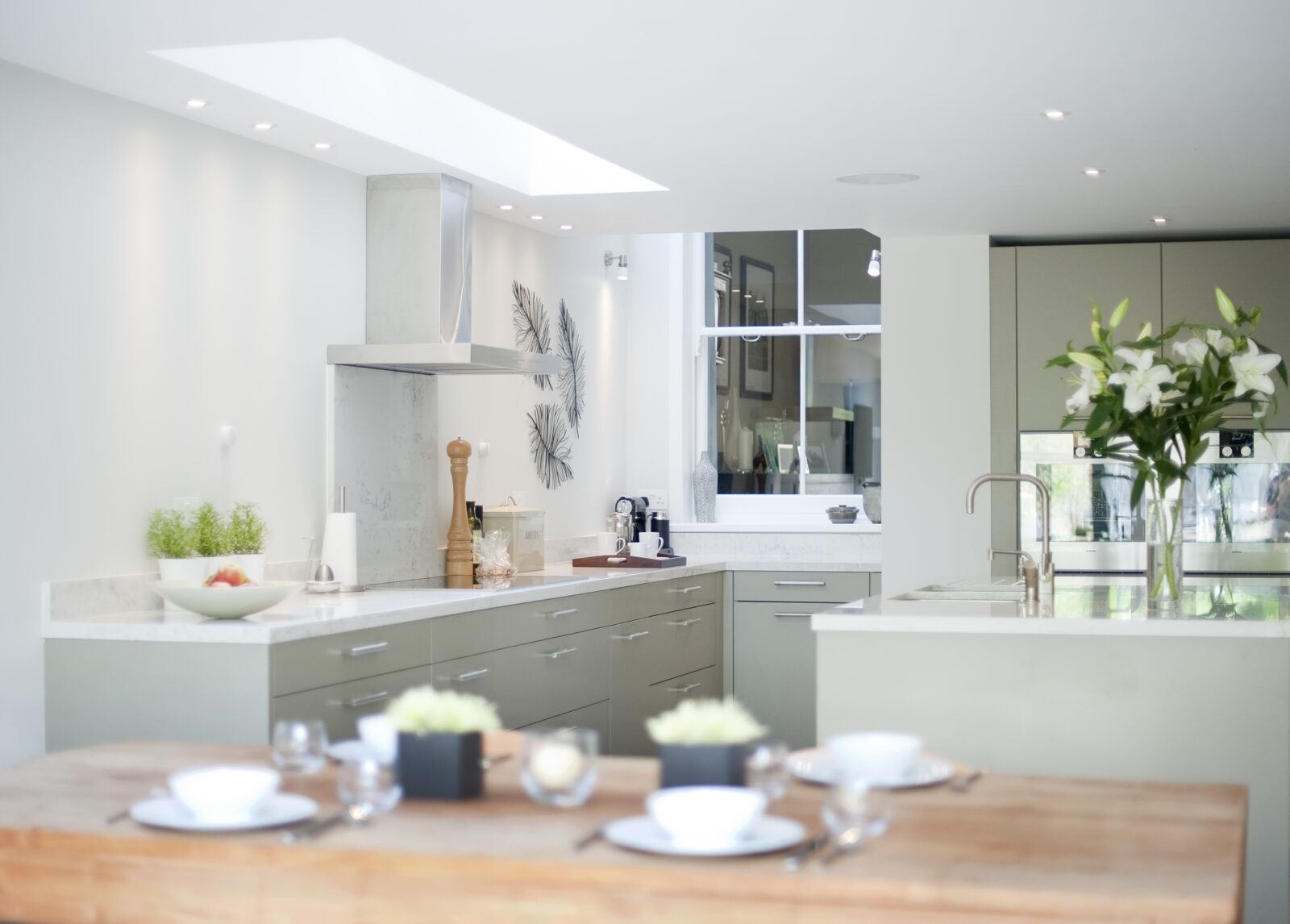
On our project in Battersea, a new internal window sits between the kitchen and the rear reception room. The reception room keeps good light levels, while the fixed glass holds back kitchen smells and sound.
Can you put a window in an internal wall?
Yes, but first find out whether the wall is load-bearing. In a terrace, the spine wall between front and middle rooms and the old rear wall often carry floors or walls above. Planning Portal says a structural engineer or surveyor can confirm this.
Forming an opening in a load-bearing wall needs building control approval and a structural engineer’s calculations. The new lintel or beam must carry the load the wall was taking. Planning Portal guidance says a new beam should normally bear at least 150mm onto the wall at each end, sometimes on padstones.
A steel beam should normally be protected so it has 30 minutes’ fire resistance. Removing or opening a non-load-bearing wall is simpler, but building control may still be involved if it affects escape routes, ventilation, drainage or electrics.
When an internal window is part of an extension, the opening is drawn and calculated with the rest of the structural package. That is cheaper and less disruptive than adding it later.
What glass do internal windows and doors need?
Internal glass in a “critical location” must be safety glass under Approved Document K. According to Planning Portal’s doors and windows guidance, critical locations include:
- any glazed panel in an internal or external wall or partition up to 800mm above floor level;
- any glass in a door up to 1500mm above floor level;
- any side panel within 300mm of a door edge, up to 1500mm above floor level.
In practice, most full-height screens and glazed doors use toughened or laminated safety glass throughout. Toughened glass breaks into small blunt pieces. Laminated glass holds together on its interlayer when it cracks, which also helps with sound.
For privacy, you can use reeded or fluted glass, acid-etched or frosted glass, or a film on part of the pane. Fitting the window higher than eye level is another option, which is why high windows between rooms work well for bathrooms and bedrooms.
Do internal windows affect fire safety in a loft conversion?
Yes, and this is where many internal glazing ideas need rethinking. When a loft conversion adds a storey to a two-storey house, the stair usually becomes a protected escape route down to the front door.
Approved Document B says the full escape route should be addressed, with fire-resisting partitions (minimum REI 30) and doors (minimum E 20). Existing doors may need upgrading. Where the ground floor is open plan, new partitions should normally enclose the escape route.
Any internal window or glazed door onto the hall or stair then has to keep that fire rating. That means fire-resisting glass in a tested frame, agreed with building control. A standard glazed door or a reclaimed screen won’t usually do.
Approved Document B also allows an alternative for open-plan layouts. It combines sprinklers in the open-plan areas, a fire-resisting partition and door between the ground and upper floors, and fire-resisting construction around the cooking area. If you’re planning a loft conversion now or later, design the ground floor glazing with this in mind.
Will an internal window stop noise and cooking smells?
A fixed, sealed internal window keeps cooking smells out and cuts noise well. An opening window, hatch or door only does this when it’s shut, and only as well as its seals. If acoustics matter, for a home office or a TV room next to the kitchen, choose fixed glass.
Heavier glass helps. Laminated acoustic glass or a double-glazed unit performs better than a single thin pane. Good perimeter seals matter as much as the glass, because sound finds the gaps. A glazed screen doesn’t replace a good extractor hood over the hob.
Which frame styles suit a period terrace?
Internal glazing can suit Georgian and Victorian houses well, because glazing bars echo the existing sash windows. The frame you pick sets the look.
- Painted timber: matches original joinery, takes glazing bars, easy to repaint.
- Steel: the thinnest profiles and the industrial look most people mean by “Crittall-style”.
- Slim aluminium: a similar look to steel, often powder-coated in black or another colour.
- Frameless glass: the least visual interruption, best in modern extensions.
A feature internal window can also be a shape rather than a grid: a round porthole on a stair, or an arched opening that echoes a period doorway. It works best where it frames a view through the house, such as from the hall to the garden.
Line up glazing bars with nearby windows, door heads or kitchen units. On a kitchen wall, set the sill height to suit the worktop and any splashback. In the middle room, plan where radiators, sockets and furniture will go, as glazing removes wall space.
Do you need planning permission for internal windows?
No. Planning Portal confirms that you don’t need planning permission to move internal walls, and the same applies to glazing them. Building regulations still apply to structural openings, safety glass and fire separation.
The exception is a listed building. Planning Portal says listed building consent is needed for any significant works, internal or external. Conservation areas and Article 4 directions mainly control the outside of a house, so they rarely affect internal windows.
How do you plan internal windows into an extension?
Decide on internal glazing at the design stage, not once the walls are plastered. Work through these questions with your designer:
- Which rooms will lose daylight once the extension is built?
- Do you need to walk between them, or only see and share light?
- Is the wall load-bearing, and can an existing opening be reused?
- Which panes fall in a critical location for safety glass?
- Is a loft conversion likely, now or later, so that fire-rated glazing is needed on the hall?
- Where do you need privacy, and where do you want a clear view to the garden?
A 3D visualisation helps you see sight lines and light before anything is built. Costs depend on the size of the opening, the frame material, the glass specification and whether a new beam is needed.
To talk through internal windows, screens and doors for your own house, book a free consultation.