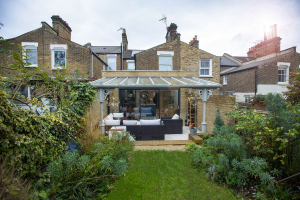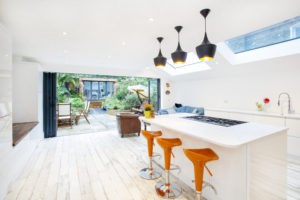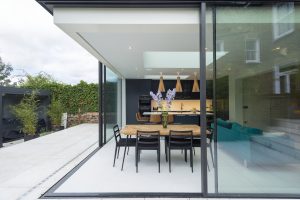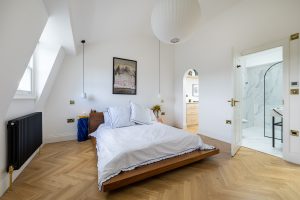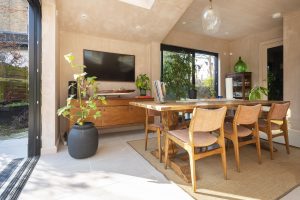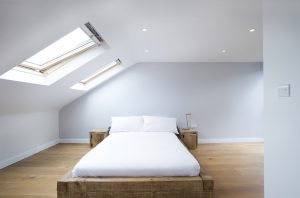

There are four main loft conversion types: rooflight (Velux), dormer, hip-to-gable and mansard. Rooflight is the cheapest and needs no roof alteration. Dormer is the most common in London and usually falls under permitted development. Hip-to-gable suits semi-detached and detached houses with a hipped roof. Mansard adds the most space but almost always needs planning permission. Which one fits your house depends on your roof shape, your budget and whether you’re on a terrace, semi or detached property. The right choice below.
The four types
| Type | Best suited to | Planning route | Typical London cost* |
|---|---|---|---|
| Rooflight (Velux) | Any roof with 2.1m+ head height already | Usually permitted development | £25,000 – £45,000 |
| Dormer | Terraced and semi-detached houses | Usually permitted development (rear) | £45,000 – £80,000 |
| Hip-to-gable | Semi-detached and detached houses with a hipped roof | Usually needs planning permission | £55,000 – £90,000 |
| Mansard | Terraced, semi-detached and detached houses wanting maximum space | Almost always needs planning permission | £60,000 – £120,000 |
*Ranges only, based on current London market guides in 2026. Every project is priced individually — get a fixed quote before budgeting against these figures.
What are the four main types of loft conversion?
A loft conversion turns unused attic space into a functional room — a bedroom, home office or bathroom — and adds value to your home at the same time. Not every type suits every roof: the shape of your existing roof, your budget and how much extra space you need all affect which type works for your house. Some properties can combine two types, such as a hip-to-gable with a rear dormer, to maximise space.
Rooflight (Velux) loft conversions
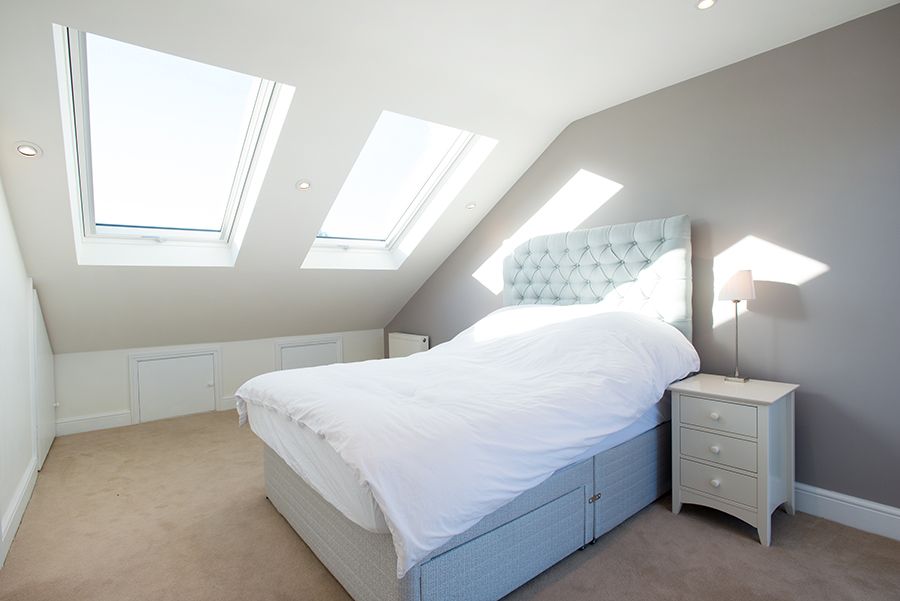
The rooflight conversion is the simplest and most cost-effective type. Named after Velux, one of the leading rooflight manufacturers, it works with the existing shape of the roof, so nothing structural needs to change. Sloping skylight windows are set into the roof slope to bring in light and ventilation.
Rooflight conversions work best where the existing attic already has full head height — at least 2.1 metres at the highest point, which is the minimum required by Building Regulations. A well-designed rooflight conversion also makes use of the eaves for storage cupboards, and it’s worth planning for temperature and airflow control to keep the room comfortable year-round. In London, this is usually the easiest type to build, as it rarely needs planning permission — even on listed buildings, since no external roof shape changes.
Dormer loft conversions
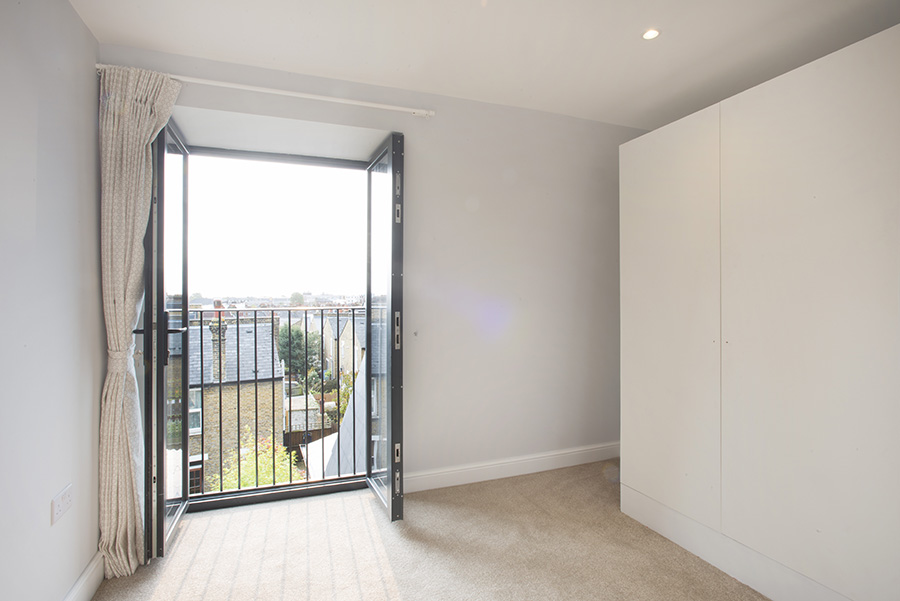
A dormer extends beyond the slope of the roof, giving the new room vertical walls and a flat ceiling. It’s the most popular loft conversion type in London, since it suits almost any house with a sloping roof and adds real headroom, usually built at the rear of the property. Compared to a rooflight conversion, a dormer creates significantly more floor space and daylight. Many London boroughs don’t require planning permission for a rear dormer, but it’s always worth checking first, since rules vary by borough and property. For the full breakdown of dormer styles, planning rules and costs, see our complete dormer loft conversion guide.
“If your house is outside of a conservation area, a dormer loft extension will provide the most volume of additional space, for two bedrooms or one bedroom and a bathroom, on a Victorian terraced house.”
— David Abimbola, Designer, Build Team
Hip-to-gable loft extensions
A hip-to-gable conversion rebuilds one sloping side of the roof as a vertical gable wall, so it only suits semi-detached and detached properties with a hipped roof — not terraces, which don’t have a sloping side to convert. Where a house has two sloping sides, both can sometimes be converted in a double hip-to-gable for extra space. Because it changes the shape and outline of the roof, a hip-to-gable extension usually needs full planning permission rather than falling under permitted development.
Hip-to-gable extensions work on bungalows and chalets as well as houses, and they’re often combined with a rear dormer to maximise the new room. They cost more than a straightforward dormer because of the extra structural work, and because they alter the roofline they can affect the character of neighbouring properties if similar conversions haven’t been built nearby.
Mansard loft conversions
A mansard conversion runs the full length of the roof and changes its profile dramatically, with a flat roof and a wall pitched at roughly 72 degrees, creating a large, fully usable room. Because it’s more complex and takes longer to build, it costs more than the other types, and it’s usually built at the rear of the house. Mansard conversions suit terraced, semi-detached and detached houses, and they’re a popular choice in London because they work on older buildings and maximise both space and natural light.
“Mansard loft extensions on specific houses that have a butterfly roof style can actually provide more usable loft space than a common dormer extension. This is because the mansard loft extension covers the whole footprint of the existing house, while a dormer on a double-pitched roof house only extends over half the footprint of the main building.”
— David Abimbola, Designer, Build Team
Which loft conversion type is right for your home?
Terraced houses. London has many Victorian and Edwardian terraces, and a rear dormer is usually the best choice, adding both headroom and floor space. Check there’s enough existing loft height and whether you’re in a conservation area, which can restrict what’s allowed. End-of-terrace houses have a bit more flexibility, since a hip-to-gable conversion is sometimes possible too.
Semi-detached houses. A semi-detached roof gives more options. A dormer works well, but if the roof is hipped — sloped on all four sides — a hip-to-gable conversion will maximise the floor area, at the cost of more structural work.
Detached houses. Detached properties can take any of the four types, though the right choice still depends on your roof structure and local planning policy. A detached house often has room for a larger, more flexible design — several bedrooms, or a master bedroom with an ensuite.
“Permitted development rules restrict the size of a proposed dormer depending on the house type. If your house is a terraced or end-of-terrace house, you can add 40 cubic metres of volume. If your house is a detached or semi-detached house, you can add 50 cubic metres of volume to your loft space.”
— David Abimbola, Designer, Build Team
Do all loft conversion types need planning permission?
Start by checking with your local Town Planning Office whether your proposed conversion counts as permitted development, meaning no planning application is needed, or whether full planning permission is likely to be required. Planning permission is more often needed in conservation areas and for listed buildings, and it also usually applies to mansard conversions or any conversion that changes the front of the property and, by extension, the character of neighbouring homes. Flats and maisonettes need planning permission for a loft conversion regardless of size, since they don’t have permitted development rights. If you choose Build Team, we handle the paperwork and liaise with your local authority to give your application the best chance of approval.
What does each type of loft conversion cost?
Cost depends on the conversion type, the structural work involved and the materials used. As a guide for London in 2026:
- Rooflight (Velux): from around £1,500 per square metre
- Dormer: from around £2,000 per square metre
- Hip-to-gable: from around £2,000+ per square metre
- Mansard: from around £2,500+ per square metre
“Structural engineers typically propose less steel in a dormer loft extension compared to a mansard loft extension. This is because the dormer has a simple square geometry, while a mansard loft extension combines smaller squares with large sloped facades. The amount of steel a loft extension needs has a direct impact on the overall build cost.”
— David Abimbola, Designer, Build Team
For a more personalised figure, use our instant online quote or speak to a member of the team.
Loft conversions we’ve completed
Build Team has completed 141 loft conversions across London, with a typical size of around 30 sqm. Seeing real sizes is the clearest way to picture what your budget buys. A sample of completed projects:
| Plan | Street | Area |
|---|---|---|
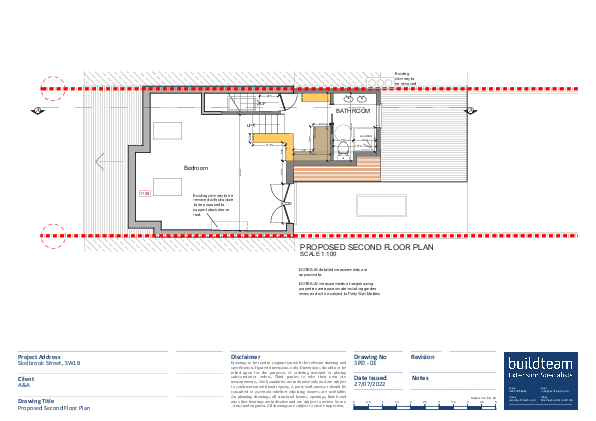 |
Skelbrook Street | SW18 (Earlsfield) |
 |
Bellamy Street | SW12 (Balham) |
 |
Brudenell Road | SW17 (Tooting) |
See the full design and planning database to filter by borough, roof type and floor area, or browse our loft conversion gallery, including an L-shape rear dormer loft conversion with real photos.
Frequently asked questions
Which loft conversion type adds the most value?
It’s less about the conversion type and more about the property itself — its location, and the quality of the design and construction. Buyers respond well to a loft conversion that makes good use of the space it adds, whether that’s an extra bedroom, a home office or a playroom.
What’s the cheapest type of loft conversion?
A rooflight (Velux) conversion is usually the best-priced option, since it uses the existing roof structure with only minor adjustments. It does offer less extra floor space than the other types, so factor that trade-off in alongside the price.
Which loft conversion type usually needs planning permission?
Rear dormer and rooflight conversions are usually possible under permitted development, though it’s always worth checking with your local authority, as this depends on your property type and location. Mansard conversions usually do need planning permission, since they significantly alter the roof profile — as do most hip-to-gable conversions.
Is a loft conversion suitable for every house?
No. Suitability depends on your roof structure and condition, your current loft height, and any planning constraints such as a conservation area. A survey early on will confirm whether a conversion is possible and which type suits your house best.
Not sure which loft conversion suits your home?
Build Team has been designing and building loft conversions in London since 2007. We’ll assess your roof, your budget and your planning route, then agree a clear, fixed price before work begins. Book a free consultation to talk through your project.
Or call 020 7495 6561 · email hello@buildteam.com