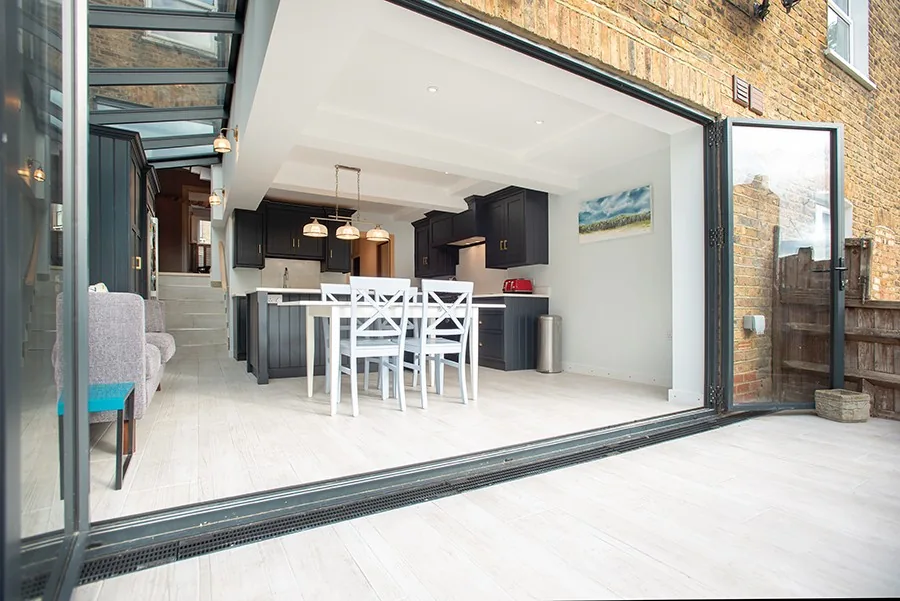
Yes, you can usually replace a conservatory with a solid extension, and a single-storey rear extension often falls under permitted development, so no planning application is needed. The catch is that the limits are measured from the original house, not from the conservatory. The new room also needs full Building Regulations approval, which an exempt conservatory never needed. This guide covers both, plus foundations, cost drivers and the checks to make first.
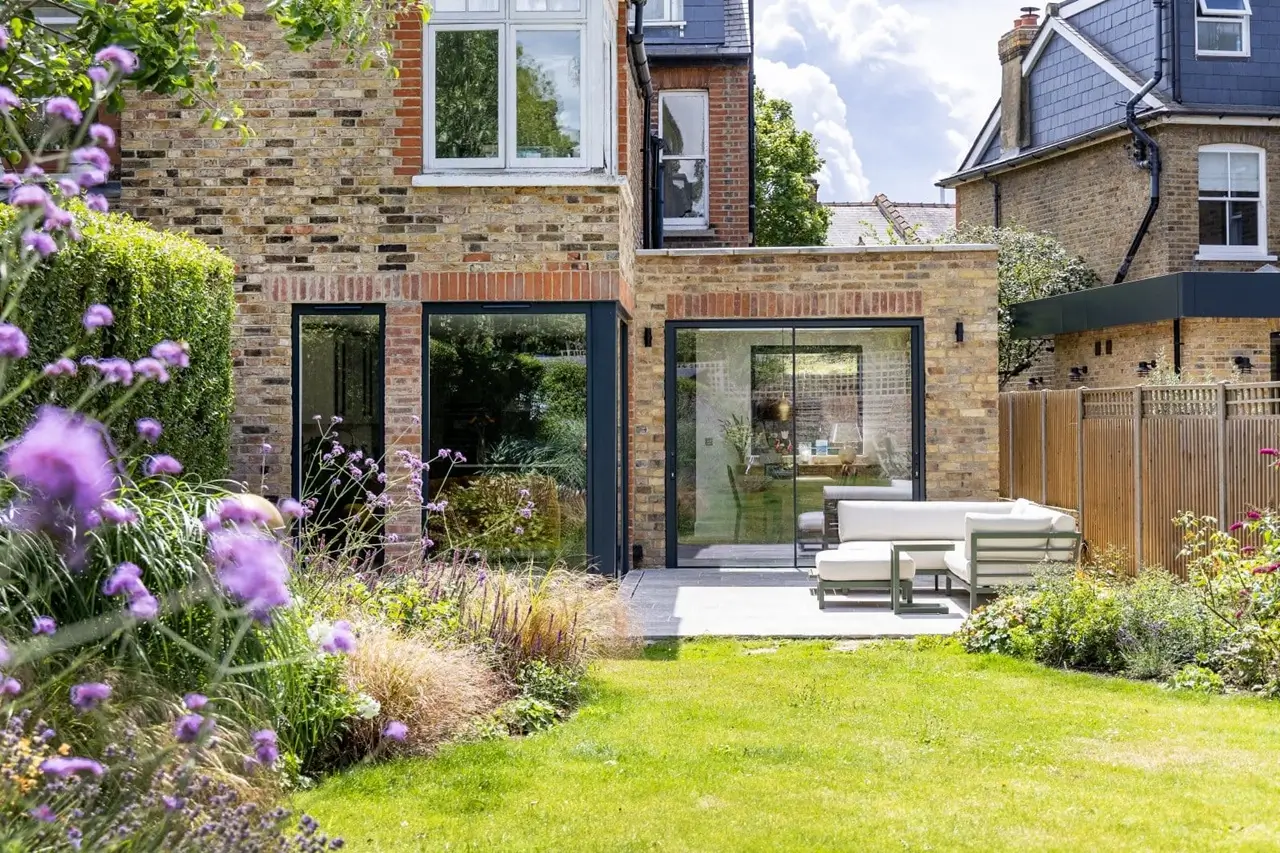
Can you replace a conservatory with an extension?
You can, and there are three ways to do it. Which one suits you depends on the state of the existing base and frame, and on how far you want the new room to join the house.
| Option | What changes | Main approvals | Best when |
|---|---|---|---|
| Replace the roof only | Glazed or polycarbonate roof swapped for an insulated solid roof; walls and doors to the house stay | Usually Building Regulations approval for the new roof; the frame and base must carry the extra weight | The conservatory is sound and you’re happy to keep it as a separate room |
| Upgrade and open up | New roof, insulated walls and glazing, and the opening to the house widened or the doors removed | Full Building Regulations approval | A structural engineer confirms the base and dwarf wall can be reused |
| Demolish and rebuild | Conservatory removed; new foundations, walls and roof built as an extension | Permitted development or planning, plus full Building Regulations approval | The footings are shallow, or you want a different size, shape or layout |
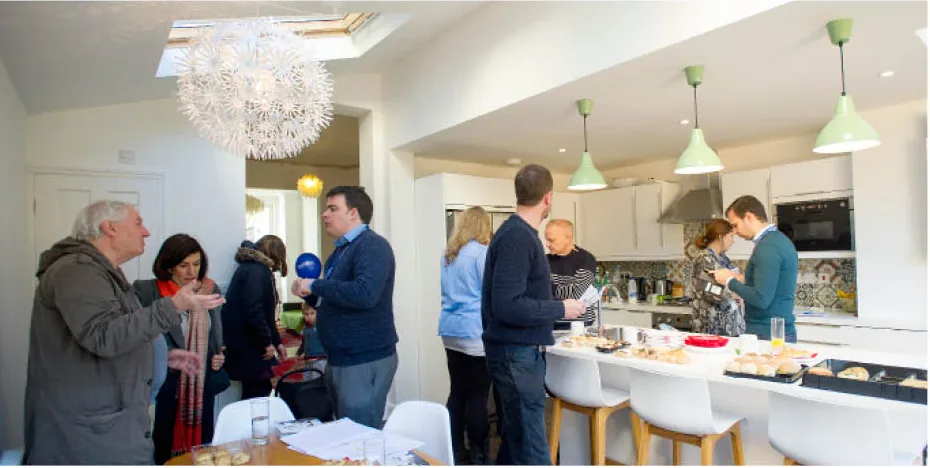
On London terraces the old base is rarely reusable in full, so the third option is the common outcome. Many old conservatories also sit on a lean-to footprint that doesn’t suit a sensible kitchen layout. Rebuilding lets you plan the depth, roof and glazing around how you’ll use the room. A common result is an open-plan kitchen in a rear extension across the back of the house.
Do you need planning permission to replace a conservatory with an extension?
Often not. The Planning Portal confirms that conservatories fall under the same planning rules as any other home extension. If your new extension stays within the permitted development limits, you don’t need to apply for planning permission. Those rights apply to houses only, not to flats or maisonettes.
The rule homeowners most often miss is how depth is measured. Permitted development limits run from the rear wall of the original house: the house as it stood on 1 July 1948, or as first built if later. Your existing conservatory is not part of the original house. A 4-metre-deep conservatory on a terrace does not give you the right to a 4-metre extension.
These are the main limits for a single-storey rear extension in England, from the government’s permitted development technical guidance:
- Depth: up to 3 metres beyond the original rear wall for a terraced or semi-detached house, or 4 metres for a detached house.
- Larger extensions: up to 6 metres (or 8 metres detached) through the prior approval process. Neighbours are consulted, and the council has 42 days to decide. This route isn’t available in conservation areas or other designated land.
- Height: no higher than 4 metres, and eaves no higher than 3 metres if the extension is within 2 metres of a boundary.
- Garden coverage: extensions and outbuildings together can’t cover more than half the land around the original house.
- Materials: the outside must look similar to the existing house. Conservatories are exempt from this condition, but a solid extension is not.
You’ll need a planning application if the house is a flat or maisonette, or if the design exceeds these limits. The same applies where an Article 4 Direction or a planning condition has removed permitted development rights. In a conservation area, side and wraparound extensions are not permitted development. A listed building needs listed building consent. The householder planning application fee in England is £548 from 1 April 2026. Our guide to permitted development for London homes covers the rules in more depth.
If you build under permitted development, consider a Lawful Development Certificate from your council. It’s optional, but it confirms in writing that the extension is lawful, which is useful evidence when you come to sell.
Which Building Regulations apply when a conservatory becomes an extension?
All of them that apply to any extension. According to the Planning Portal, a conservatory is normally exempt from Building Regulations only when all of these are true:
- It’s built at ground level and is less than 30 square metres in floor area.
- It’s single storey.
- It’s separated from the house by external-quality walls, doors or windows.
- It has its own heating system with separate temperature and on/off controls.
- Its glazing and any fixed electrical installations comply with the regulations.
Take out the separating doors, widen the opening or run the house heating into it, and the conservatory no longer meets those conditions. Any new structural opening between a conservatory and the house needs Building Regulations approval, even if the conservatory itself is exempt. In practice, a conservatory replaced by an extension is treated as a new extension.
That means building control will check the structure, foundations, thermal insulation (Part L), ventilation (Part F), drainage (Part H) and electrics (Part P). The difference between Building Regulations and planning permission catches many people out: you can need the first even when you don’t need the second.
How much glazing can the new extension have?
Less than most conservatories have. Under the simplest Part L route, the total area of windows, doors and rooflights should be no more than 25% of the extension’s floor area. You can add to that the area of any windows or doors in the old back wall that the extension covers over. More glazing is possible, but an energy assessor then has to show the whole house still performs well enough. Plan the glass early, because this decides the roof and wall design.
These are the Part L standards in force in England in October 2026. A revised Approved Document L takes effect on 24 March 2027. Under the government’s transitional rules, work notified to building control before that date keeps the current standards if it starts before 24 March 2028.
When the work is signed off, you receive a completion certificate. Keep it with the house deeds, because you’ll need it when you sell.
Can you reuse the conservatory’s foundations and dwarf wall?
Sometimes, but don’t assume it. Conservatory footings are often shallow because they were designed for a lightweight frame, not for insulated masonry walls and a solid roof. A structural engineer and building control will want to see what is there before agreeing to reuse anything.
The usual check is a trial pit dug beside the existing base to expose the footing. From that, the engineer decides between three routes: reuse the base as it is, strengthen or underpin it, or break it out and pour new foundations. On London clay, especially near trees, building control often asks for deeper foundations than a conservatory ever had.
The dwarf wall needs the same scrutiny. Many are a single skin of brick with no insulation and no proper damp-proof detail, so they won’t meet Part L as they stand. They may need insulating on the inside or rebuilding as a cavity wall.
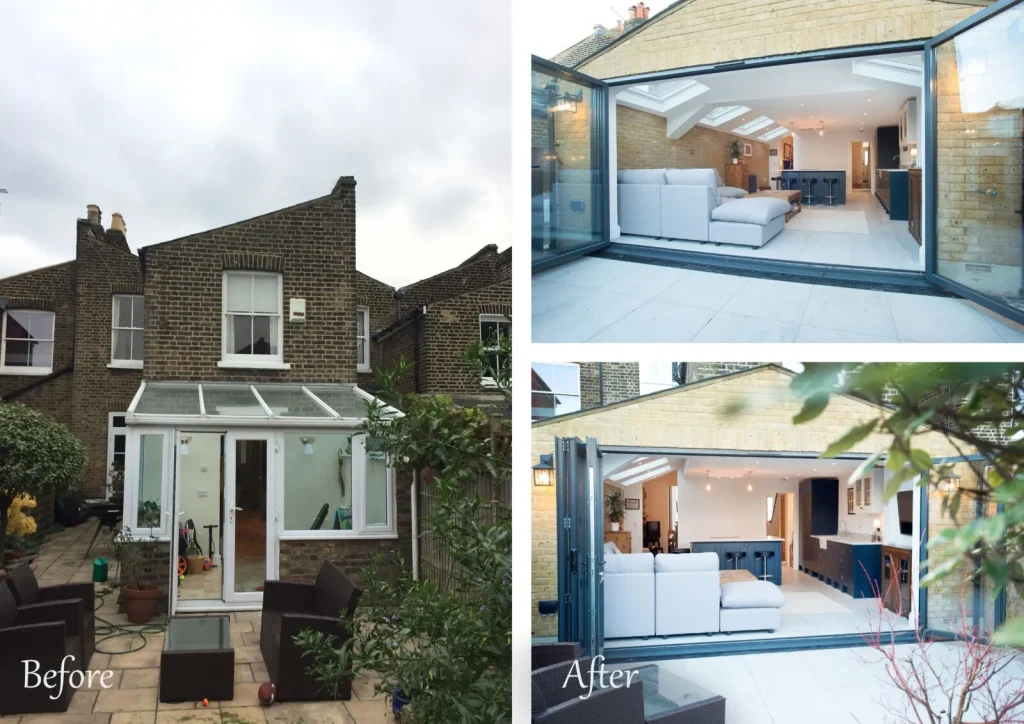
What does a conservatory to extension conversion look like before and after?
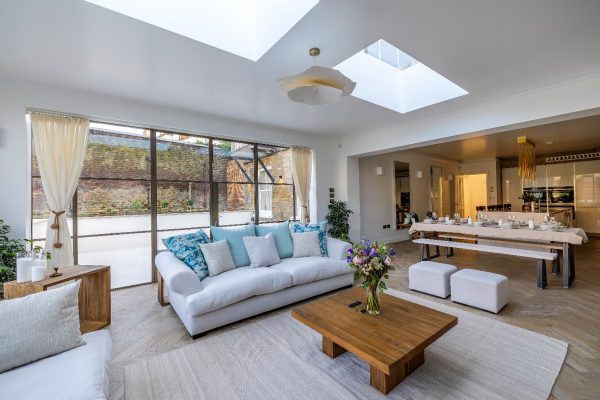
Before, you usually have a glazed or polycarbonate roof, a low brick dwarf wall and doors shutting the conservatory off from the house. After, the room has an insulated solid roof with rooflights, insulated walls and glazing sized to meet Part L. The old back wall is usually opened up on steel beams, so kitchen and extension become one room. The new space runs on the house heating and is warm enough to use in January.
How much does it cost to convert a conservatory into an extension?
It depends far more on the structure and specification than on floor area. Two replacements of the same size can differ widely in cost once foundations, steelwork and glazing are priced. These are the items that move the number most:
- Removing the conservatory: taking down the frame and glazing, disposing of it and making good the back wall of the house.
- Foundations: reusing a sound base costs least; underpinning or new foundations cost more, especially on clay or near trees.
- Opening up the house: removing the old back wall to join the kitchen usually needs steel beams and structural calculations.
- Roof: a flat roof with rooflights, a pitched roof or a glazed section each price differently.
- Glazing: large sliding doors and rooflights are among the biggest single items, and Part L limits how much you can use.
- Kitchen, heating and electrics: if the room becomes the kitchen, units, worktops and appliances are a large budget line of their own.
- Approvals and fees: design, structural engineer, building control, and a planning or Lawful Development Certificate application if needed.
- Party wall: surveyor fees if you build on or near a shared boundary.
Converting the existing conservatory is cheaper than a full rebuild only when the base and dwarf wall can be reused. If the engineer finds they can’t, you’re paying for a new extension anyway, plus the demolition. For a figure based on your own house and specification, try our online quote calculator.
Is an extension better than a conservatory?
For a room you want to use every day, yes. A conservatory loses heat fast in winter and overheats in summer, which is why so many end up storing bikes and drying washing. An insulated extension with a solid roof and controlled glazing stays usable all year and connects properly to the house.
A new conservatory still makes sense in a few cases. You might want a garden room rather than a kitchen, have a tight budget, or prefer to keep it separate from the house. If you plan to open it up to the kitchen, build an extension from the start. Otherwise you end up meeting Building Regulations later anyway.
Will replacing a conservatory add value to your home?
It can, because an extension adds year-round living space to the house. How much depends on your street, the size of the house and the quality of the work, so be wary of any single percentage figure.
Paperwork matters as much as the build. Buyers and their surveyors look for a Building Regulations completion certificate and either a planning permission or a Lawful Development Certificate. An extension without them can slow down a sale, however good it looks.
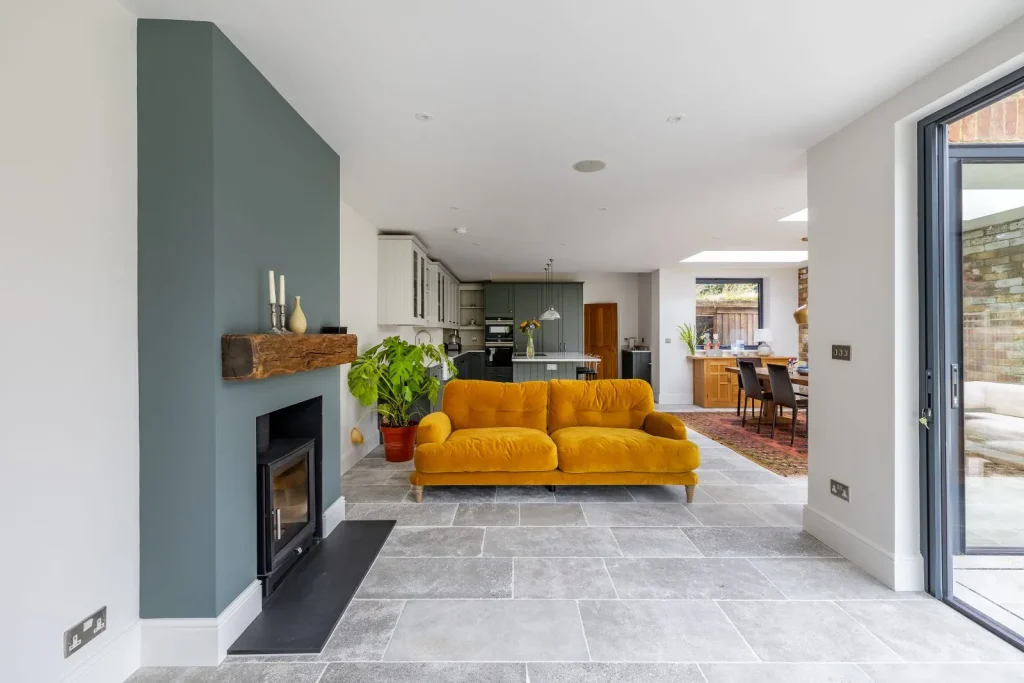
What else should you check before you start?
- Party wall: on a terrace or semi, building on or near the boundary usually triggers the Party Wall etc. Act 1996. Notices go to neighbours before work starts. Our guide to party wall agreements in London explains the process.
- Drains: rear extensions on London terraces often sit over or close to a shared sewer. Building over a public sewer needs Thames Water’s agreement before work starts.
- Original permissions: check whether the conservatory had planning permission with conditions attached. A condition removing permitted development rights means you’ll need a full application.
- Heating: plan how the new room will be heated, and whether your boiler and radiators can take the extra load.
How long does it take to replace a conservatory with an extension?
Most of the time goes on design and approvals rather than demolition. Taking down a conservatory is the quickest stage of the job. The building work itself runs like any single-storey extension: foundations, walls, roof, glazing, then first and second fix.
Before work starts, allow for drawings and structural calculations, the building control application, and party wall notices. Add planning if you need it, or 42 days for a prior approval decision on a larger extension. Starting the party wall and drainage checks early is the simplest way to avoid a delayed start date.
Frequently asked questions
Can I extend my existing conservatory?
Yes, but making a conservatory bigger usually means rebuilding it. Once it reaches 30 square metres or more, or is joined to the house, the Building Regulations exemption no longer applies. The permitted development limits still run from the original house, so the existing conservatory doesn’t add to your allowance.
Can I put a solid roof on my conservatory?
Often, yes, but a solid roof adds weight and changes how the structure performs, so it usually needs Building Regulations approval. Ask a structural engineer to check the frame and base, and speak to building control before you order.
Do I need planning permission to replace a conservatory with a single-storey extension?
Not if the new extension stays within permitted development limits, measured from the original rear wall, and your house still has those rights. Flats, maisonettes and houses with an Article 4 Direction or a restrictive planning condition need a planning application.
Does a conservatory replacement need Building Regulations approval?
Yes, if the new room is joined to the house or built as a solid extension. Any new structural opening between a conservatory and the house needs approval too, even when the conservatory itself is exempt.
Can I keep the existing doors between the conservatory and the house?
You can, but most people replacing a conservatory want an open-plan room. If you remove those doors, the whole space must meet Building Regulations. Keeping them only makes sense if you want two separate rooms.
If you’re ready to see what your conservatory could become, book a free consultation.