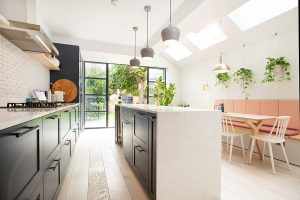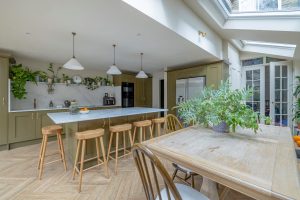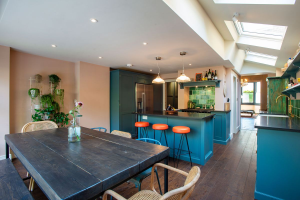

A key consideration when planning a new extension is energy efficiency. With volatile energy prices and regulations in the UK being tightened, homeowners are realising that designing a beautiful extension is not enough and that the question must be “How do we add space without increasing long-term energy costs?”
Whether you are planning a passive house kitchen extension, a rear addition to a London terrace, or a full-width garden room, designing to high-performance standards using Passive House principles is one of the strongest ways to create an energy-efficient extension in the UK that will stand the test of time.
Our guide explores how Passive House principles can be used to financially, practically and environmentally future-proof your home.
Why Standard Extensions Are No Longer Enough
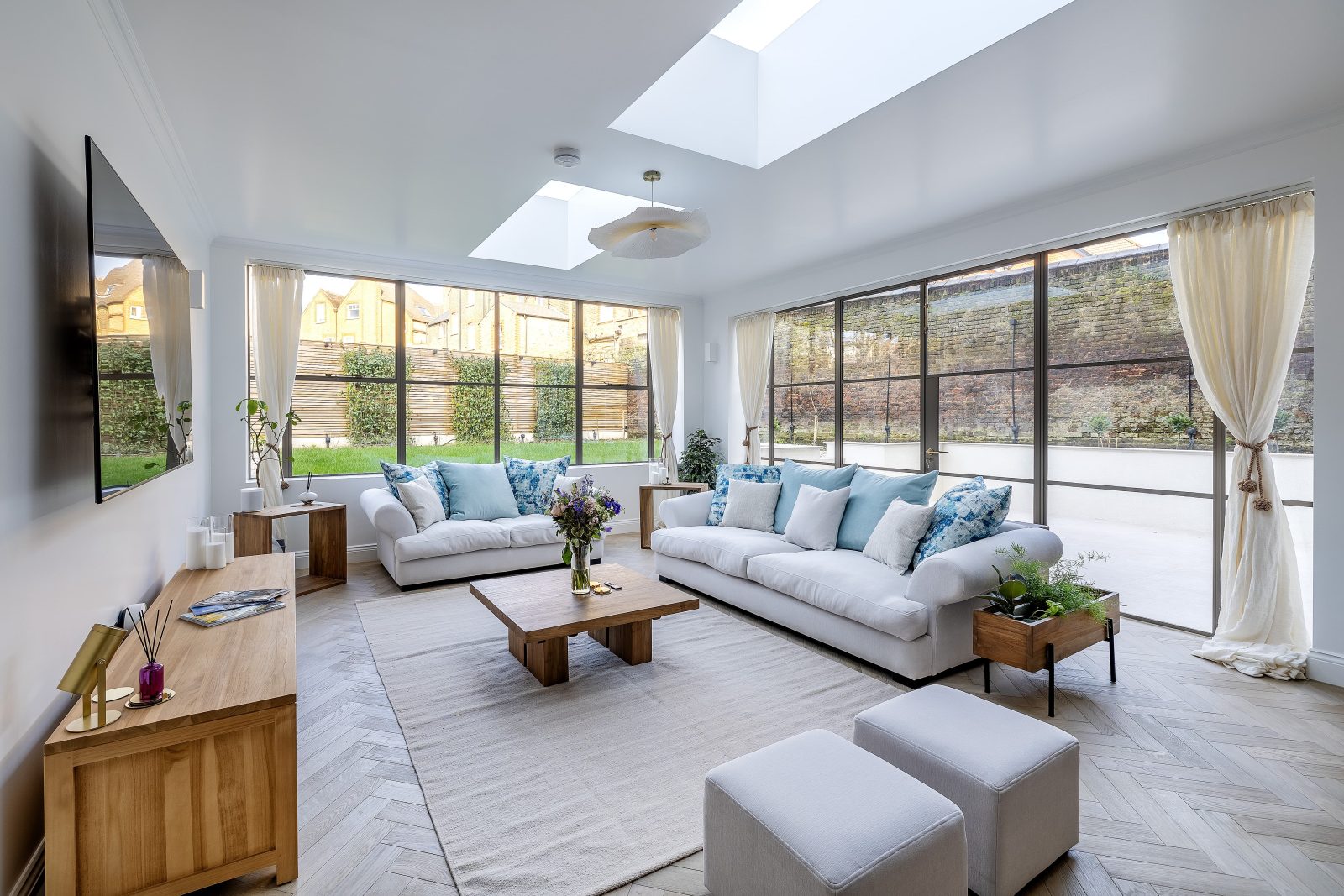
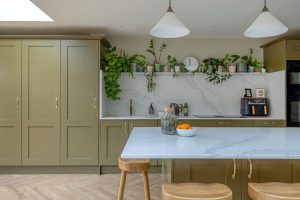
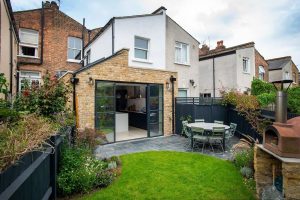
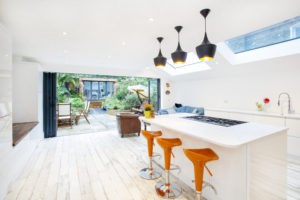
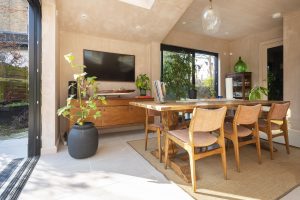
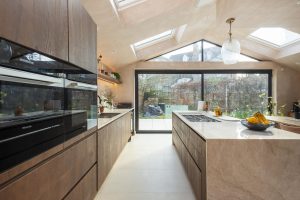
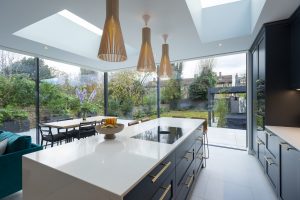
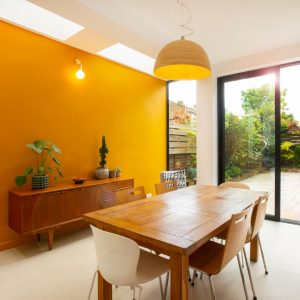
Modern home extensions are carefully planned to be future-proofed. (Photograph: BuildTeam)
For years, home extensions have been built to meet minimum Building Regulations. Insulation levels were adequate; glazing was double-glazed, and heating usually meant installing a larger boiler.
This approach is outdated because:
- Energy prices remain unpredictable.
- The use of gas is being phased out for new homes.
- Heat pumps make lower heating demands to operate efficiently.
- Buyers are increasingly focused on EPC ratings when choosing a property.
A conventional type of extension can increase your energy requirements as it takes more cubic volume to heat, has ineffective glazing to lose warmth and has a greater reliance on expensive systems.
In sharp contrast, a Passive House-inspired extension reduces heating needs so dramatically that energy bills remain stable.
The concept is not about adding technology to compensate for inefficiency. It is about using technology to eliminate inefficiency from the start.
The Five Pillars of a Passive Extension
Passive House design is built on five key principles. These principles work together to create a high-performance system that minimises energy loss.
1. Ultra-Insulation
The walls, floors and roofs of modern extensions are wrapped in continuous, high-performance insulation that is significantly thicker than in standard builds.
The aim of this is simple – to prevent heat loss and retain heat in the winter months, and prevent heat gain indoors during the summer.
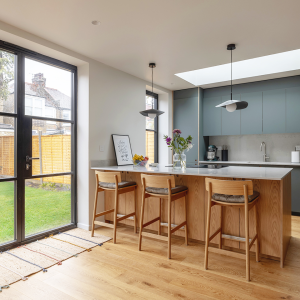
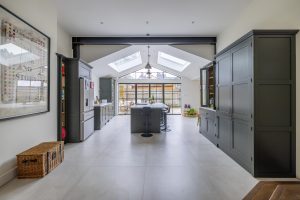
This concept is particularly important in large modern open-plan kitchen extensions where glazing and high ceilings would otherwise lead to inconsistent temperatures.
2. Airtight Construction
Most UK homes leak a surprising amount of heat through tiny gaps found around windows, joists and structural junctions.
Passive design uses specialist membranes and tapes to seal these areas completely. Blower door testing ensures airtightness targets are met. The result is that there are no draughts, no cold spots and no hidden heat loss.
3. High-Performance Triple Glazing
Triple glazing is a cornerstone of Passive House extensions. Modern triple-glazed units bring many benefits, including:
- Low U-values
- Thermally broken frames
- Reduced condensation risk
- Excellent acoustic insulation
For homeowners who are planning to retrofit a London terrace house, upgrading the rear extension glazing to a triple-glazed system can dramatically improve comfort and reduce street noise.
4. Thermal Bridge-Free Detailing
Thermal bridges, areas where heat escapes through structural elements, can be successfully eliminated.
Steel beams, junctions and slab connections are carefully wrapped and insulated to maintain a continuous thermal layer.
This high standard of detailing is what really separates a truly energy-efficient extension in the UK from a superficially energy-efficient “eco” build.
5. Mechanical Ventilation with Heat Recovery (MVHR)
An airtight home must still be able to breathe intelligently.
MVHR systems extract stale air from kitchens and bathrooms whilst replacing it with fresh air from outside. Crucially, these systems recover up to 90% of the outgoing heat.
The result is that a MVHR system ensures:
- Consistent indoor temperatures
- Excellent air quality
- Reduced condensation
- Lower heating demand
In a passive house kitchen extension, where cooking moisture and heat fluctuate daily, MVHR works efficiently to ensure comfort with minimal energy waste.
Integrating Heat Pumps and Invisible Tech
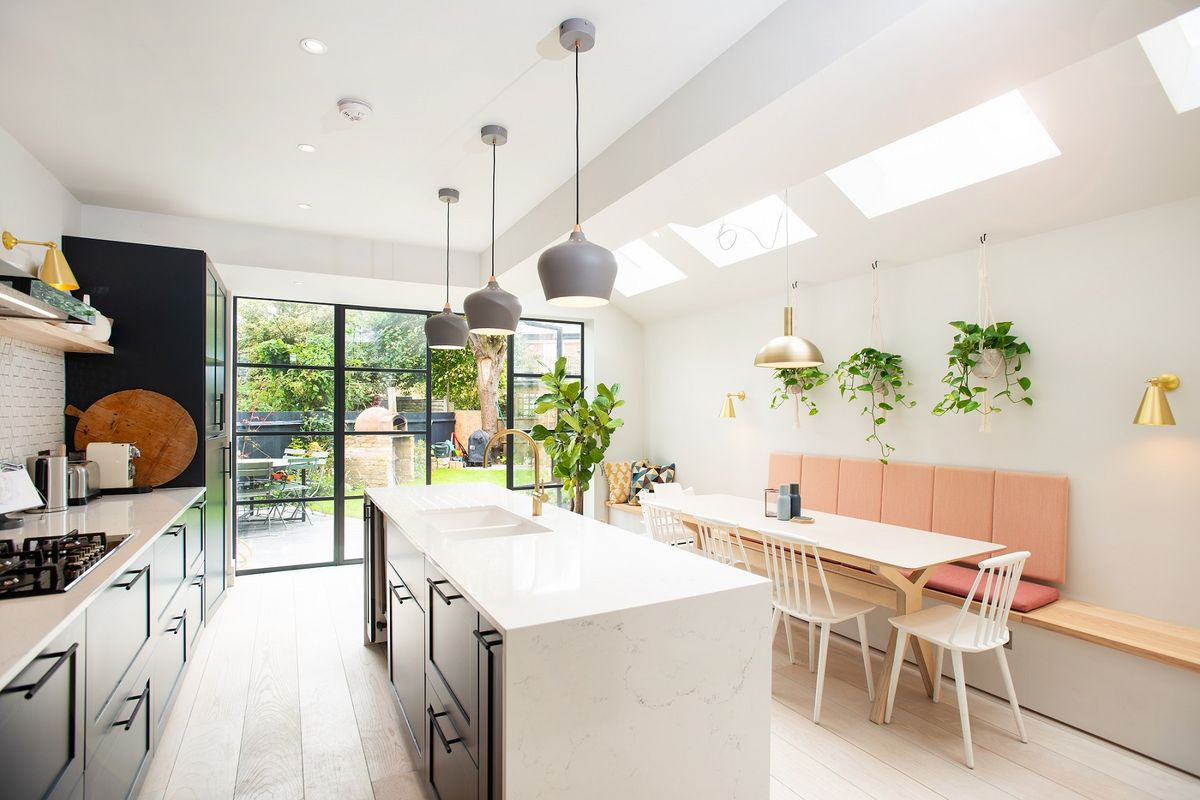
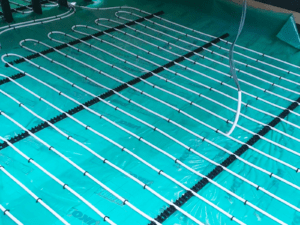
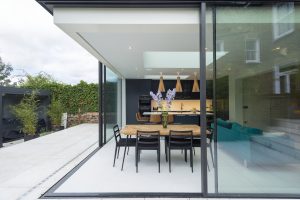
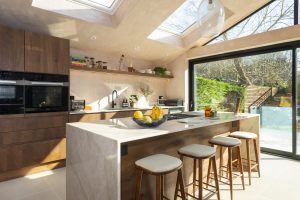
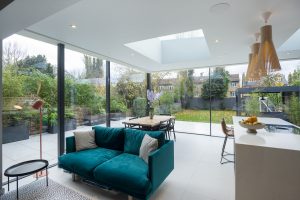
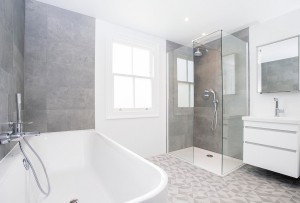
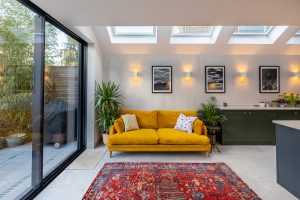
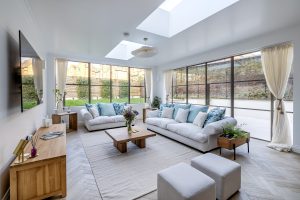
Consistent indoor temperatures are important in home extensions. (Photograph: BuildTeam)
The traditional gas boiler is rapidly making way for heat pumps. Passive House extensions always use heat pumps because they make such low heating demands. Air source heat pumps can operate efficiently at low flow temperatures – especially when paired with underfloor heating.
The shift goes further with invisible integration, which includes:
- Underfloor heating embedded within insulated slabs
- Induction cooking instead of gas
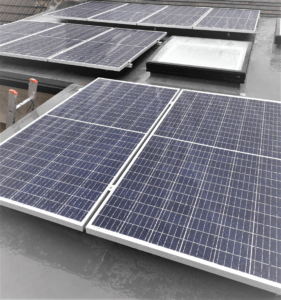
- Solar-optimised architecture
- Smart load management systems
The goal is seamless efficiency, using technology that supports performance without dominating the aesthetic.
Retrofitting the London Terrace: The EnerPHit Standard
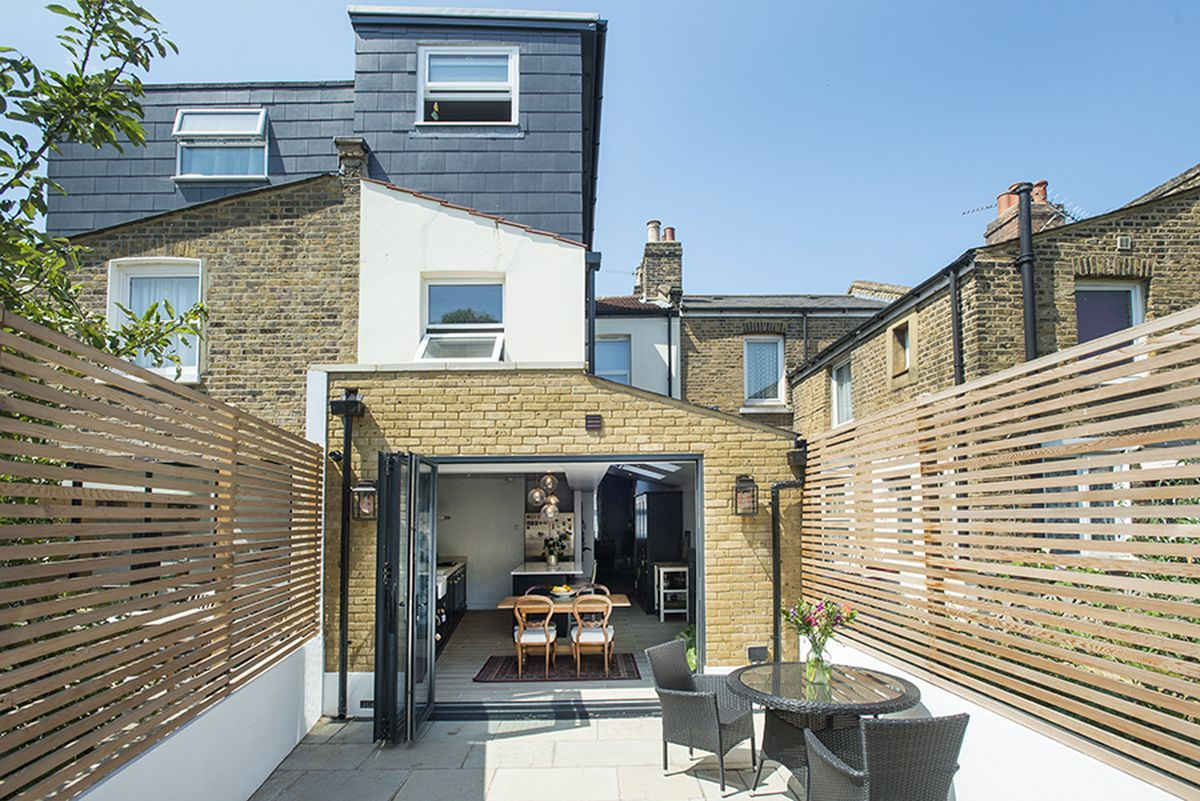
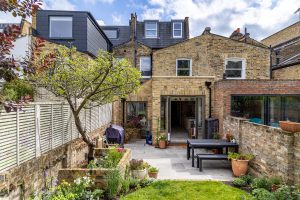
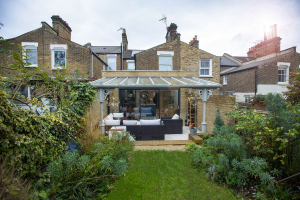
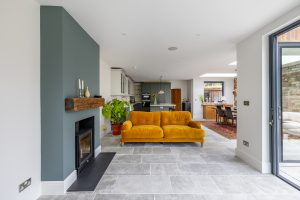
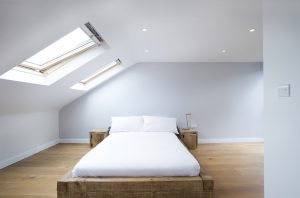
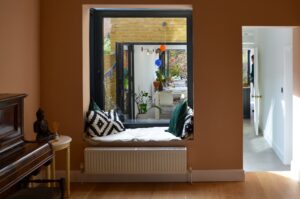
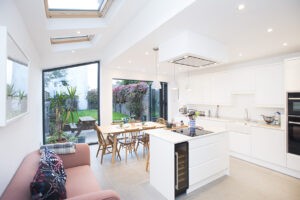
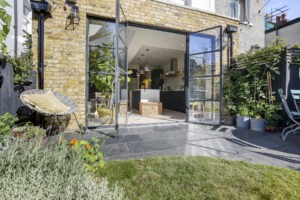
The EnerPHit Standard is ideal for period terrace houses. (Photograph: BuildTeam)
Many UK homeowners live in Victorian or Edwardian terraces, so in reality, can these homes achieve Passive House standards?
The answer is ‘yes’, these standards can be achieved, using the EnerPHit standard, which is the retrofit equivalent of Passive House.
Retrofitting a London terrace may involve:
- Internal wall insulation
- Rear extension built to Passive standards
- High-performance glazing
- Upgraded airtightness
- Heat pump integration
Achieving full certification can be complex, but applying these principles to a new extension dramatically improves the overall performance of the house.
For period properties in London, a hybrid approach which combines heritage sensitivity with cutting-edge performance is becoming increasingly popular.
Preventing Summer Overheating: Smart Shading and Orientation
Energy efficiency in a home extension is not just about winter heating. Overheating is now a serious concern in UK extensions with large glazed expanses.
Passive House design addresses this problem successfully using:
- Correct glazing orientation
- External shading systems
- Deep roof overhangs
- Solar control glass
- Cross ventilation planning
A well-designed extension will harness winter sun for warmth, but during the summer months, it will avoid excessive heat gain. Good performance is about achieving a good balance, rather than the thickness of the insulation.
Indoor Air Quality: Why MVHR Is a Game-Changer
Modern homes are more airtight than ever, but airtightness without ventilation can compromise health.
MVHR systems provide continuous filtered air, but at the same time reduce pollutants, allergens, the build-up of humidity and the risk of mould.
These systems are ideal for families living in busy urban environments. They provide improved indoor air quality and, at the same time, reduce energy bills.
The ROI of Resilience: Investment vs Lifetime Savings
A Passive House extension typically costs more upfront than a standard build extension, but the additional investment covers:
- Enhanced insulation
- Triple glazing
- MVHR systems
- Detailed airtight construction
The long-term return on the investment includes reduced energy bills and maintenance, an increase in the property value and most importantly, an improved EPC rating.
Future buyers are increasingly prioritising high-performance homes, and this will become an even higher priority as minimum EPC requirements tighten.
A Passive House extension is not a short-term upgrade. It is a prudent long-term investment for homeowners.
Is a Passive House Kitchen Extension Worth The Money?
For many homeowners, a spacious kitchen extension is the largest investment they will make after purchasing the property. Designing the new extension to Passive standards ensures that:
- The space remains comfortable year-round
- Heating systems are smaller and more efficient
- Running costs stay predictable
- Sustainability targets are met
An energy-efficient extension in the UK is no longer a niche ambition. It is rapidly becoming the benchmark.
Build for a Low-Energy Future
The homes built in the early 2000s were designed around cheap gas and minimal regulation. House extensions in 2026 must be designed to use electricity, be sustainable and be resilient long-term.
Passive House principles offer a clear roadmap. By incorporating ultra-insulation, triple glazing, MVHR and heat pump integration, you can create a space that costs less to run, feels more comfortable to live in, and can perform in an uncertain energy landscape.
Are You Planning a High-Performance Extension?
Designing a Passive House-inspired extension requires technical precision, expert detailing and careful coordination between the architect and builder.
At BuildTeam, we specialise in creating high-performance, energy-efficient extensions across London, from passive house kitchen extensions to sensitive retrofitting of London terraces.
Are you ready to future-proof your home against rising energy costs? Contact BuildTeam today for a tailored quote and expert guidance on designing a truly resilient extension. Our email: hello@buildteam.com; our telephone: 0207 495 6561.