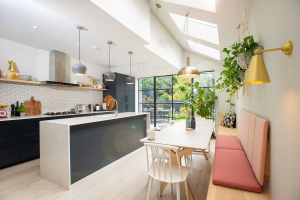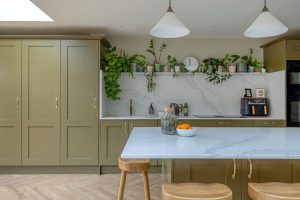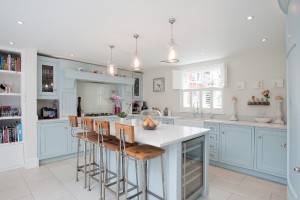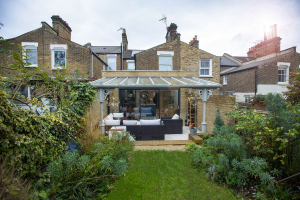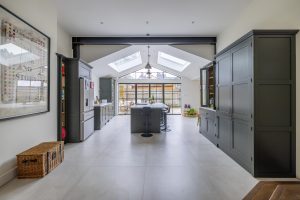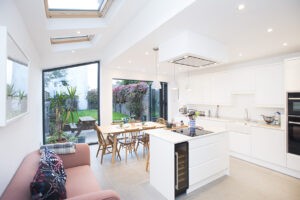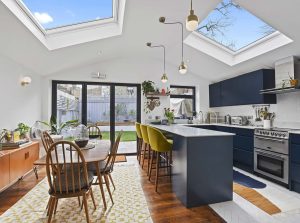

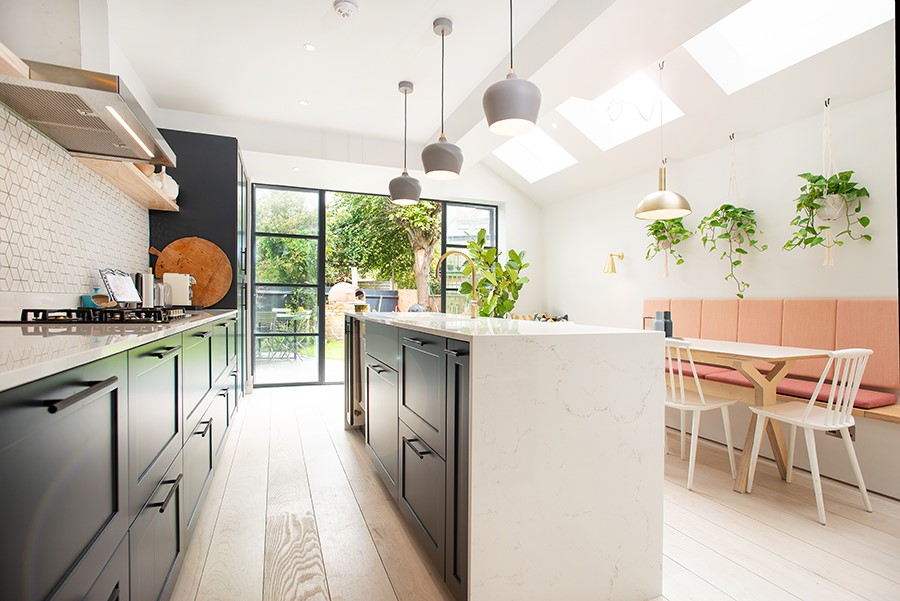
Kitchen islands have long been regarded as a symbol of contemporary living as they are a place to cook, eat, work and connect. However, the idea of the oversized, bulky central island is being rethought.
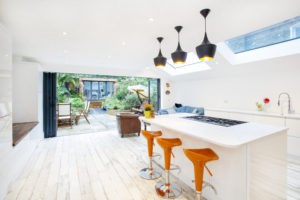
Whilst kitchen islands remain hugely popular, homeowners and designers are now favouring slimmer, more flexible peninsula-style layouts that are more practical and better reflect how kitchens are being used today.
Modern kitchens are no longer just places to cook. They are now ‘work from home’ hubs, social places, wellness zones and are often situated in extensions or open-plan living areas.
This guide explores the real benefits of kitchen islands and explains why the new style peninsulas and “kitchen runways” are replacing giant islands. We show how thoughtful designs using hidden technology and sustainable materials can make your kitchen more practical, comfortable and future-proof.
From Oversized Islands to Slim Peninsulas: A Smarter Use of Space
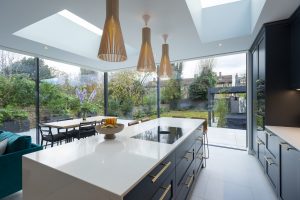
One of the biggest shifts in kitchen design has been in scale. Large, chunky islands can really dominate a room, restrict movement and are visually heavy – especially in extensions and broken-plan layouts.
In 2026, slimmer designs work better, and designers are prioritising:
- Peninsula island designs that connect to a wall or cabinetry run.
- Narrower island profiles that will enhance circulation.
- Kitchen runways that define space rather than block it.
The idea is that space in the centre of the room is left free and that the island will improve the flow between the different zones in the kitchen and will feel more natural in multifunctional homes. For families and their visitors alike, the result is a kitchen that feels open and airy, rather than restricted and obstructed.
Invisible Integration: The Kitchen Island is a Seamless Surface
The modern kitchen island is no longer about showing off appliances — it is more about what you cannot see! When not in use, the kitchen island should be a clean, clear and uninterrupted space.
One of the most exciting developments is invisible induction technology. There is a non-visible hob, and cooking takes place directly on the stone or porcelain surface. When not in use, the island looks like one clean worktop that is perfect for socialising or dining.
Power sources and appliances are being hidden so that the island can be a multifunctional and social surface rather than a technical workstation. Designers are using the following clever tricks to achieve this:
- Wireless surface charging is replacing visible plug sockets.
- Pop-up appliance garages easily conceal mixers, toasters, and coffee machines.
- Flush-fitted extraction units eliminate overhead clutter.
Dynamic Zoning is replacing the “Work Triangle”
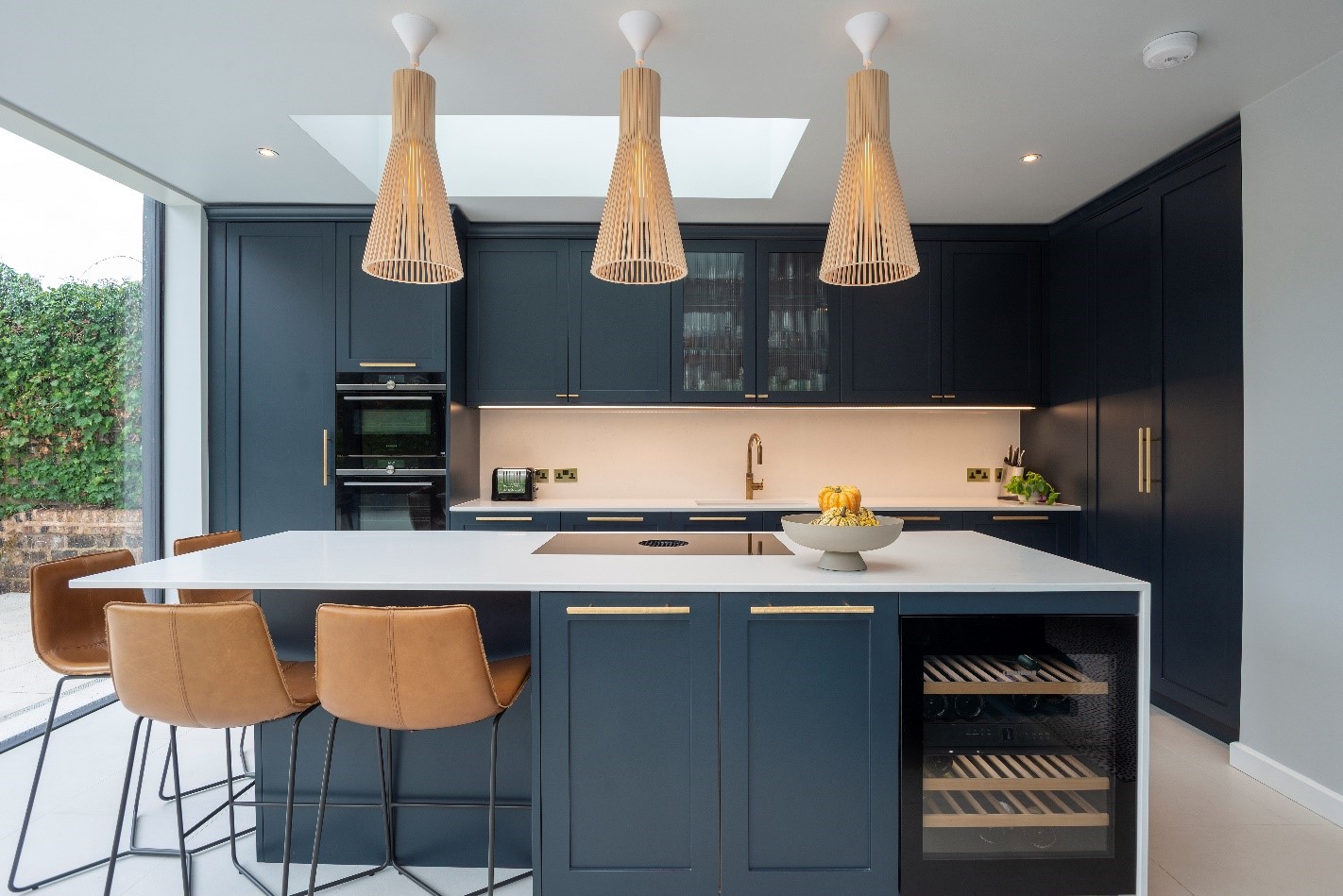
The traditional “kitchen work triangle” is no longer relevant for modern families; the focus is on dynamic zoning. Designers find that a well-placed island or peninsula:
- Creates a social buffer between guests and the cooking zone
- Keeps people away from ovens, hobs, and prep areas
- Allows multiple activities to happen simultaneously
Creating this separation improves safety, efficiency and comfort and is particularly beneficial in homes where entertaining and cooking happen together.
Seating Solutions are Evolving
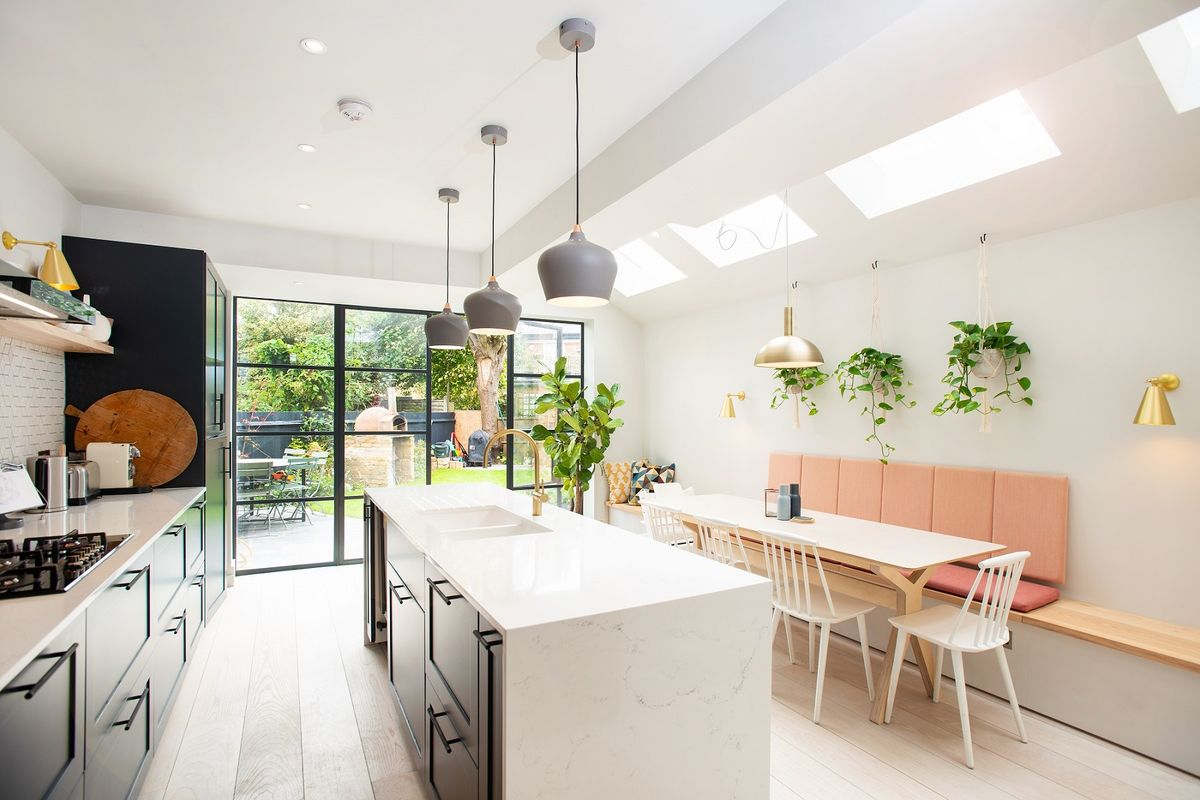
The classic breakfast bar design is being replaced by more comfortable, versatile seating solutions. Instead of using high stools by the kitchen island that are only suited for short perches, in 2026 kitchen designs favour:
- Dropped timber dining ledges and tables attached to or near kitchen islands
- Mixed seating heights for casual meals and longer dining
- Softer materials that feel more like furniture than cabinetry
These new features encourage people to linger and help make the kitchen a genuine dining and social space, rather than just for cooking and food prep.
Work-From-Home Made Easier
Hybrid working is now the regular style of daily life, and kitchen islands must have a clutter-free design and adapt quickly between use as a desk during the day and as a food prep or dining surface in the evening. Modern islands often include such features as:
- Concealed cable management channels
- Ventilated drawers for storing laptops and tablets
- Pop-up or hidden charging points
These help at the end of the working day when the island needs to be returned to an area for food prep or informal dining.
The Wellness & Hydration Station
In 2026, the kitchen is health-focused and popular integrations on the island include:
- 4-in-1 taps for boiled, chilled, sparkling, and filtered water.
- Integrated hydration stations that reduce the use of plastic bottles.
- Hydroponic herb drawers for producing fresh herbs.
Furniture-Led Aesthetics
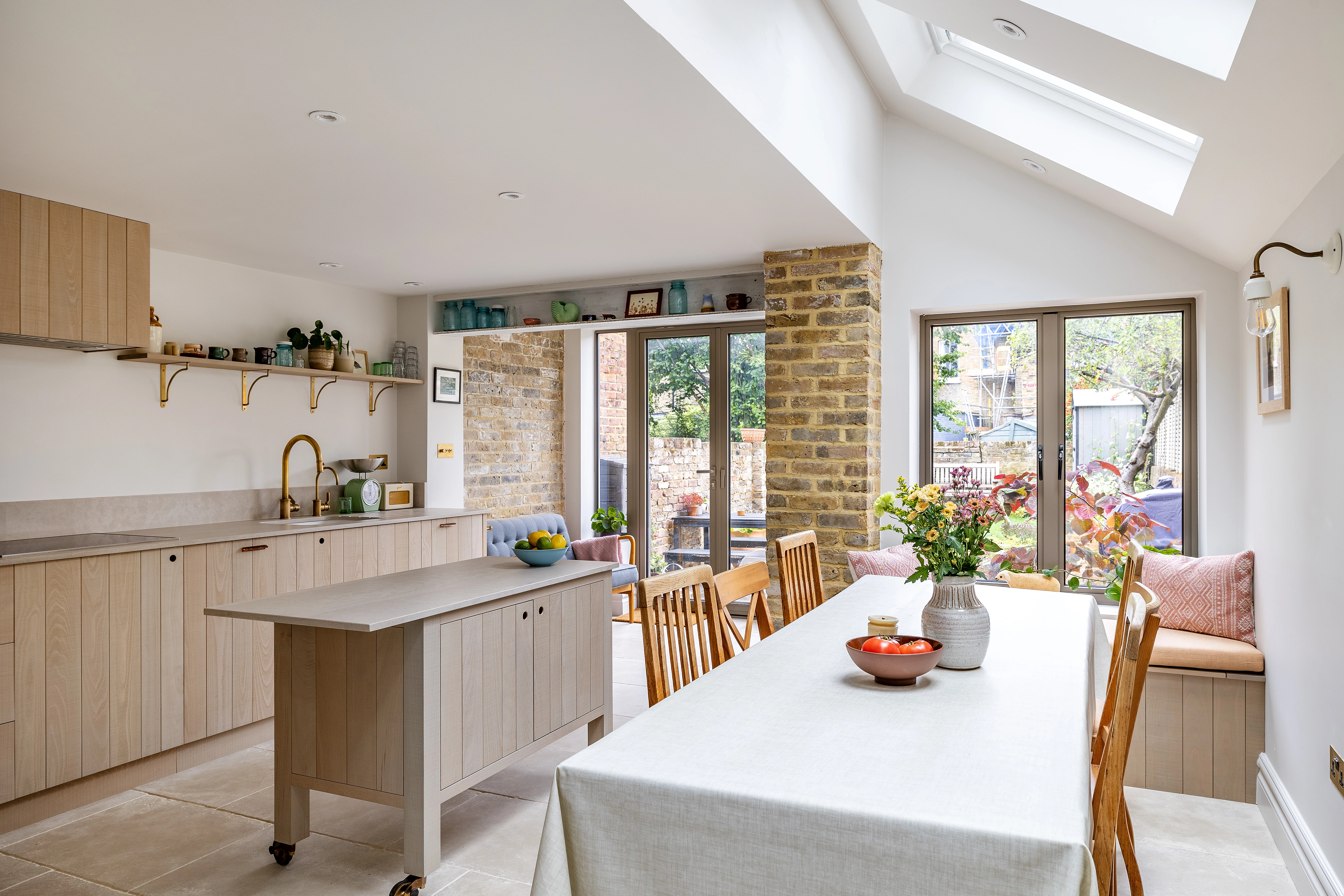
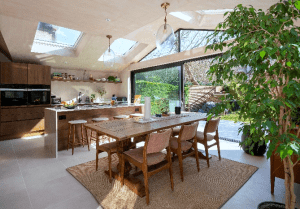
Kitchen islands are now being designed to not look so chunky and solid but to have an ‘airy island’ character that is very effective in open-plan extensions, where it is important that the kitchen space does not overwhelm everything.
Designers are now favouring legged bases rather than ones that are solid blocks and recessed plinths with integrated LED lighting.
Sustainable Sourcing and Long-Term Durability
Sustainability is no longer just about using recycled materials; it is now focused on longevity and responsibility. The choice of materials used for kitchen islands reflects this and now includes the use of:
- Sintered stone and ultra-compact porcelain
- Carbon-neutral or low-impact bio-composites
- Surfaces that are proven to be heat-proof, scratch-proof and stain-resistant
Storage to Remove Visual Clutter
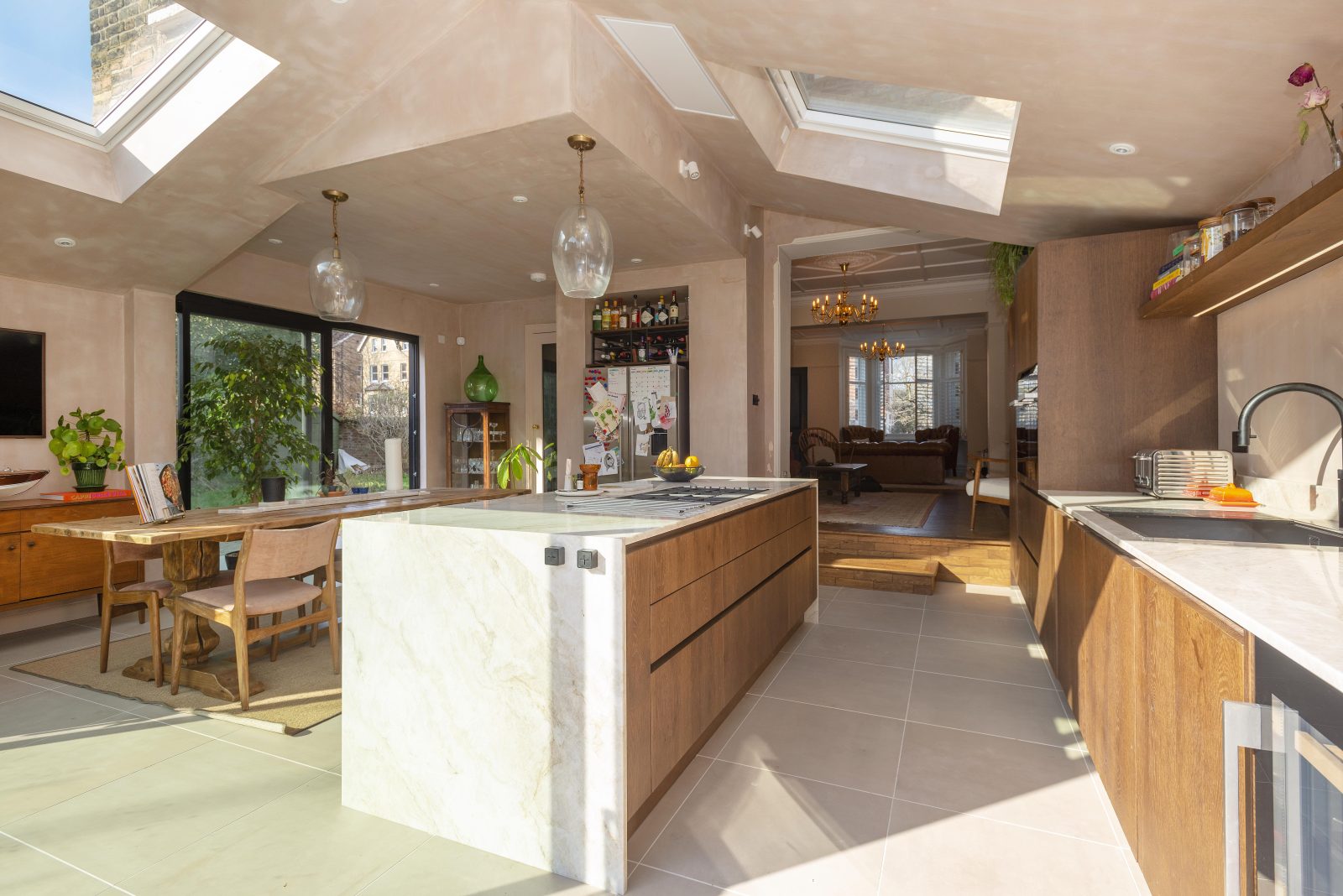
One of the most practical benefits of having a kitchen island is that it provides good storage. How this is achieved has altered as deep drawers are being used rather than cupboards, push open fronts give a perfect seamless look and storage is being well-organised and tailored to daily use.
Adding Value Without Overdesign
A well-planned kitchen island continues to add to the value of your home and is very important to most potential property buyers.
When planning the installation of a kitchen island, restraint is key.
Oversized islands are starting to feel dated, except when the kitchen is generously sized. In contrast, the new slimmer, multifunctional peninsula designs are very appealing as they work better in both period and contemporary kitchens, and they are ideal for many different lifestyles as they are about flexibility.
Final Thoughts
Consequently, kitchen islands will remain as one of the most valuable design features in a modern kitchen, but their role is evolving. In 2026, their success lies not in their size, but in their design.
Slimmer peninsula islands and runways, incorporating invisible technology, dynamic zoning, and wellness-focused features, ensure kitchens function beautifully for cooking, working, dining, and socialising. When designed with care, a kitchen island quickly becomes the heart of the home – but without dominating it.
If you’re planning a kitchen renovation or extension, BuildTeam can help you design a kitchen island or peninsula that truly works for your space, lifestyle and future needs. From layout planning to material selection and installation, our team delivers kitchens that balance beauty with performance.
Contact BuildTeam today for a tailored kitchen design quote and expert guidance. Our email: hello@buildteam.com, and our telephone: 0207 495 6561.