
The definition of “family home” is continuing to change. In London and the south-east, soaring property prices, shifting economic realities and evolving family dynamics mean that more family members are now living under one roof. In modern families, adult children are staying at home longer, elderly parents are moving in, and blended families are reshaping traditional house layouts.
The solution is not simply adding another bedroom, but rather designing a multi-generational extension. This is a self-contained annex that offers privacy, dignity and independence, whilst remaining seamlessly connected to the main home.
For homeowners considering a self-contained annex in London, this guide explores how to design it well, navigate planning requirements and future-proof your property for decades to come.
The 2026 Shift In Housing: Why Multi-Generational Living Is the New London Standard
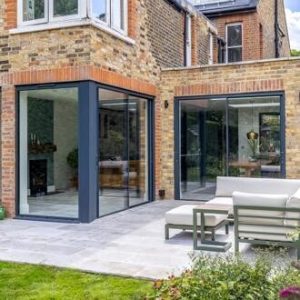
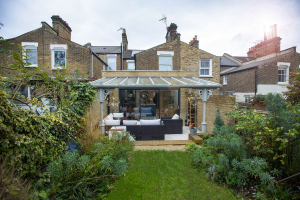
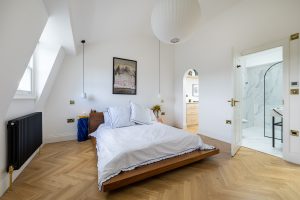
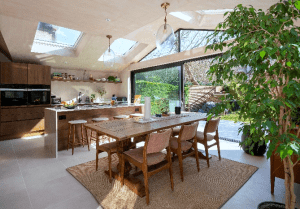
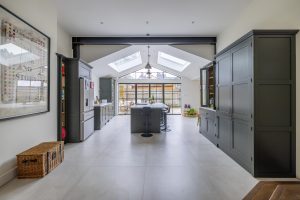
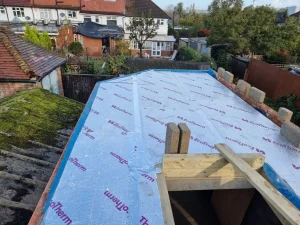
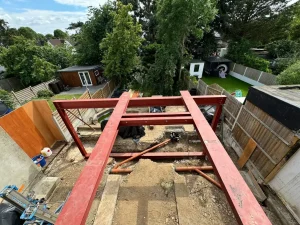
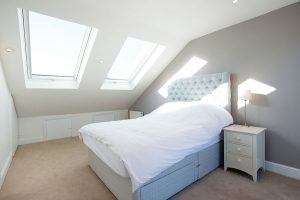
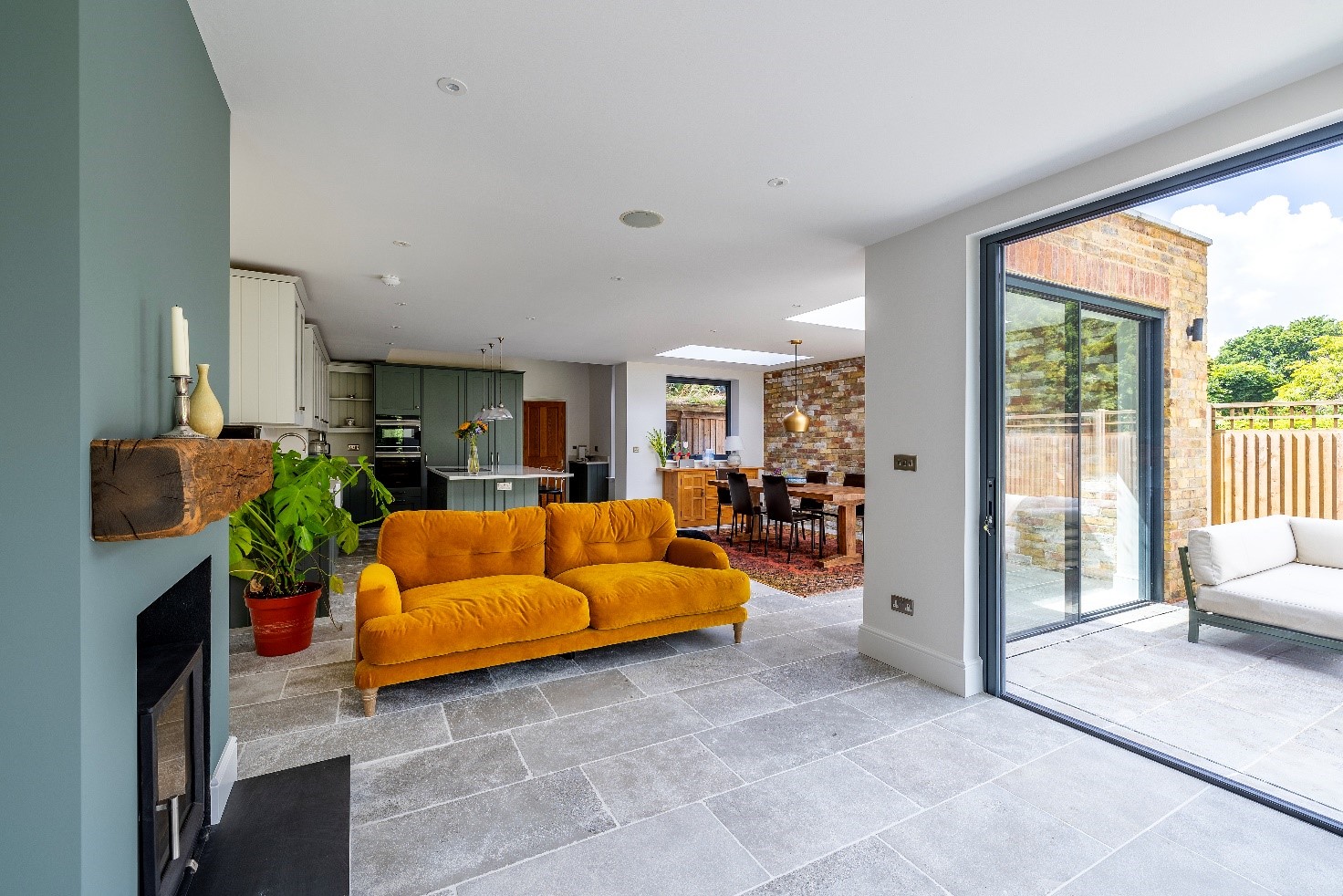
A well-designed self-contained annex is ideal for the multigenerational family. (Photograph: BuildTeam)
The buoyancy of London’s property market has fundamentally reshaped family living. Families found that to upsize, they have usually had to move further out, and this results in longer commutes, new schools, higher stamp duty and leaving established communities behind. As a result, many homeowners are now favouring to stay where they are and extend rather than relocate.
Adding a self-contained annex to your house in London is increasingly viewed as a smarter alternative to having to move house. Multi-generational living is becoming common too, as house prices prove prohibitive to adult children and older family members need support in their everyday living.
Multi-generational living brings many bonuses, including:
- Shared childcare and support
- Reduced living costs
- Emotional connection across generations
- Greater security for elderly relatives
Multi-generational living only works when the annex design prioritises autonomy, and thoughtful architectural planning has been a key factor.
Designing for Autonomy: Shared Spaces vs Private Entrances
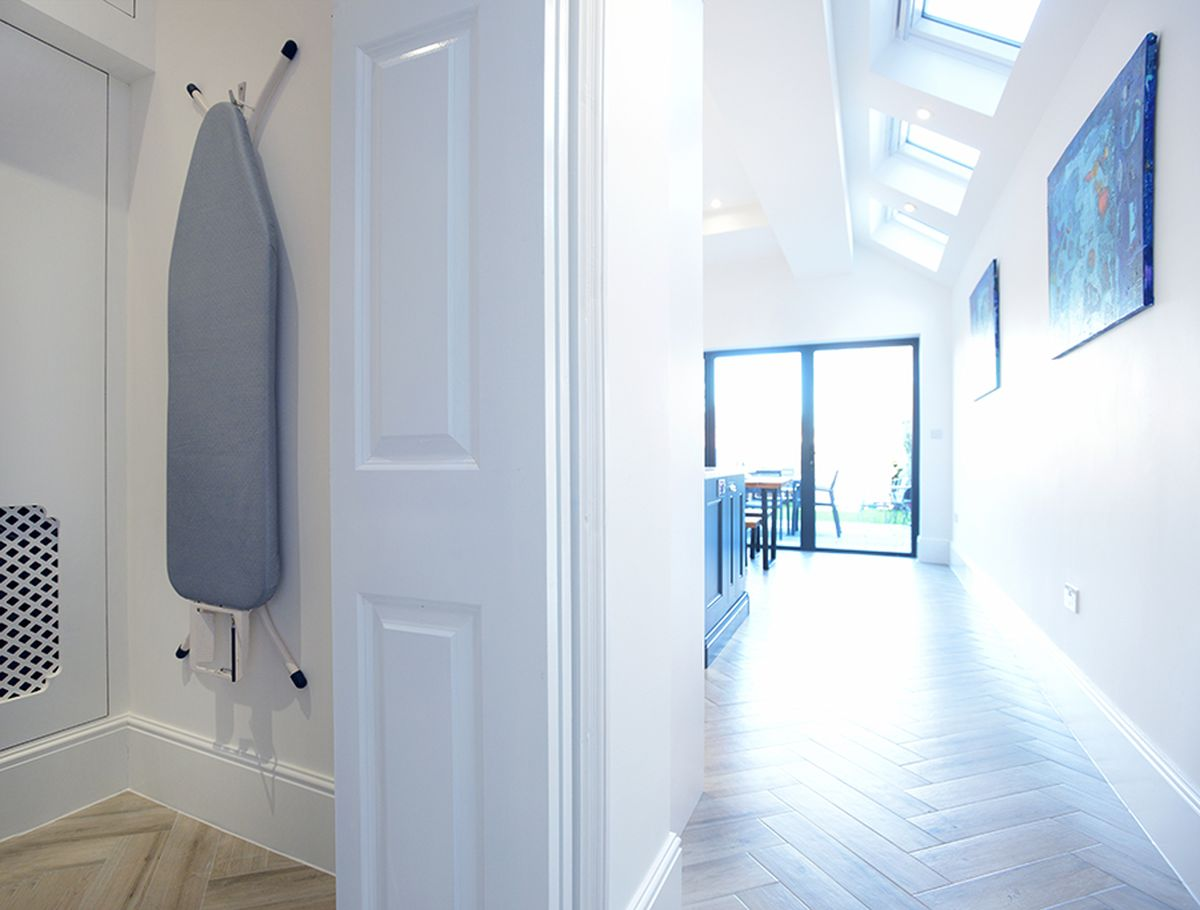
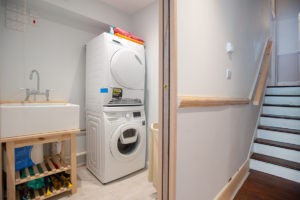
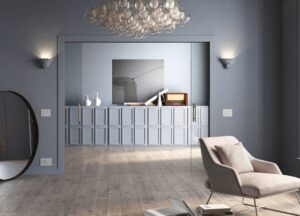
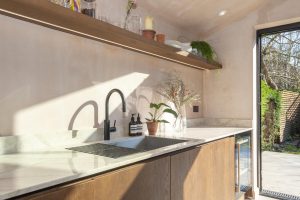
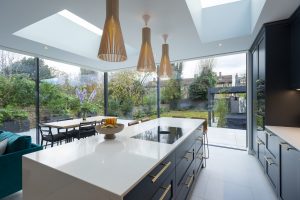
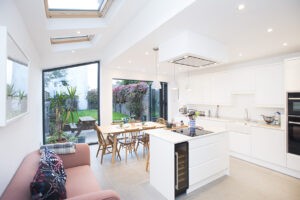
A clever design is stylish and practical, and maximises storage. (Photograph: BuildTeam)
The key to successful multi-generational house planning is achieving balance. A well-designed extension allows family members to come together when they want, whilst still retaining full independence day-to-day.
Private Access
Where possible, a well-planned self-contained annex should have:
- A separate entrance (side access or garden entry, both work well)
- An independent kitchenette for drinks and easy meal preparation.
- A private ensuite bathroom
- Dedicated living area
In a London terrace, this type of annex often takes the form of a cleverly configured side-return with an ensuite. Even subtle design features – such as a private hallway or sliding partition – can psychologically reinforce the feeling of privacy and independence.
Connected But Flexible
Internal doors linking the annex to the main house allow adaptability. When open, the space feels like part of the larger home. When closed, the annex functions independently. It is this flexibility that defines the best multi-generational extensions.
The Evolution of the Annex: A Luxury, Rather Than an Afterthought
The image of the “granny flat” is now rather outdated as it was small, dark and purely functional.
Today’s annex is an inviting, well-planned, design-led space with:
- Full-height glazing that optimises natural daylight
- Underfloor heating that is both economical and consistent
- Bespoke joinery that adds character
- Plenty of spacious integrated storage
- High-quality finishes used throughout
The annex may serve different purposes over time. It can provide Independent living for elderly parents and be the ideal suite for adult children or guests. The annex can provide the perfect workspace for hybrid working and provide a rental opportunity (subject to permissions).
A well-designed annex should not be viewed as a short-term solution, but as extra space that provides flexibility as your family dynamics and needs change and a home improvement that adds value to your property.
Protecting Privacy: Acoustic Zoning & Thermal Separation
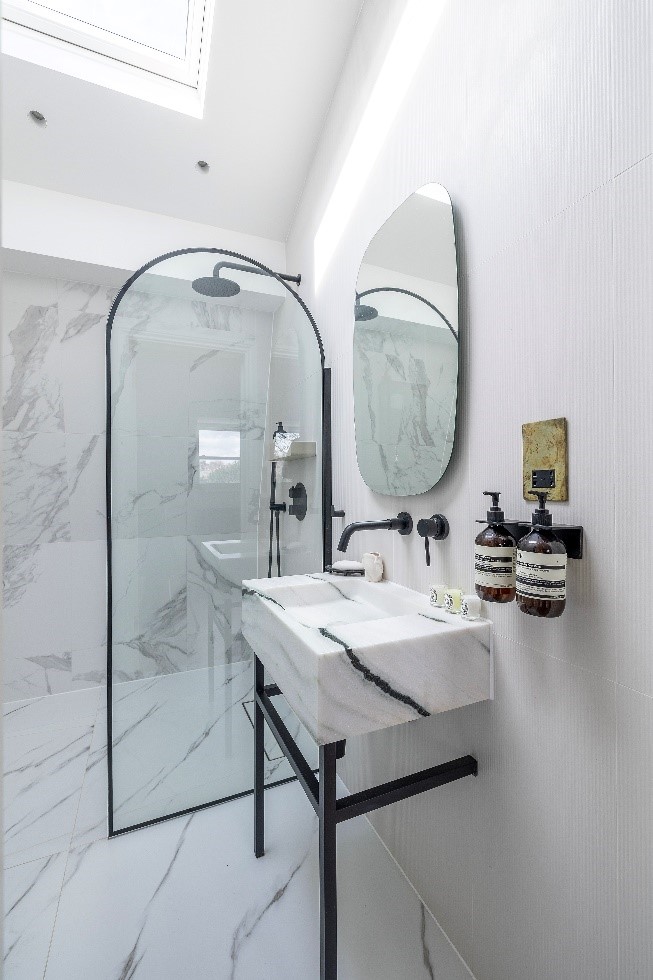
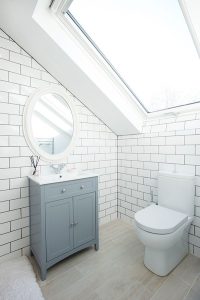
Bathrooms are well-designed with walk-in showers and good lighting. (Photograph: BuildTeam)
One of the biggest concerns in multi-generational living is the noise level. Crying babies, Late-night television, radios, and early morning alarms can all be testing to family members. To maintain family harmony, extension designs should incorporate acoustic zoning from the outset.
This can be achieved using:
- Enhanced acoustic insulation within walls and floors
- Solid-core internal doors
- Strategic room positioning (bedrooms not back-to-back)
Thermal separation is equally important. By installing independent thermostats or zoned underfloor heating systems, each generation can control its own comfort without conflict.
In high-performance builds – particularly Passive House-inspired extensions – this zoning can be seamlessly integrated at the design stage.
Understanding London Planning Requirements: What You Need to Know
When planning a self-contained annex in London, planning permission is a major consideration. Local authorities generally distinguish between an annex ancillary to the main dwelling that will be used by family members and a separate, independent dwelling unit
If the annex includes all facilities for independent living, including kitchen, bathroom, sleeping space and private entrance, it may be classified as a new dwelling, which can complicate permission. Many multi-generational extensions are successfully approved when clearly intended for family use, and they remain legally tied to the main house.
Key considerations at the planning stage include:
- Separate utility meters
- Council tax implications
- Access arrangements
- Privacy and impact on neighbours
- Parking provisions
Early consultation with the professionals at BuildTeam, who are experienced in design-and-build and familiar with the requirements of the London borough, is essential and can save time and money.
It is important to remember that whilst planning done correctly adds value to your property, poor planning can delay the project significantly.
Future-Proofing for Ageing with An Accessible Design
A well-designed annex must consider accessibility from the beginning. Even if the space is initially going to be used by an adult child, future-proofing for elderly parents -or even your own later life – is wise.
It is well worth considering the incorporation of the following features in your design plan:
- Step-free access into the annex to reduce the risk of falls
- Ground-floor living/sleeping space
- Wider doorways for wheelchair users
- Large walk-in showers
- Reinforced bathroom walls for the future installation of grab rails
- Ample natural light
The annex design need not appear clinical and lacking in character. In a good design, these features will feel seamless and elegant. Designing for the future ensures that the annex remains functional for decades, as it will easily adapt to life’s inevitable changes.
The Role of Natural Light and Wellbeing
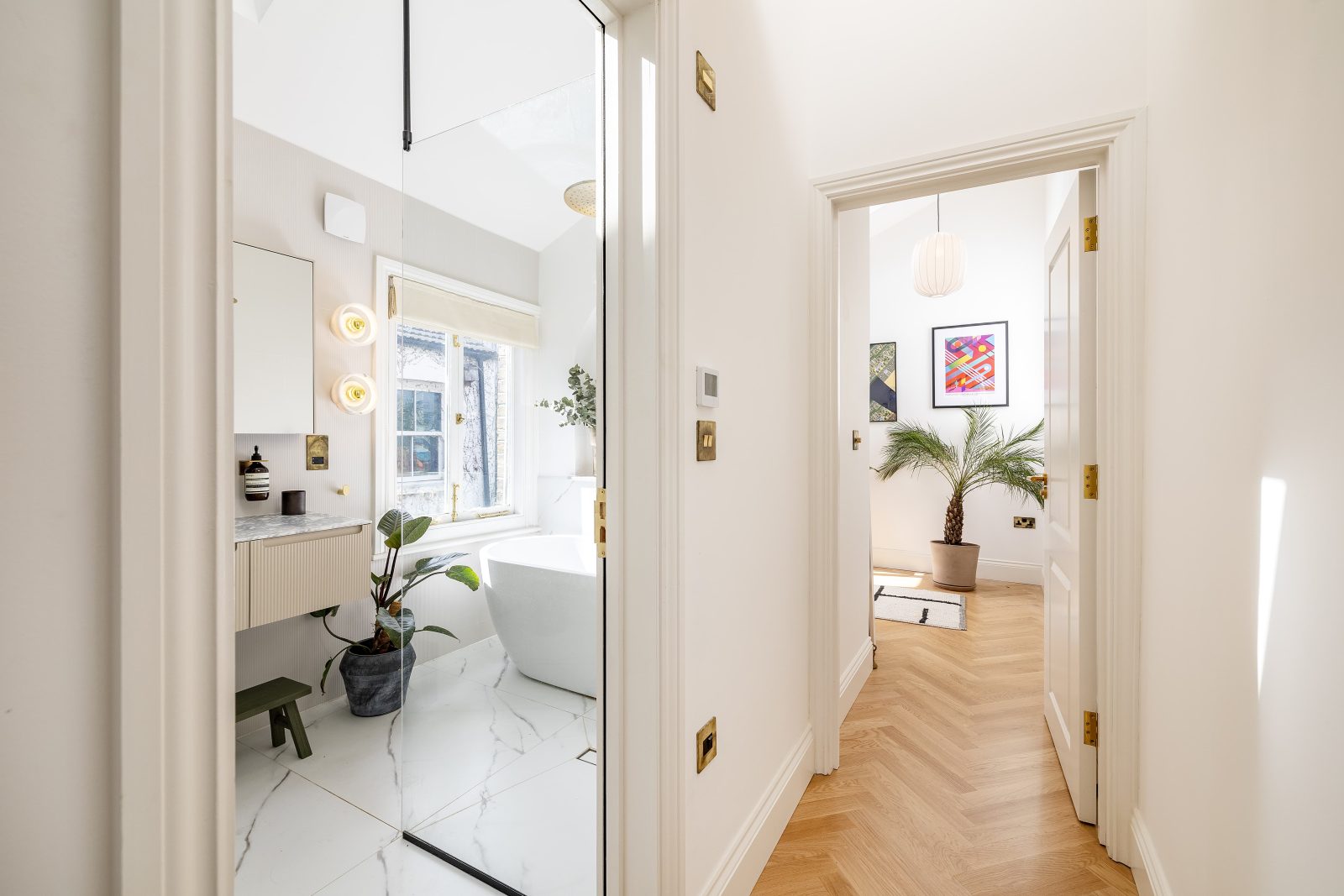
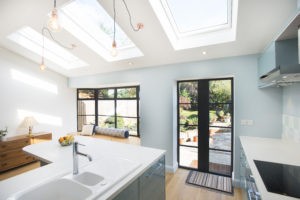
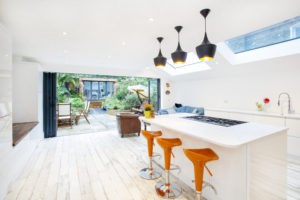
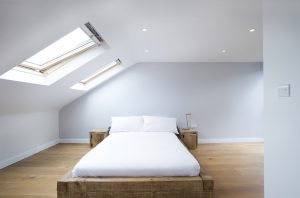
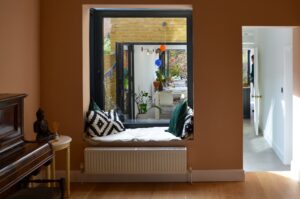
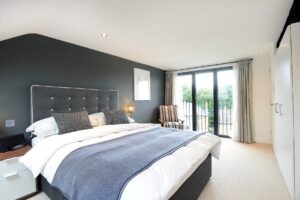
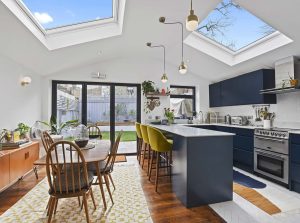
A multigenerational annex should be light, bright and very comfortable. (Photograph: BuildTeam)
Annexes should never feel secondary but should feel part of the main house. Their design should not be just about space, but also about psychology.
Maximising natural light using roof lights, corner glazing, or light wells transforms compact spaces into uplifting retreats. For elderly occupants in particular, good exposure to natural daylight supports good sleep cycles and mental health.
Biophilic elements, including timber flooring and finishes, garden views and internal planting, all enhance emotional wellbeing.
Energy Efficiency in Dual-Occupancy Extensions
A multi-generational extension doubles the living functions in a home – cooking, bathing, and heating. Without a careful and well-thought-out design, energy costs can rise sharply.
Incorporating high-performance insulation, triple glazing and efficient heating systems ensures the home remains cost-effective to run. Energy efficiency is a key requirement.
Independent heating zones allow efficient heating to operate only when it is occupied. As more homeowners adopt heat pump systems, designing annexes as part of a heat pump-ready home ensures long-term compatibility.
Maximising Property Value
As well as the many lifestyle benefits, a well-designed annex can significantly enhance property value.
In London’s competitive housing market, flexibility is a key asset. A property offering:
- A stylish self-contained suite that is energy efficient
- An annex that has multi-generational adaptability
- Offers potential rental income (subject to permissions)
will be far more attractive to future buyers.
In many cases, extending to create space for multi-generational occupancy offers better ROI than moving to a larger home – especially when factoring in stamp duty and all relocation costs.
For homeowners considering long-term investment, a well-designed and built multi-generational house plan can deliver both emotional and financial dividends.
The Future of London Living Is Adaptive
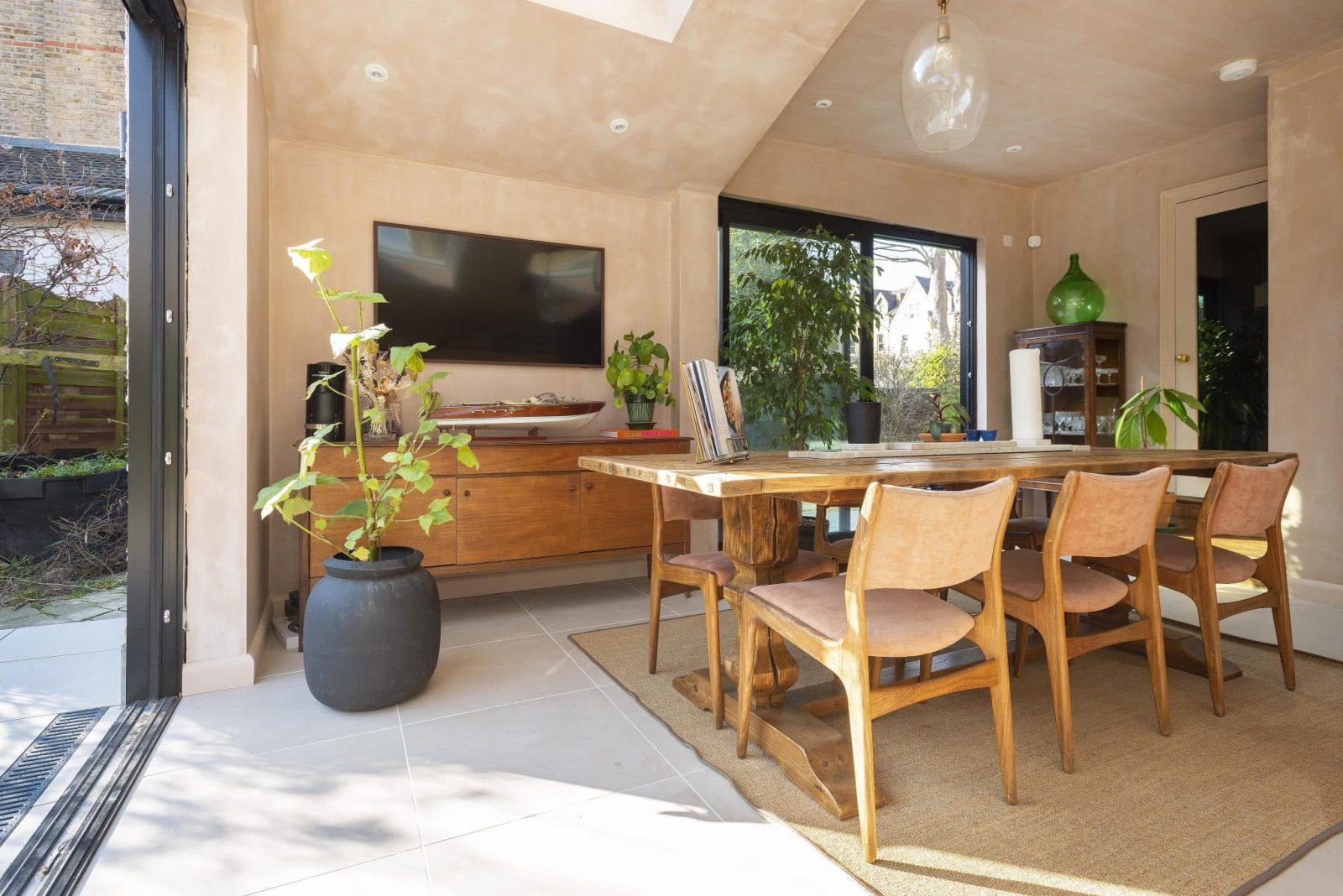
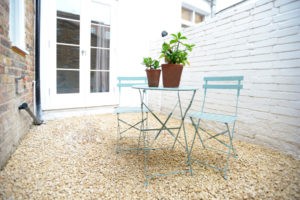
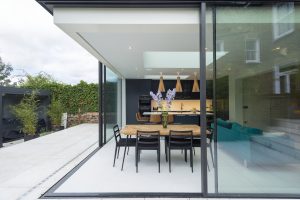
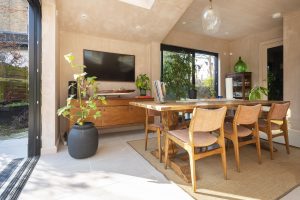
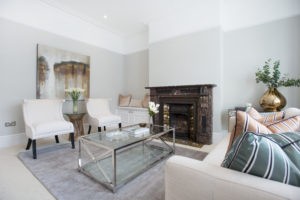
Introduce biophilic elements like wood and plenty of indoor plants. (Photograph: BuildTeam)
The most successful homes are not necessarily the largest, but they are the most adaptable and function as one household, but feel like two.
They accommodate shifting life stages without requiring repeated moves. They offer family members privacy without isolation. They also represent dignity for elderly parents and independence for adult children. The ‘Granny Annex 2.0’ is the ideal answer to modern London living.
Are You Considering a Multi-Generational Extension?
Designing a self-contained annex requires careful planning, expert design and a clear understanding of London planning policy.
At BuildTeam, we specialise in fully designing and building intelligent, future-proof extensions from side-return with ensuite layouts to fully integrated internal ADUs (Accessory Dwelling Units) across London.
If you are considering a multi-generational extension that maximises space, privacy and long-term value, why not contact BuildTeam today for a tailored consultation. Our email: hello@buildteam.com, and our telephone: 0207 495 6561.