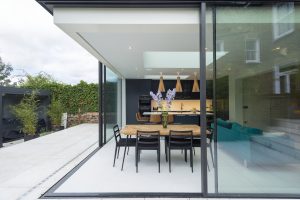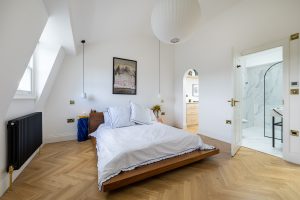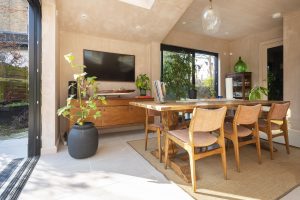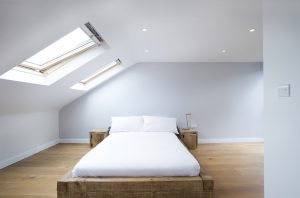

In 2026, a single-storey extension in London costs about £2,800 to £5,500+ per m² for the build, depending on specification. For a typical 20 to 30 m² rear extension that means roughly £80,000 to £150,000 all-in, once professional fees (10 to 15%), a contingency (10 to 20%) and 20% VAT are included. A small extension starts from around £55,000, and a large wraparound can pass £200,000. The figures below break this down by specification, by extension type, and line by line.
“How much does an extension cost?” is the question we are asked most, and the honest answer is that it depends on three things: the size of the extension, the specification you choose, and the type of project. A small, simple side return and a large, glazed wraparound are very different undertakings, and their costs reflect that. The good news is that you can budget with real confidence using current per-square-metre rates and typical cost ranges by project type.
This guide sets out the 2026 figures for London, where extension costs run well above the national average. It explains what a price per square metre does and does not include, gives a line-by-line breakdown of a typical quote, and covers the factors that move the final figure up or down. Throughout, the figures are indicative benchmarks for planning, not quotes, because the only way to know the cost of your project is to have it designed and priced.
How much does an extension cost per square metre in London?
Cost per square metre is the most useful starting benchmark, because it lets you compare projects of different sizes on the same basis. For the build (the structural shell plus standard internal finishes), London rates in 2026 fall into three broad tiers:
| Specification | London £/m² (build only) | What you get |
|---|---|---|
| Basic / entry | £2,800 to £3,200 | Sound, Building-Regs compliant, standard materials and fittings, flat roof, standard openings |
| Mid-range | £3,200 to £4,200 | Good-quality glazing, a rooflight, considered materials, a design that ties into the house |
| High-end | £4,200 to £5,500+ | Structural glazing or roof lantern, made-to-measure joinery, premium kitchen, underfloor heating |
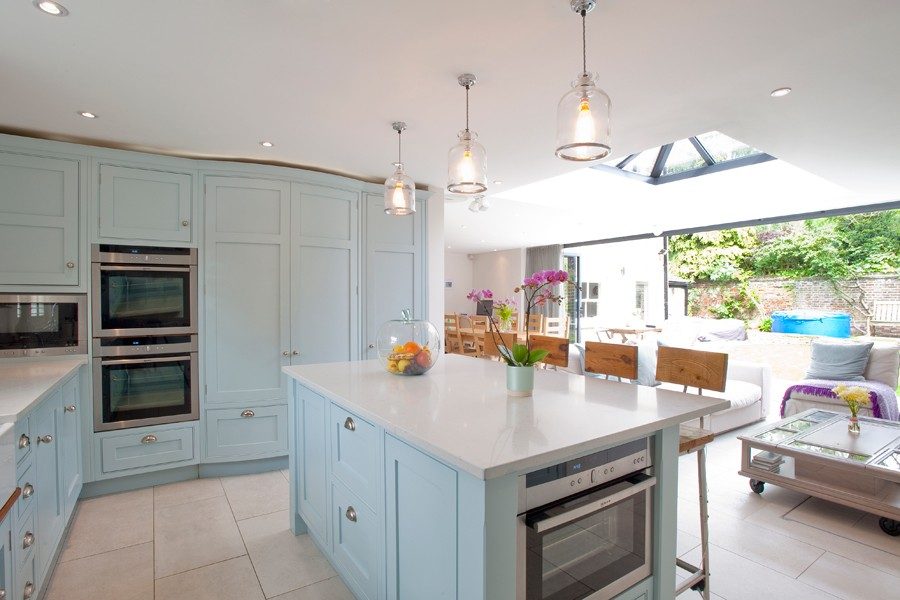
What moves a project from one tier to the next is mostly the level of glazing, the kitchen and the finishes, rather than the size. A basic rear extension with a flat roof and standard windows sits at the lower end; a full-width glazed extension with a roof lantern, premium bifolds and underfloor heating sits firmly at the top. Two extensions on an identical footprint can therefore differ by tens of thousands of pounds purely on specification.
These are build-only rates, and they exclude VAT and professional fees. They also exclude the fit-out, which we explain below. London runs roughly 20 to 40% above the UK average, where single-storey extensions are nearer £1,800 to £3,000 per m². That premium is not a London surcharge for its own sake: it reflects higher labour rates, the logistics of building on tight terraced sites where materials are often carried through the house, the unpredictable foundations of Victorian-era homes, and a planning environment that demands more professional input.
How much does an extension cost by type?
Different extension types carry different costs, and not in proportion to size. The table below shows typical all-in ranges, which include the build, professional fees and 20% VAT, but exclude kitchen units, furniture and landscaping.
| Extension type | Typical size | All-in cost (London, 2026) |
|---|---|---|
| Small single-storey | 10 to 15 m² | £55,000 to £95,000 |
| Side return | 10 to 15 m² | £55,000 to £140,000 |
| Rear / kitchen | 20 to 30 m² | £80,000 to £150,000 |
| Wraparound (L-shaped) | 25 to 40 m² | £130,000 to £250,000+ |
| Double-storey | 40 to 60 m² | £120,000 to £220,000+ |
| Loft conversion | 25 to 35 m² | £45,000 to £100,000+ |
A side return extension is the most expensive of the single-storey types per square metre. Its small footprint spreads the fixed costs of any extension, the foundations, a steel beam, drainage and building control, over fewer square metres, and it usually involves tight access down the side of a terrace and the premium glazing that makes a narrow space feel open. A rear or kitchen extension is the most common London project and offers a better rate per square metre, while a wraparound combines a side return and a rear extension into the largest single-storey footprint, with more steel, more complex roof junctions and, almost always, a full planning application.
A double-storey extension is the best value per square metre, because the foundations and the roof, the two most expensive structural elements, are shared across two floors rather than built for one. A loft conversion is a different route again: it adds a bedroom and bathroom within the existing roof without extending the footprint, which is why it is often the most cost-effective way to add a bedroom. For a full treatment of loft figures, see our guide to planning your loft conversion costs.
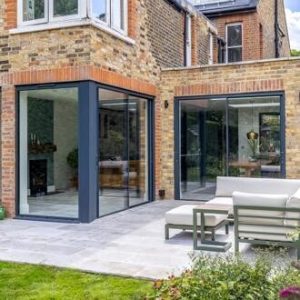
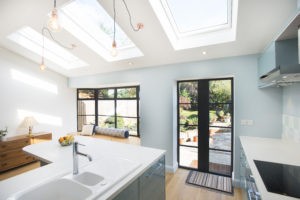
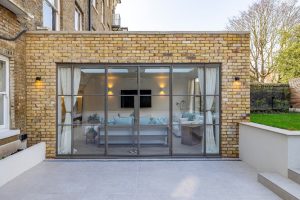
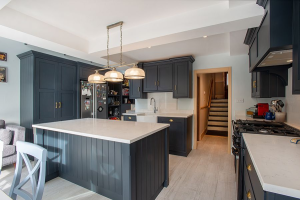
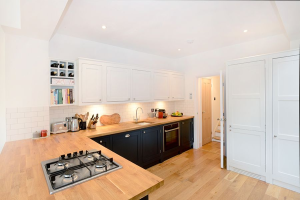
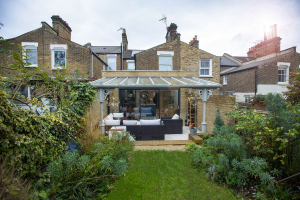
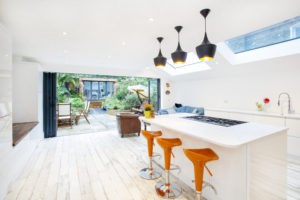
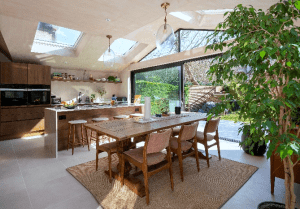
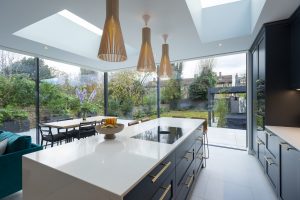
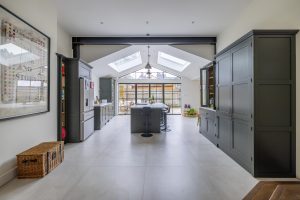
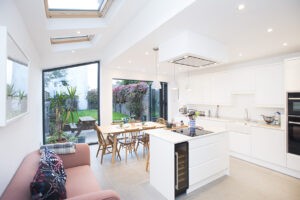
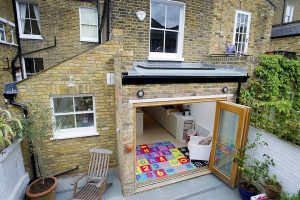
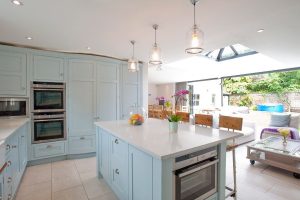
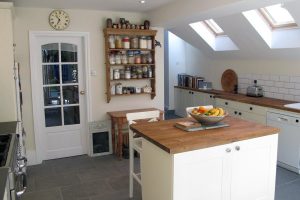
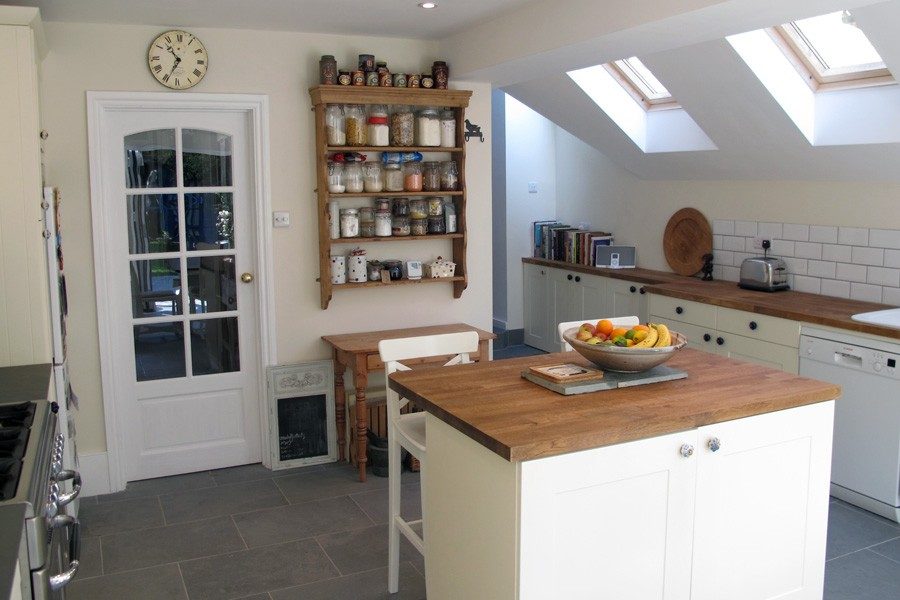
We have designed and built extensions of every type across London, and seeing finished work is the clearest way to judge what a budget buys. Our completed projects include a wraparound in Stroud Green, where a partially pitched roof was used to lower the height on the neighbour’s side while keeping a tall living space inside, a rear kitchen extension in East Dulwich lit by a large rooflight, and a side-and-rear extension in Battersea designed as an alternative where the local council was cautious about full wraparounds. You can browse finished extensions, with photographs, in our project gallery.
Real extension projects we have completed in London
We have completed more than 1,750 projects across London, of every type in the table above. Seeing real sizes and boroughs is the clearest way to picture what a budget buys. A sample, with their plans:
| Plan | Street | Area | Type | Size |
|---|---|---|---|---|
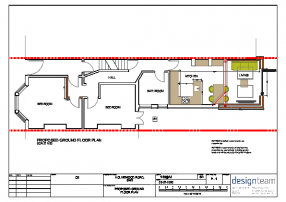 |
Holmewood Road | SW2 (Brixton) | Side return | 9 m² |
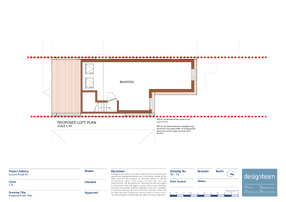 |
Sussex Road | E6 (East Ham) | Rear / kitchen | 22 m² |
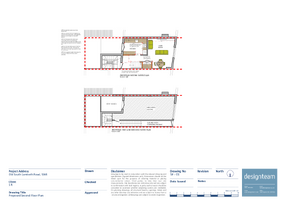 |
Old South Lambeth Road | SW8 (Nine Elms) | Rear / kitchen | 30 m² |
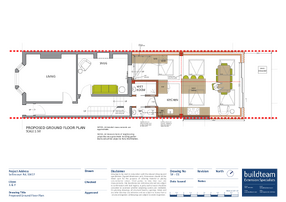 |
Sellincourt Road | SW17 (Tooting) | Rear / wraparound | 42 m² |
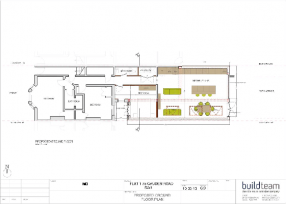 |
Gauden Road | SW4 (Clapham) | Loft | 15 m² |
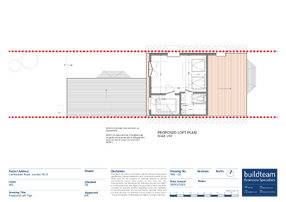 |
Combedale Road | SE10 (Greenwich) | Loft | 18 m² |
How much does a small extension cost?
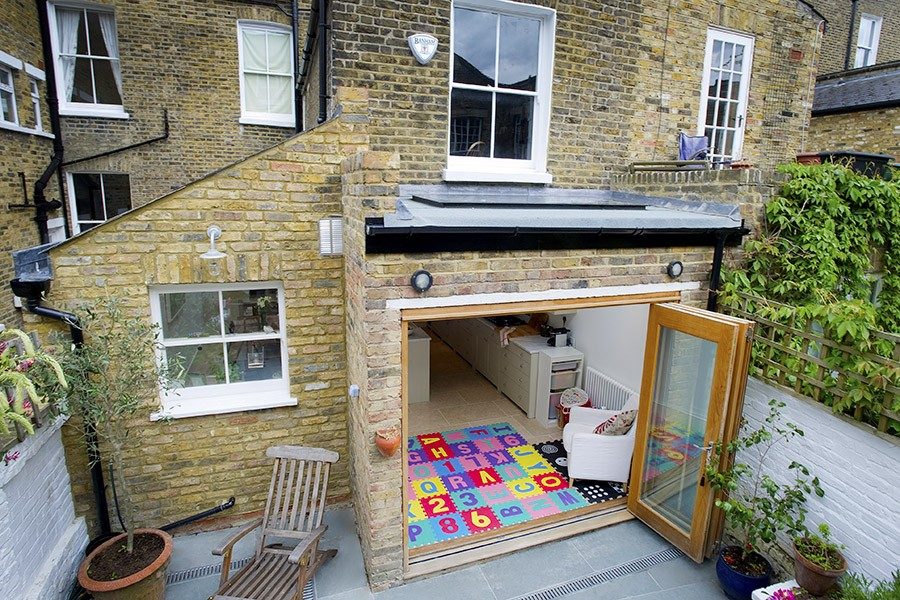
A small extension of 10 to 15 m² costs from around £55,000 to £95,000 all-in in 2026, depending on specification and glazing. The reason a small extension does not cost proportionally less than a large one is that it still carries the same fixed costs: the foundations, a structural steel beam, drainage connections, building control and professional fees all have to be paid whether the extension is 12 square metres or 30. The per-square-metre rate is therefore higher on a small project, even though the total is lower.
That said, a small, well-designed extension is frequently the most cost-effective way to open up a cramped kitchen. Adding even a few square metres to the side return of a terrace, and opening it through to the existing kitchen, can turn a dark galley into an open-plan kitchen-diner. The value is in the layout the extra space allows, not the floor area alone.
What is included in the price per square metre?
This is where many quotes are misread, and where two builders’ prices can look very different for the same job. A per-square-metre rate usually covers the “shell and core”: the foundations, the structure, the walls, the roof, the windows and external doors, all made watertight, plus first-fix electrics and plastering. It is the extension as a finished, weatherproof, plastered room ready to decorate.
What the rate does not include is the fit-out: the kitchen, the flooring, the bathroom if you are adding one, and the final decoration. These are costed separately and can add £20,000 to £60,000 or more, with the kitchen alone running from £15,000 to over £50,000. When you compare two quotes, the single most important check is whether each figure is build-only or all-in, and whether it includes VAT. A quote that looks cheaper is often simply a quote that excludes more.
“The single biggest reason a London extension budget slips is comparing a build-only quote with an all-in one and assuming the cheaper number is the real cost. We price every job all-in and fixed before work starts, so the figure you agree is the figure you pay.”
Dan Davidson, Founder, Build Team
What does an extension cost, line by line?
A clear, trustworthy quote breaks the cost into its parts rather than presenting a single lump sum. Here is a realistic 2026 breakdown for a single-storey London extension:
| Cost element | 2026 figure (London) |
|---|---|
| Design fees | 8 to 15% of build cost (or a fixed design fee) |
| Planning application (if needed) | £548 (England householder fee, from April 2026) |
| Structural engineer | £1,500 to £4,000 |
| Construction (shell) | the bulk, at £2,800 to £5,500 per m² |
| Fit-out (kitchen, flooring, glazing) | £20,000 to £60,000+ |
| Bifold doors (aluminium, supply and fit) | £3,150 to £7,200 |
| Roof lantern or structural rooflight | £2,000 to £5,000 each |
| Building control | £500 to £1,500 |
| Party wall surveyor (per neighbour) | £800 to £2,000 |
| VAT | 20% on the whole project |
| Contingency | 10 to 20% of the total |
To put those numbers together, take a mid-specification side return of around 18 m². The shell at roughly £3,700 per m² comes to about £66,600. Professional fees at around 12% add close to £8,000, giving £74,600 before tax. Add 20% VAT and the figure is around £89,500, and that is before the kitchen, flooring and decoration, which a homeowner usually supplies separately. A worked example like this is the most honest way to understand a quote, because it shows where the money actually goes.
For help judging whether a quote is realistic and what a good one should contain, read our guide to getting a realistic builder’s quote. If you are working out how to pay for the project, our guide to funding and budgeting a home extension covers the options.
What affects the cost of an extension?
On the same footprint, two extensions can differ by tens of thousands of pounds. Understanding the main drivers helps you decide where to spend and where to save. In rough order of impact:
- Specification: the single biggest variable. The gap between a basic flat-roof box and a glazed, lantern-and-bifold kitchen on the same footprint can exceed £70,000.
- Glazing: bifolds, roof lanterns, structural glass and Crittall-style screens are some of the most expensive elements per unit, and they push the rate toward the top of the range. The roof itself matters too, as our guide to flat versus pitched roofs explains.
- Kitchen quality: from £15,000 to over £50,000, and the line homeowners most often underestimate.
- Groundworks and foundations: standard foundations are straightforward, but deeper ones near trees or in clay soil, or piled foundations, can add several thousand pounds.
- Site access: a terrace with no rear access means every load is carried through the house, which adds labour time and cost.
- Structural steel: the amount of steel needed is a major driver, and steel prices have risen sharply through 2026.
- Borough: inner and prime London boroughs sit 10 to 20% above outer London.
Because input costs, particularly labour and steel, have continued to rise in 2026, a fixed-price contract agreed before work starts is the surest way to protect your budget from mid-project increases. It also makes the comparison between builders meaningful, because you are comparing committed prices rather than moving estimates.
Is an extension cheaper than moving?
For many London homeowners, yes. The average cost of moving home in London is now around £32,786, the bulk of it stamp duty, estate agent fees and conveyancing. None of that money adds space or value; it is the cost of the transaction itself. The April 2025 stamp duty changes made moving more expensive still, with the nil-rate threshold reverting to £125,000, so most movers now pay more than they would have a year earlier.
A comparable sum spent on an extension does the opposite: it adds usable space and, in most cases, value to the property. Nationwide’s research found that adding a double bedroom and a bathroom through an extension or loft conversion can add as much as 24% to the value of a three-bedroom house. An extension also lets you stay in the home and the area you already know, which is why so many London families now choose to improve rather than move.
How can I estimate my extension’s cost?
The fastest way to a realistic figure for your own project is to use our online extension cost calculator, which gives an instant estimate based on your size and specification. It is a starting point rather than a fixed quote, but it grounds your budget in current London rates. For a price tailored to your home, book a free design and planning consultation and we will give you a clear, itemised, fixed quote before any work begins.
Frequently asked questions
How much does an extension cost in London in 2026?
About £2,800 to £5,500+ per m² for the build, giving all-in totals of roughly £80,000 to £150,000 for a typical 20 to 30 m² rear extension once fees, contingency and 20% VAT are added.
How much does a small extension cost?
A small 10 to 15 m² extension costs from around £55,000 to £95,000 all-in. The per-square-metre rate is higher than a larger extension because the fixed costs are spread over fewer metres.
How much does a side return extension cost?
Typically £55,000 to £140,000 all-in, with most projects between £65,000 and £95,000. Side returns cost more per m² than larger rear extensions because of their complexity and tight access.
How much does a wraparound extension cost?
A wraparound (L-shaped) extension of 25 to 40 m² typically costs £130,000 to £250,000+ all-in. It has the largest single-storey footprint and the most complex structure, and almost always needs planning permission.
What is included in the cost per square metre?
Usually the shell and core: foundations, structure, walls, roof, windows and external doors, made watertight, plus electrics and plastering. It excludes the kitchen, flooring and decoration, which can add £20,000 to £60,000 or more.
Does an extension add value to a London home?
Typically 5 to 10%, and up to 24% where it adds a double bedroom and bathroom, according to Nationwide. An extension also avoids the roughly £32,786 cost of moving home in London.
Do I pay VAT on an extension?
Yes. Most extension work is standard-rated at 20% VAT. Builder quotes are often shown excluding VAT, so always confirm whether a figure includes it.
Get a fixed price for your extension
Build Team is a London design and build extension specialist, trusted by more than 1,750 London homeowners. Use our instant calculator for a quick estimate, or book a free consultation for a clear, fixed price agreed before work starts.
Or call 020 7495 6561 · email hello@buildteam.com