
A fully insulated garden office in London costs roughly £16,000 to £35,000+ in 2026, at about £1,500 to £2,500 per m², including the base, insulation, glazing, certified electrics and installation. A small basic office starts from around £8,000, and a large made-to-measure one can pass £45,000. Most garden offices do not need planning permission, because they are permitted development, but London conservation areas and flats are the common exceptions. A garden office typically costs about half the price of a rear extension and can add an estimated 5 to 15% to a home’s value.
Since home and hybrid working became normal, the garden office, sometimes called a garden room, has gone from a luxury to one of the most requested projects in London. It gives you a dedicated, quiet place to work a few steps from the back door, without losing a bedroom indoors or taking on the cost and upheaval of an extension. This guide sets out what a garden office really costs in London in 2026, when you need planning permission, how to build one that is comfortable all year, and whether it adds value, using current figures and the planning rules as they stand.
Build Team designs and builds garden offices alongside our extension and loft work, so the advice below is based on how these projects are actually costed and built in London, not on flat-pack brochure prices.
How much does a garden office cost in London?
A garden office in London costs between £16,000 and £35,000 all-in for a proper year-round room in 2026, with most projects landing around £20,000 to £28,000. The figure depends mainly on size and specification. London runs above the UK average, where the same office is nearer £12,000 to £30,000, because labour and access cost more in the city. The table below sets out the three tiers:
| Specification | Typical size | London all-in cost, 2026 |
|---|---|---|
| Basic insulated office | 6 to 9 m² | £8,000 to £15,000 |
| Mid-range (electrics, double glazing, plastered finish) | 9 to 15 m² | £16,000 to £30,000 |
| High-end, made-to-measure | 12 to 20 m² | £30,000 to £45,000+ |
As a rule of thumb, a London garden office, or garden room, works out at about £1,500 to £2,500 per m² once the base, insulation, glazing, electrics and finishes are included. The cheapest advertised pods, below £8,000, are usually shells that still need insulation and power added before they are usable in winter, so treat those headline prices with care. It is worth comparing the figure against the alternatives: a rear extension in London costs roughly £40,000 to £80,000 or more, so a garden office is broadly half the cost for a dedicated room.
What does a garden office cost, line by line?
A clear quote breaks the cost into its parts rather than giving a single lump sum. Here is a realistic 2026 breakdown for a London garden office:
| Cost element | 2026 London figure |
|---|---|
| Base and foundations (concrete pad or ground screws) | £750 to £3,000 |
| Insulated shell (walls, roof and floor) | the bulk of the build |
| Glazing and doors | £700 (patio doors) to £3,300+ (aluminium bifolds) |
| Electrics (armoured cable, consumer unit, Part P certified) | £1,500 to £3,000 |
| Cladding (cedar, larch or composite) | varies by material |
| Heating and cooling | £300 to £2,000+ |
| Broadband and data | around £500 |
| Delivery and installation | £2,000 to £5,000 |
| VAT | 20% |
The biggest swing comes from glazing and finishes. A large set of bifold doors looks the part but is the weakest point for heat loss and one of the most expensive single items, so it is a choice to make on purpose rather than by default. Access matters in London too: a terraced garden with no side return means every load of materials is carried through the house, which adds labour time.
Do I need planning permission for a garden office?
Usually not, but the exceptions catch a lot of London homeowners. A garden office is treated as an outbuilding and is normally permitted development, which means no planning application, as long as it meets all of these conditions:
- It is single-storey, with a maximum eaves height of 2.5m.
- The overall height is no more than 4m for a dual-pitched roof, or 3m for any other roof.
- If it sits within 2m of a boundary, the whole building is capped at 2.5m high. This is the rule that forces a flat roof on most small London gardens.
- It sits behind the front of the house, not forward of the principal elevation.
- All outbuildings and extensions together cover no more than half the original garden.
- It is used for a purpose incidental to the house, and not as self-contained living accommodation.
The London catches are the ones to check first. In a conservation area, an outbuilding to the side of the house is not permitted development and needs an application. On designated land, anything more than 20m from the house is capped at 10 m². Flats and maisonettes have no permitted development rights at all, and an Article 4 direction, common in inner London, can remove the rights entirely. Conservation areas alone cover a large share of inner-London streets, so do not assume. Before you spend anything, check your specific address. You can use our permitted development and Article 4 checker to see what is likely to apply, then confirm with your council.
Even when your office is permitted development, it is worth applying for a Lawful Development Certificate, which costs £129 and gives you legal proof that the building is lawful. It is cheap insurance that makes a future sale simpler. A full householder planning application, if you need one, costs £258.
Do garden offices need building regulations?
Building regulations are separate from planning, and for most garden offices they do not apply. The thresholds are based on floor area and use:
- Under 15 m²: normally exempt, provided there is no sleeping accommodation.
- 15 to 30 m²: exempt if it is at least 1m from any boundary, or built mainly of non-combustible materials, and again has no sleeping accommodation.
- Over 30 m²: building regulations always apply.
Two points always apply whatever the size. Any sleeping accommodation triggers building regulations, so an office that doubles as a guest room is treated differently. And all electrical work must comply with Part P and be certified by a qualified electrician, which covers the armoured cable from the house and the consumer unit in the office.
How do you make a garden office usable all year?
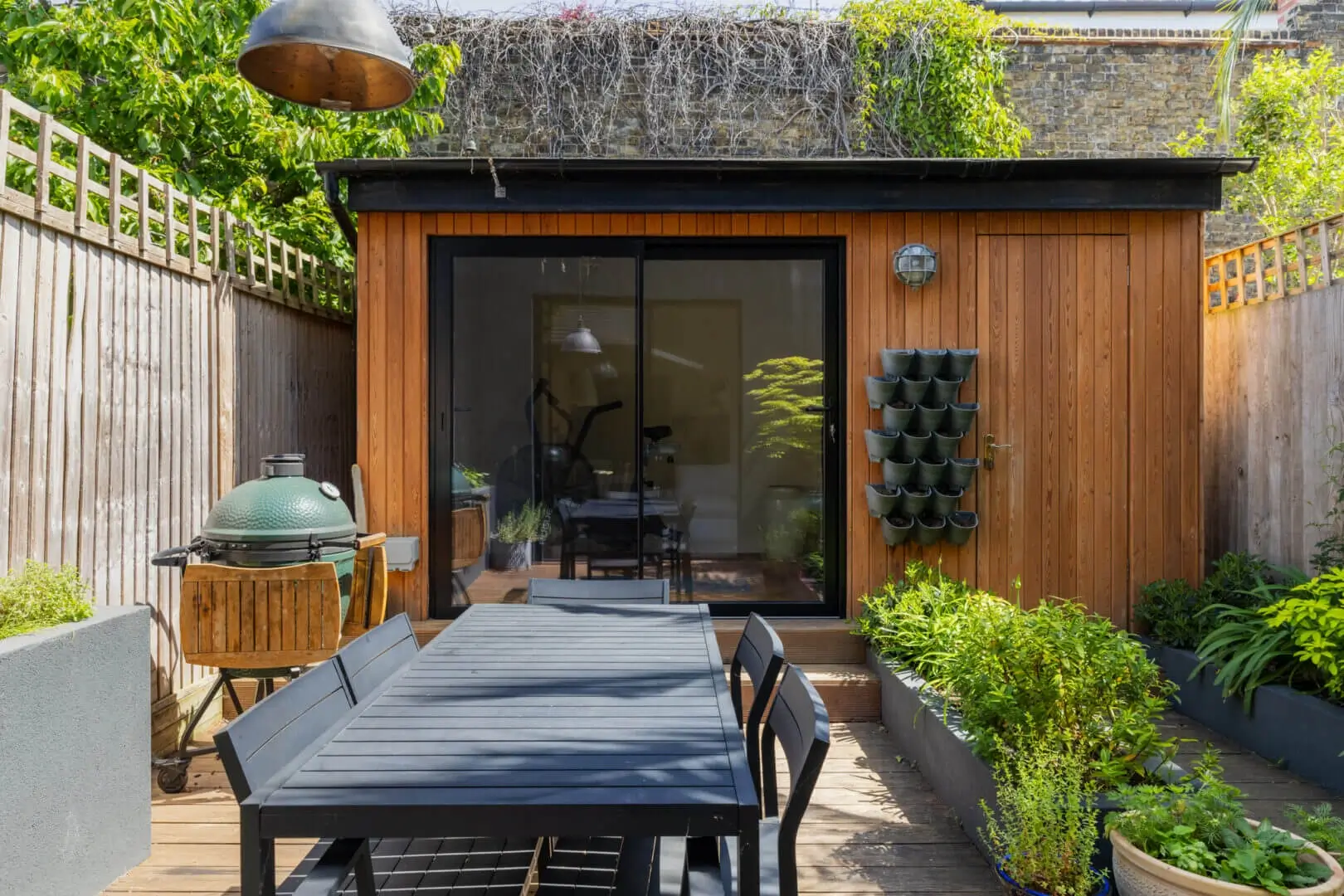
Whether you use the room every day or give up on it in January comes down to insulation and power. A garden office built for year-round use should have:
- Full insulation on all six sides, typically rigid PIR boards, with double glazing. This is the single biggest factor in whether the room is comfortable in winter and summer.
- A vapour control layer and ventilation, to stop condensation and protect the equipment you keep in there all year.
- Heating and cooling, from a simple panel heater on a timer for occasional use, up to underfloor heating or an air-conditioning unit that also cools in summer.
- Certified electrics, a buried armoured cable from the house to a dedicated consumer unit, with enough sockets, lighting and data points.
- A solid base, either a concrete pad or ground screws. Ground screws are quick and work well where tree roots are protected, which is common in leafy London conservation areas.
- Soundproofing and reliable internet, which matter if you are on video calls all day. A wired connection or a good mesh point beats relying on the house wifi reaching the bottom of the garden.
Garden office or extension: which is right for you?
If you only need a quiet, dedicated place to work, a garden office is usually the better value. It is around half the cost of a rear extension, far quicker to build, and far less disruptive, often days or weeks on site rather than months. The trade-off is that it sits in the garden and does not add living space to the house itself. If you need an extra bedroom, a bigger kitchen or open-plan family space, an extension or a loft conversion adds more value and integrates into the home, which is why those projects tend to repay their cost more reliably. Our guides to how much an extension costs and to loft conversion costs set out those figures so you can compare like for like.
Does a garden office add value?
Usually yes, though the honest answer is that the daily use matters more than the resale figure. Studies put the uplift at roughly 5 to 15% of a property’s value, and one widely reported study found an average of 8.4%, about £22,739. The bigger return for most people is practical: a dedicated workspace, a clear line between work and home, and the saved time and cost of commuting. Demand sits behind this. More than a quarter of workers in Great Britain were hybrid in early 2025, according to the Office for National Statistics, and the number of property listings mentioning a garden office or garden room has risen sharply over the past decade. If you are weighing the value, check with a local agent whether buyers in your area pay a premium, because every London street has a ceiling price.
How Build Team can help
Build Team designs and builds garden offices in London as part of our wider design and build service, with the same approach we bring to extensions: a proper insulated structure, certified electrics, and a design that suits the house and garden rather than a flat-pack box dropped on the lawn. We handle the planning question, the base, the build and the finish, and we price the work all-in and fixed before it starts.
“Most of what makes a garden office work is hidden once it is finished, the insulation, the way it is ventilated and how the power is run from the house. We often see people spend on the cladding and the doors and save on those, and then the room is too cold to use by the time winter comes.”
David Abimbola, Head of Design, Build Team
Frequently asked questions
Do I need planning permission for a garden office in London?
Usually not, because a garden office is permitted development if it is single-storey, within the height limits, behind the front of the house and used incidentally. You will need permission if you live in a flat, the building is to the side of the house in a conservation area, an Article 4 direction applies, or the property is listed.
How much does a garden office cost in London in 2026?
About £16,000 to £35,000 all-in for a year-round insulated office, at roughly £1,500 to £2,500 per m². A small basic office starts from around £8,000, and a large made-to-measure one can pass £45,000.
Does a garden office add value to a London home?
Typically 5 to 15% of the property’s value, with one study finding an average of 8.4%, around £22,739. The main benefit for most owners is the daily use rather than the resale figure, so check whether buyers in your area pay a premium.
Can I sleep in a garden office?
Not under the standard exemptions. Any sleeping accommodation triggers full building regulations whatever the size, and can change the planning position, because the building must stay incidental to the house rather than become separate living accommodation.
Do garden offices need building regulations?
Generally no under 15 m², and not between 15 and 30 m² if it is at least 1m from the boundary or built of non-combustible materials and has no sleeping accommodation. Over 30 m² they always apply, and the electrics always need Part P certification.
Can I run a business from my garden office?
Yes, if it stays incidental, meaning you working there yourself. A business with regular client visits, deliveries or staff, or one that creates noise or traffic, can need planning permission, because the house must remain mainly a home.
Thinking about a garden office?
Build Team is a London design and build specialist, trusted by more than 1,750 London homeowners. We design and build garden offices made for year-round use, with a clear, fixed price agreed before work begins. Book a free consultation to talk through your garden and your budget.
Or call 020 7495 6561 · email hello@buildteam.com