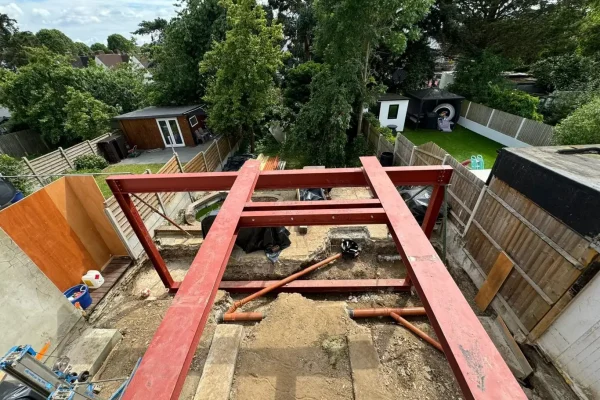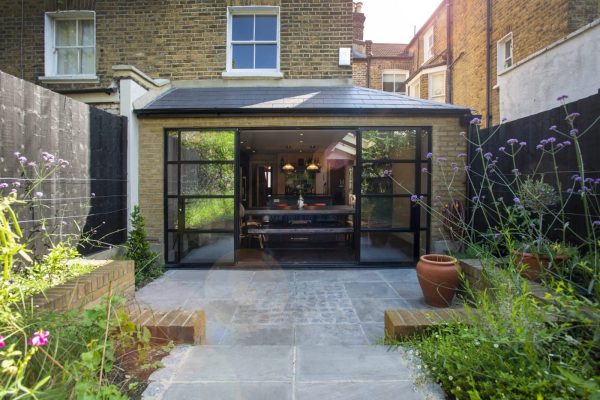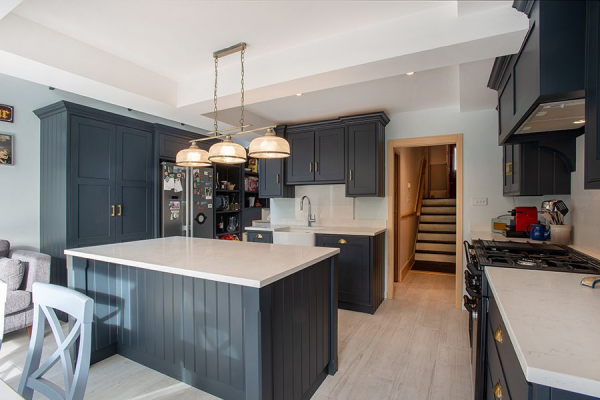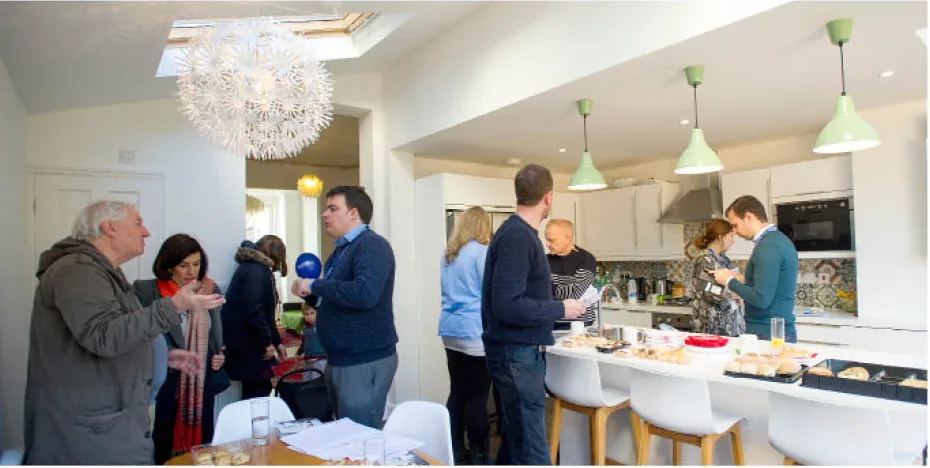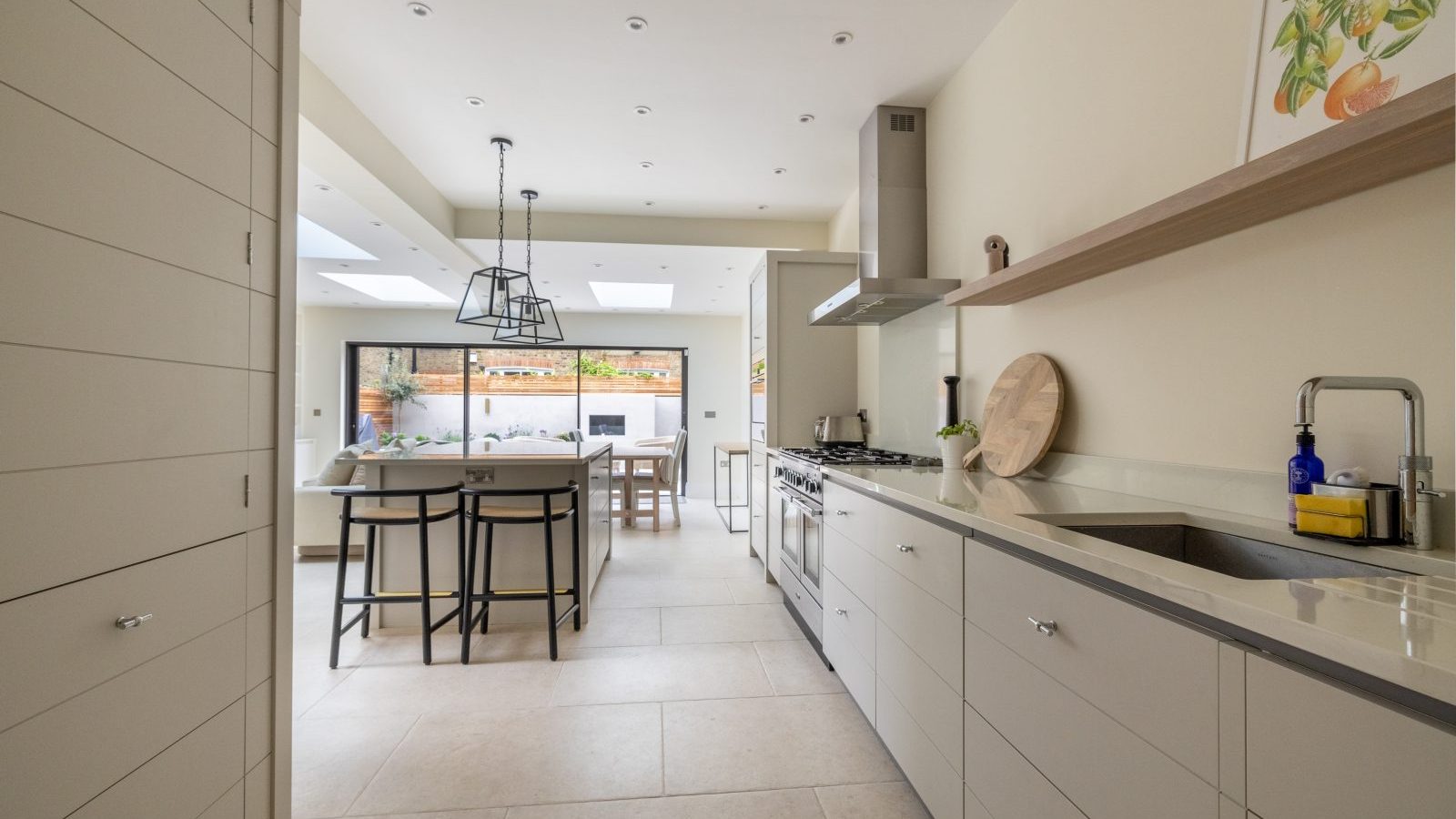
In 2026 a single-storey extension in London costs £75,000 to £250,000 all-in, including the kitchen, finishes, professional fees, party wall costs, a contingency and 20% VAT. A rear extension of 15 to 25 m² costs £75,000 to £150,000, a side return of 10 to 18 m² £80,000 to £140,000 and a wraparound of 20 to 35 m² £130,000 to £250,000. The build alone (the shell) costs £2,500 to £5,000 per m² before fees and VAT, or £40,000 to £160,000 depending on size.
Want a figure for your own extension? Our online quote calculator uses the same prices as this guide and gives you an estimate in about two minutes.
Get an instant quoteThe cost of an extension in London depends on three things: its size, its specification and its type. This guide gives Build Team’s current London prices for every single-storey type, side return, rear, kitchen and wraparound, explains what a price per square metre does and does not include, and breaks a typical quote down line by line.
How much does an extension cost in London? Prices by type
| Extension type | Typical size | All-in cost (inc VAT) | All-in per m² | Shell per m² (before fees and VAT) |
|---|---|---|---|---|
| Side return | 10 to 18 m² | £80,000 to £140,000 | £6,500 to £8,500 | £3,500 to £5,000 |
| Rear extension | 15 to 25 m² | £75,000 to £150,000 | £4,200 to £6,500 | £2,500 to £4,200 |
| Kitchen extension | 15 to 25 m² | £90,000 to £180,000 | £5,000 to £7,500 | £2,500 to £4,200 |
| Wraparound (L-shaped, side and rear) | 20 to 35 m² | £130,000 to £250,000 | £5,500 to £7,500 | £3,000 to £4,800 |
Prices: Build Team’s published London price list, updated October 2026, the same rates our online quote calculator uses. Shell figures are build cost before fees and VAT; all-in figures include VAT.
All-in figures are the finished room, ready to use. Shell figures are the extension built, roofed, glazed and plastered, before the kitchen, finishes, fees and VAT. Each type has its own guide with the full price table: side return extension costs, rear and wraparound extension costs and kitchen extension costs.
“How much does an extension cost?” is the question we are asked most, and the honest answer is that it depends on three things: the size of the extension, the specification you choose, and the type of project. A small, simple side return and a large, glazed wraparound are very different undertakings, and their costs reflect that. The good news is that you can budget with real confidence using current prices per square metre and by project type.
London extension costs run well above the national average. It explains what a price per square metre does and does not include, gives a line-by-line breakdown of a typical quote, and covers the factors that move the final figure up or down. The figures are our published prices for planning a budget, not a quote for your house: the only way to know the cost of your project is to have it designed and priced.
How much does an extension cost per square metre in London?
Cost per square metre is the most useful starting benchmark, because it lets you compare projects of different sizes on the same basis. For the build alone (the shell, before fees and VAT), our London rates in 2026 are:
| Specification | Shell £/m² (before fees and VAT) | What you get |
|---|---|---|
| Mid specification | £2,500 to £3,200 | Structure, foundations, flat roof, standard glazing, first-fix services |
| High specification | £3,200 to £4,200 | Rooflights or a lantern, bi-fold or sliding doors, a wider structural opening into the house |
| Side return or wraparound | £3,000 to £5,000 | Smaller or more complex footprints, more steel and glazing per square metre |
Prices: Build Team’s published London price list, updated October 2026, the same rates our online quote calculator uses. Shell figures are build cost before fees and VAT; all-in figures include VAT.
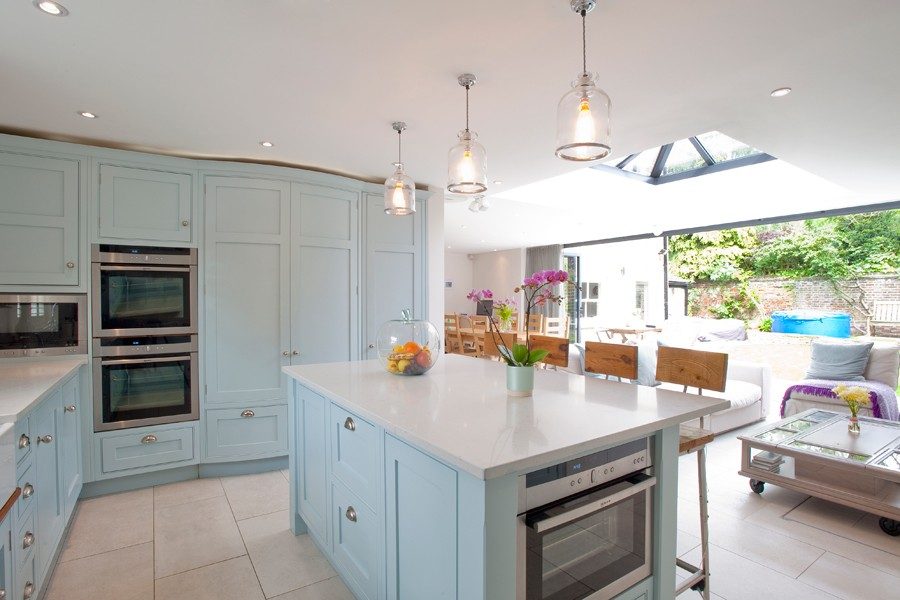
What moves a project from one tier to the next is mostly the level of glazing, the kitchen and the finishes, rather than the size. A basic rear extension with a flat roof and standard windows sits at the lower end; a full-width glazed extension with a roof lantern, premium bifolds and underfloor heating sits firmly at the top. Two extensions on an identical footprint can therefore differ by tens of thousands of pounds purely on specification.
These are build-only rates: they exclude VAT, professional fees and the fit-out, which we explain below. Once everything is included, a finished extension works out at £4,200 to £8,500 per m² including VAT, with side returns at the top of that range. London runs roughly 20 to 40% above the UK average, where single-storey extensions are nearer £1,800 to £3,000 per m². That premium is not a London surcharge for its own sake: it reflects higher labour rates, the logistics of building on tight terraced sites where materials are often carried through the house, the unpredictable foundations of Victorian-era homes, and a planning environment that demands more professional input.
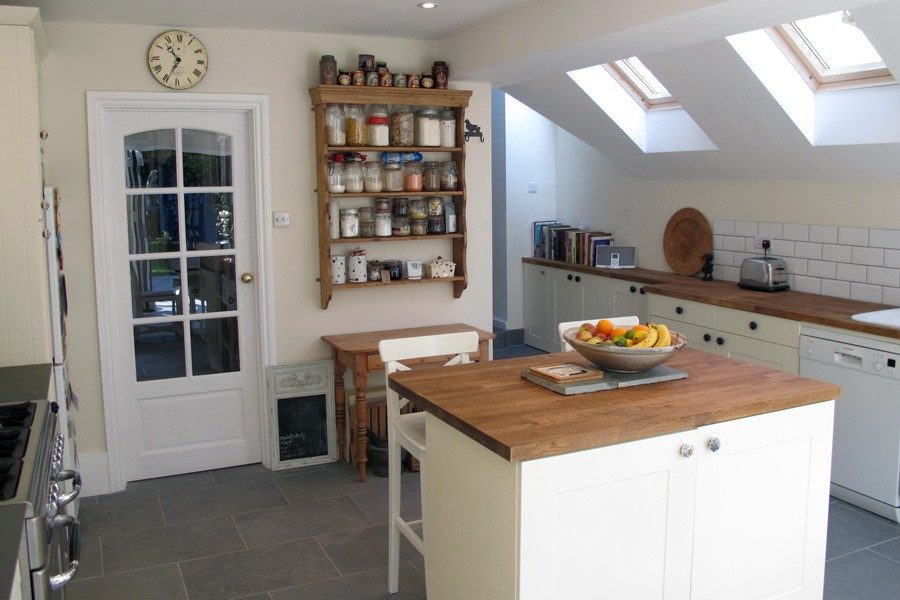
Why do extension types cost different amounts?
Different extension types carry different costs, and not in proportion to size. The table at the top of this guide gives our all-in prices; here is what sits behind them.
A side return extension is the most expensive of the single-storey types per square metre. Its small footprint spreads the fixed costs of any extension, the foundations, a steel beam, drainage and building control, over fewer square metres, and it usually involves tight access down the side of a terrace and the premium glazing that makes a narrow space feel open. A rear or kitchen extension is the most common London project and offers a better rate per square metre, while a wraparound extension combines a side return and a rear extension into the largest single-storey footprint, with more steel, more complex roof junctions and, almost always, a full planning application.
How much does an L-shaped or side and rear extension cost?
An L-shaped extension, also called a side and rear extension, is what we call a wraparound. It costs £130,000 to £175,000 all-in for 20 to 25 m² and £175,000 to £250,000 for 25 to 35 m², or £70,000 to £160,000 for the shell before fees and VAT. It costs more per project than a side return or a rear extension because it needs more steel at the corner, a two-way roof and more glazing, and it almost always needs full planning permission.
A double-storey extension is the best value per square metre, because the foundations and the roof, the two most expensive structural elements, are shared across two floors rather than built for one. A loft conversion is a different route again: it adds a bedroom and bathroom within the existing roof without extending the footprint, which is why it is often the most cost-effective way to add a bedroom. For a full treatment of loft figures, see our guide to planning your loft conversion costs.
We have designed and built extensions of every type across London, and seeing finished work is the clearest way to judge what a budget buys. Our completed projects include a wraparound in Stroud Green, where a partially pitched roof was used to lower the height on the neighbour’s side while keeping a tall living space inside, a rear kitchen extension in East Dulwich lit by a large rooflight, and a side-and-rear extension in Battersea designed as an alternative where the local council was cautious about full wraparounds. You can browse finished extensions, with photographs, in our project gallery.
Real extension projects we have completed in London
We have completed more than 1,750 projects across London, of every type in the table above. Seeing real sizes and boroughs is the clearest way to picture what a budget buys. A sample, with their plans:
| Plan | Street | Area | Type | Size |
|---|---|---|---|---|
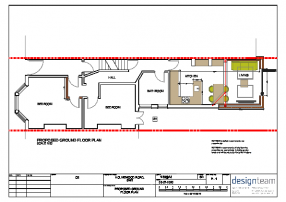 |
Holmewood Road | SW2 (Brixton) | Side return | 9 m² |
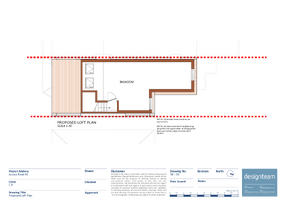 |
Sussex Road | E6 (East Ham) | Rear / kitchen | 22 m² |
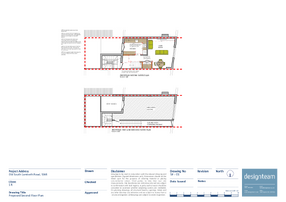 |
Old South Lambeth Road | SW8 (Nine Elms) | Rear / kitchen | 30 m² |
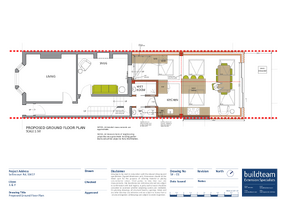 |
Sellincourt Road | SW17 (Tooting) | Rear / wraparound | 42 m² |
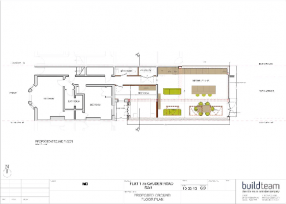 |
Gauden Road | SW4 (Clapham) | Loft | 15 m² |
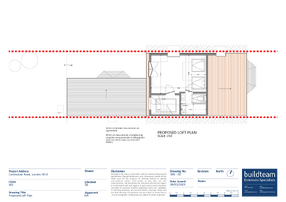 |
Combedale Road | SE10 (Greenwich) | Loft | 18 m² |
How much does a small extension cost?
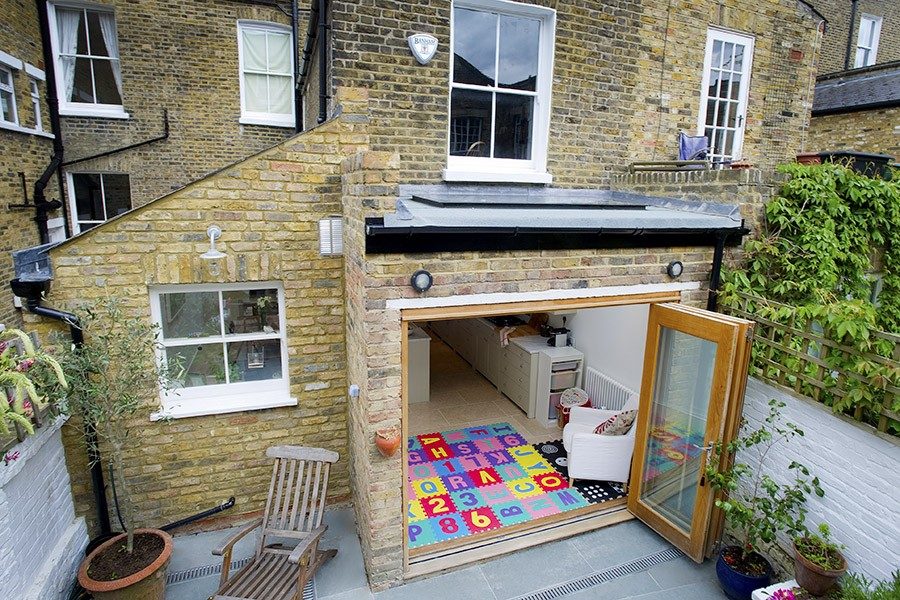
A small side return of 8 to 10 m² costs £45,000 to £60,000 for the shell before fees and VAT, and a small rear extension of 15 to 20 m² £40,000 to £65,000; finished all-in, small extensions start from around £75,000 to £80,000. The reason a small extension does not cost proportionally less than a large one is that it still carries the same fixed costs: the foundations, a structural steel beam, drainage connections, building control and professional fees all have to be paid whether the extension is 12 square metres or 30. The per-square-metre rate is therefore higher on a small project, even though the total is lower.
That said, a small, well-designed extension is frequently the most cost-effective way to open up a cramped kitchen. Adding even a few square metres to the side return of a terrace, and opening it through to the existing kitchen, can turn a dark galley into an open-plan kitchen-diner. The value is in the layout the extra space allows, not the floor area alone.
What is included in the price per square metre?
This is where many quotes are misread, and where two builders’ prices can look very different for the same job. A per-square-metre rate usually covers the “shell and core”: the foundations, the structure, the walls, the roof, the windows and external doors, all made watertight, plus first-fix electrics and plastering. It is the extension as a finished, weatherproof, plastered room ready to decorate.
What the rate does not include is the fit-out: the kitchen, the flooring, the bathroom if you are adding one, and the final decoration. These are costed separately and can add £20,000 to £60,000 or more, with the kitchen alone running from £15,000 to over £50,000. When you compare two quotes, the single most important check is whether each figure is build-only or all-in, and whether it includes VAT. A quote that looks cheaper is often simply a quote that excludes more.
“The single biggest reason a London extension budget slips is comparing a build-only quote with an all-in one and assuming the cheaper number is the real cost. We price every job all-in and fixed before work starts, so the figure you agree is the figure you pay.”
Dan Davidson, Founder, Build Team
What does an extension cost, line by line?
A clear, trustworthy quote breaks the cost into its parts rather than presenting a single lump sum. Here is a realistic 2026 breakdown for a single-storey London extension:
| Cost element | 2026 figure (London) |
|---|---|
| Design fees | 8 to 15% of build cost (or a fixed design fee) |
| Planning application (if needed) | £548 (England householder fee, from April 2026) |
| Structural engineer | £1,500 to £4,000 |
| Construction (shell) | the bulk, at £2,500 to £5,000 per m² before VAT |
| Fit-out (kitchen, flooring, glazing) | £20,000 to £60,000+ |
| Bifold doors (aluminium, supply and fit) | £3,150 to £7,200 |
| Roof lantern or structural rooflight | £2,000 to £5,000 each |
| Building control | £500 to £1,500 |
| Party wall surveyor (per neighbour) | £800 to £2,000 |
| VAT | 20% on the whole project |
| Contingency | 10 to 20% of the total |
To put those numbers together, take a mid-specification side return of around 18 m². The shell at roughly £3,700 per m² comes to about £66,600. Professional fees at around 12% add close to £8,000, giving £74,600 before tax. Add 20% VAT and the figure is around £89,500, and that is before the kitchen, flooring and decoration, which a homeowner usually supplies separately. A worked example like this is the most honest way to understand a quote, because it shows where the money actually goes.
For help judging whether a quote is realistic and what a good one should contain, read our guide to getting a realistic builder’s quote. If you are working out how to pay for the project, our guide to funding and budgeting a home extension covers the options.
What affects the cost of an extension?
On the same footprint, two extensions can differ by tens of thousands of pounds. Understanding the main drivers helps you decide where to spend and where to save. In rough order of impact:
- Specification: the single biggest variable. The gap between a basic flat-roof box and a glazed, lantern-and-bifold kitchen on the same footprint can exceed £70,000.
- Glazing: bifolds, roof lanterns, structural glass and Crittall-style screens are some of the most expensive elements per unit, and they push the rate toward the top of the range. The roof itself matters too, as our guide to flat versus pitched roofs explains.
- Kitchen quality: from £15,000 to over £50,000, and the line homeowners most often underestimate.
- Groundworks and foundations: standard foundations are straightforward, but deeper ones near trees or in clay soil, or piled foundations, can add several thousand pounds.
- Site access: a terrace with no rear access means every load is carried through the house, which adds labour time and cost.
- Structural steel: the amount of steel needed is a major driver, and steel prices have risen sharply through 2026.
- Borough: inner and prime London boroughs sit 10 to 20% above outer London.
Because input costs, particularly labour and steel, have continued to rise in 2026, a fixed-price contract agreed before work starts is the surest way to protect your budget from mid-project increases. It also makes the comparison between builders meaningful, because you are comparing committed prices rather than moving estimates.
Is an extension cheaper than moving?
For many London homeowners, yes. The average cost of moving home in London is now around £32,786, the bulk of it stamp duty, estate agent fees and conveyancing. None of that money adds space or value; it is the cost of the transaction itself. The April 2025 stamp duty changes made moving more expensive still, with the nil-rate threshold reverting to £125,000, so most movers now pay more than they would have a year earlier.
A comparable sum spent on an extension does the opposite: it adds usable space and, in most cases, value to the property. Nationwide’s research found that adding a double bedroom and a bathroom through an extension or loft conversion can add as much as 24% to the value of a three-bedroom house. An extension also lets you stay in the home and the area you already know, which is why so many London families now choose to improve rather than move.
How can I estimate my extension’s cost?
The fastest way to a realistic figure for your own project is to use our online extension cost calculator, which gives an instant estimate based on your size and specification, using the same prices as this guide. It is a starting point rather than a fixed quote, but it grounds your budget in current London rates. For a price tailored to your home, book a free design and planning consultation and we will give you a clear, itemised, fixed quote before any work begins.
Frequently asked questions
How much does an extension cost in London in 2026?
A single-storey extension costs £75,000 to £250,000 all-in, including the kitchen, finishes, fees, party wall, contingency and 20% VAT: £75,000 to £150,000 for a rear extension, £80,000 to £140,000 for a side return and £130,000 to £250,000 for a wraparound.
How much does an extension cost per square metre in London?
The build (shell) costs £2,500 to £5,000 per m² before fees and VAT. A finished extension costs £4,200 to £8,500 per m² all-in including VAT, with side returns at the top of the range.
How much does a small extension cost?
A small 8 to 10 m² side return costs £45,000 to £60,000 for the shell before fees and VAT; finished all-in, small extensions start from around £75,000 to £80,000 because the fixed costs stay the same.
How much does a side return extension cost?
A side return of 10 to 18 m² costs £80,000 to £140,000 all-in, or £6,500 to £8,500 per m² including VAT. It is the most expensive single-storey type per square metre.
How much does a wraparound or L-shaped extension cost?
A wraparound (L-shaped, side and rear) costs £130,000 to £175,000 all-in for 20 to 25 m² and £175,000 to £250,000 for 25 to 35 m². It almost always needs full planning permission.
What is included in the cost per square metre?
A shell rate covers the foundations, structure, walls, roof, windows and external doors, made watertight, plus first-fix services and plastering. It excludes the kitchen, flooring, decoration, fees and VAT, which an all-in price includes.
Does an extension add value to a London home?
Typically 5 to 10%, and up to 24% where it adds a double bedroom and bathroom, according to Nationwide. An extension also avoids the roughly £32,786 cost of moving home in London.
Do I pay VAT on an extension?
Yes. Most extension work is standard-rated at 20% VAT. Builder quotes are often shown excluding VAT, so always confirm whether a figure includes it. Our all-in prices include VAT; our shell rates are before VAT.
Get a fixed price for your extension
Build Team is a London design and build extension specialist, trusted by more than 1,750 London homeowners. Use our instant calculator for a quick estimate, or book a free consultation for a clear, fixed price agreed before work starts.
Or call 020 7495 6561 · email hello@buildteam.com