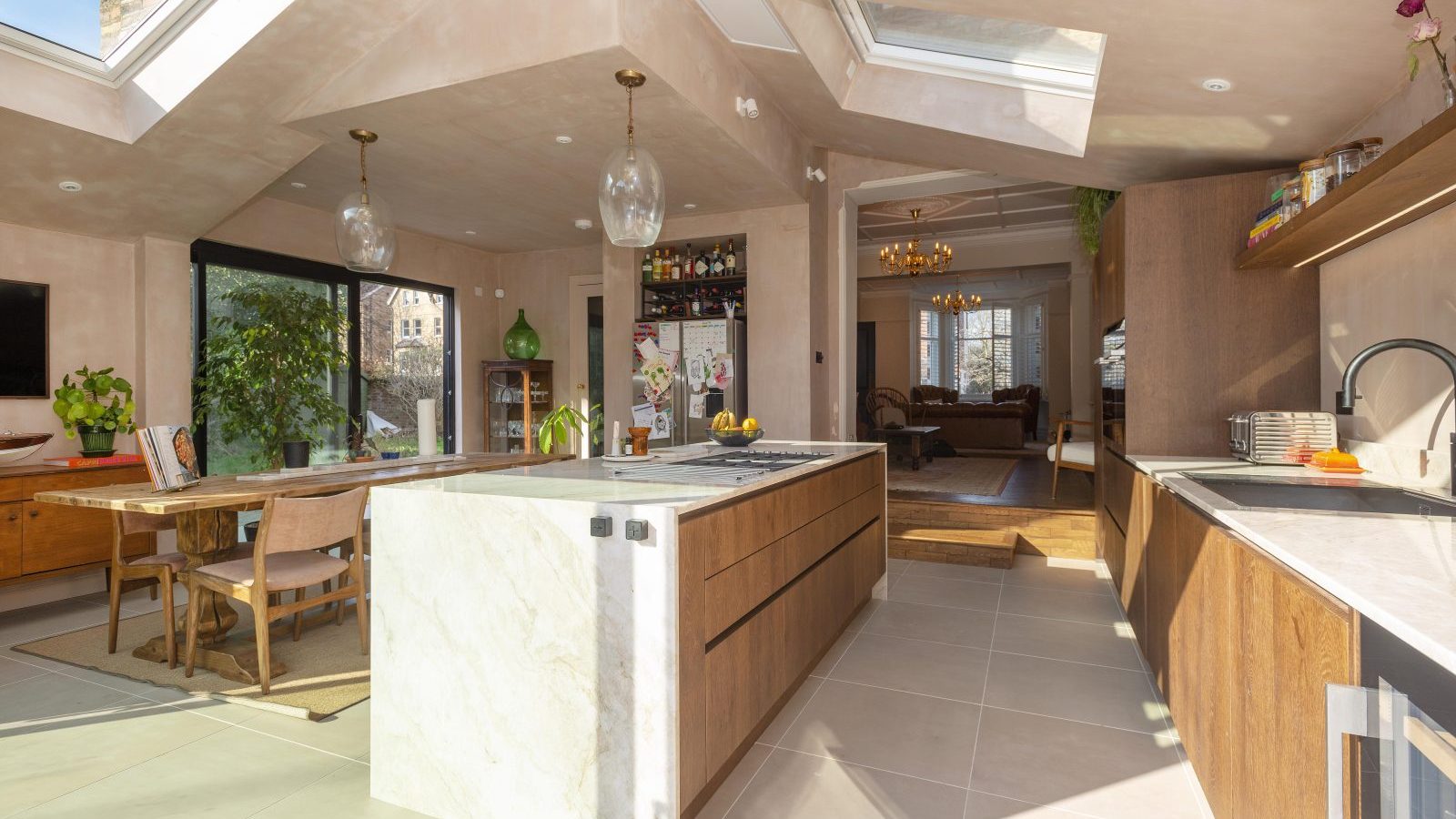
The best kitchen layout for a London terrace extension is usually an L-shape or a G-shaped peninsula. Both give you plenty of worktop while leaving the garden end free for dining and sitting. A U-shape suits a wider room that opens onto a living area and a galley fits a narrow side return. An island only works when there’s real width to walk around it.
How do you choose a kitchen layout for an extension?
Start with the width of the room, where the garden doors will go and how many people cook at once. In a terrace extension, the kitchen usually sits deeper in the plan, nearer the original house, with dining and seating by the glass. The layout then has to fit around that route from hallway to garden.
The classic work triangle between sink, hob and fridge still helps in a small kitchen. In a larger family kitchen, planning by zones works better, so two or three people can use it without crossing paths. A common method splits the kitchen into five zones:
- Consumables: fridge, freezer and food storage
- Non-consumables: crockery, glasses and cutlery
- Cleaning: sink, dishwasher and recycling bins
- Preparation: the main run of clear worktop
- Cooking: hob, ovens and extraction
Each layout below handles these zones differently. Seeing options drawn up for your own house is the quickest way to compare them. That’s why we plan the kitchen outline as part of a kitchen extension design, not at the end.
Open-plan L-shaped kitchen: pros and cons
An L-shaped kitchen runs units along two adjacent walls, leaving the rest of the room open. That makes it the easiest layout to combine with a dining table and sofa in one open-plan space, and it works in almost any size of room.
Pros: In a side return, one leg can run along the party wall and the other across the back of the original house, keeping the glazing clear. There’s room to add an island later if the space is wide enough. Only one corner needs a clever storage fitting.
Cons: In a large L, the walk between the two ends can be long. The corner cupboard is awkward without carousel or pull-out fittings. In a small, enclosed room, an L can feel tucked away from the rest of the house.
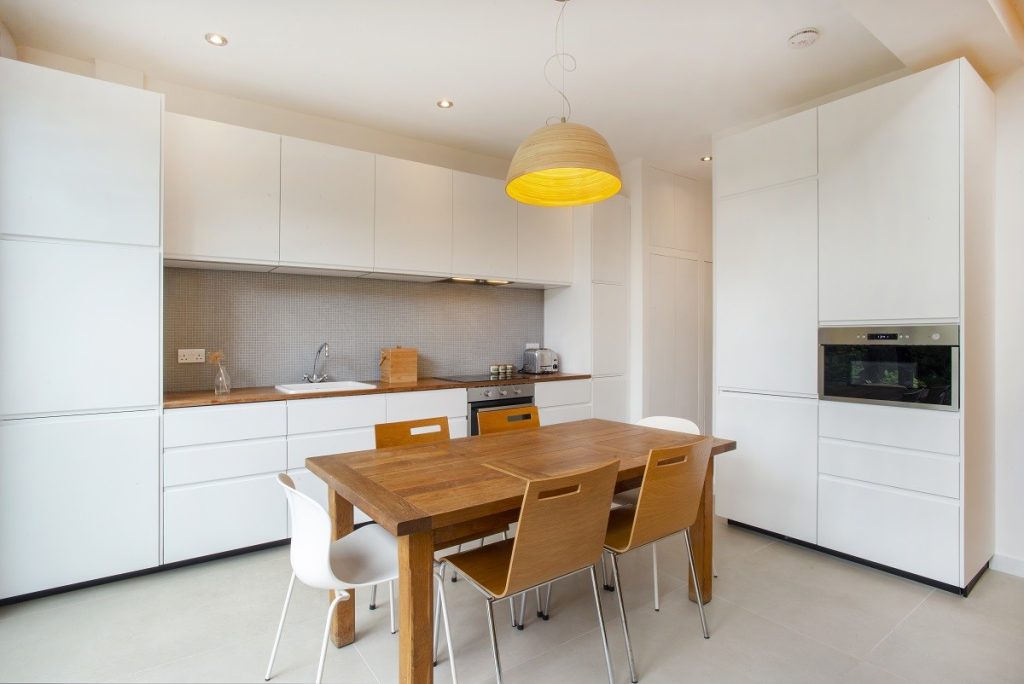
U-shaped kitchen open to a living room: pros and cons
A U-shaped kitchen wraps units around three sides. In an open-concept extension, the third side usually becomes a breakfast bar or low run facing the living area, so the cook can talk to family or guests across it.
Pros: A U gives the most worktop and storage of any layout. One cook can reach everything with very few steps. The open arm defines the kitchen without a wall, which keeps light and views flowing from the garden.
Cons: A U needs enough width between the facing runs for doors, drawers and two people to pass. In a narrow kitchen it feels cramped and enclosed. There are two corners to deal with, and a single entry point can bottleneck when several people are cooking.
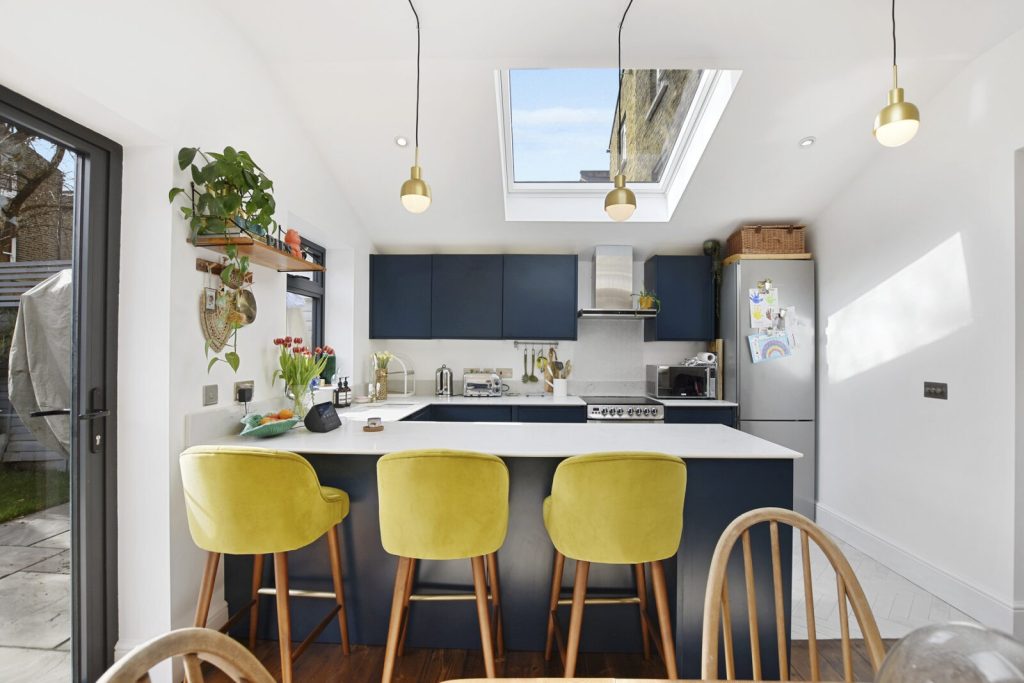
G-shaped kitchen with a peninsula: pros and cons
A G-shaped kitchen is a U with a short fourth arm, called a peninsula, that sticks out into the room. The peninsula usually becomes a breakfast bar. It’s the go-to alternative to an island when a room is too narrow for a freestanding one.
Pros: The peninsula adds worktop, storage and seating while marking out the kitchen inside an open-plan space. It also acts as a soft barrier between cooking and living areas, keeping children and guests out of the working zone.
Cons: With only one way in and out, a G can feel crowded when two people cook. The extra arm adds another corner. In a small room, a deep peninsula can make the space feel boxed in.
A small G-shaped kitchen layout works best with a slim peninsula used for seating and serving rather than for the hob or sink. Keep wall cupboards off the peninsula side so the view across the room stays open.
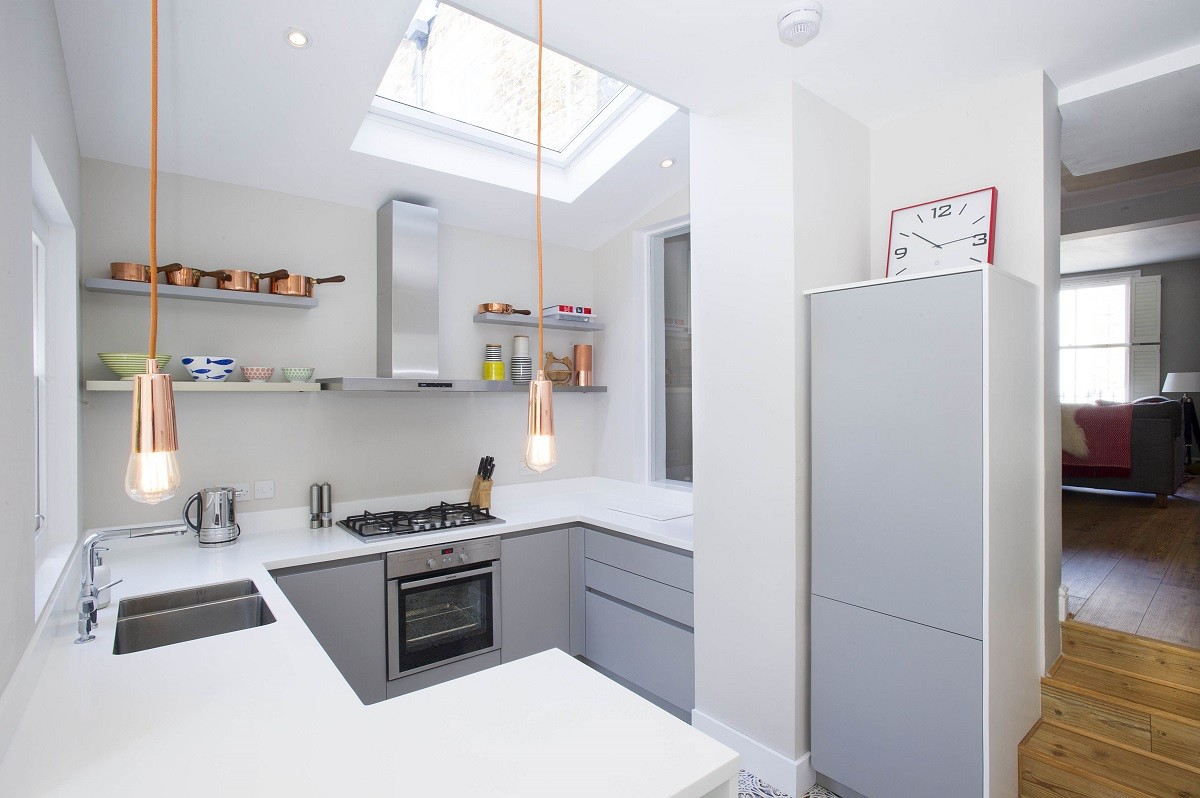
Galley kitchen: pros and cons
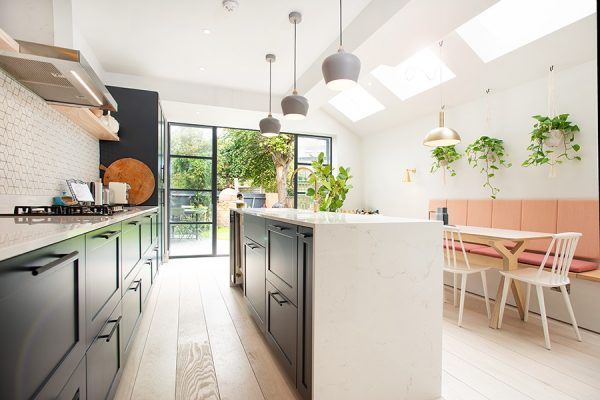
A galley kitchen has two parallel runs of units with a walkway between them. It’s the most efficient layout for a narrow space, which is why it often suits a side return.
Pros: Everything is within a step or two, and both walls give plenty of storage. One run doesn’t have to sit against a wall: it can become an island facing the dining area, which keeps the cook part of the room.
Cons: If the galley is also the route to the garden, people walk straight through the cooking zone. There’s little room for seating, and a tight galley with tall units on both sides can feel like a corridor.
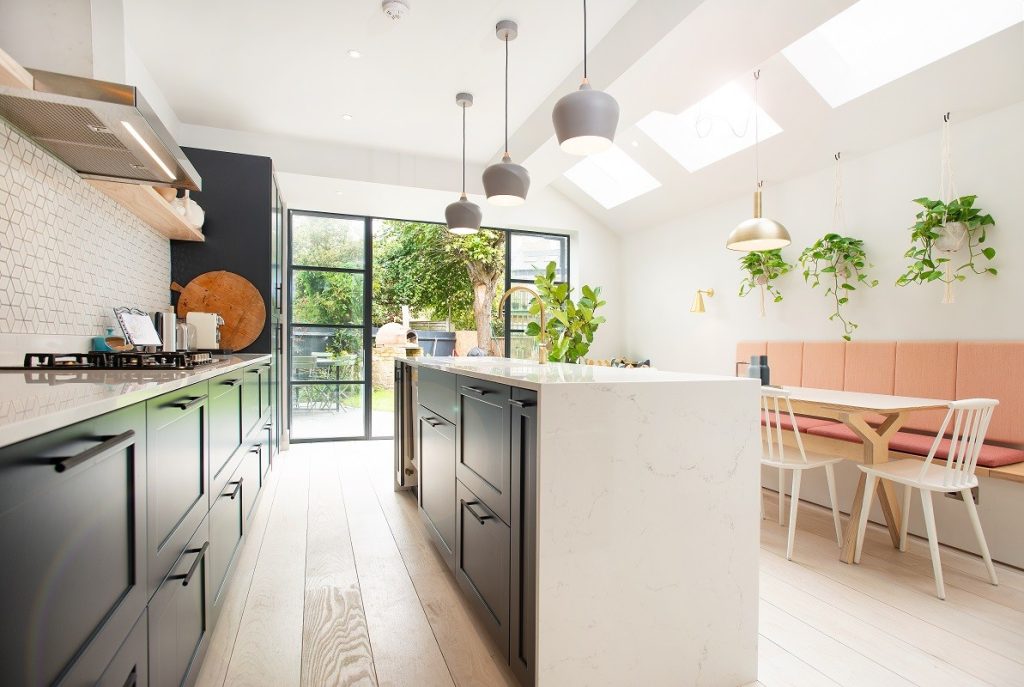
Kitchen island: pros and cons
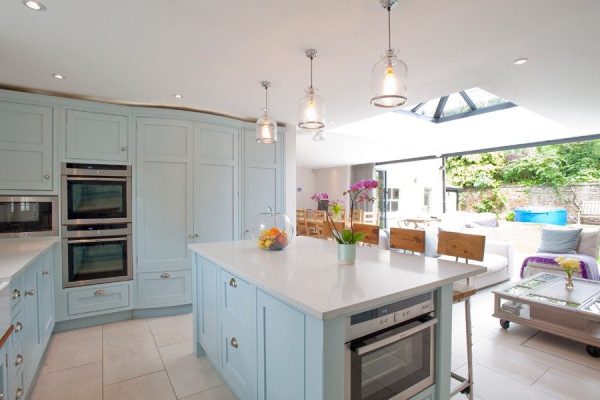
A kitchen island is a freestanding block of units, usable from every side. It’s the most sociable layout and pairs well with an L-shaped or single-wall run in a larger open-plan extension.
Pros: An island gives worktop you can use from all four sides, plus seating. With the hob or sink on the island, you can cook facing guests. A bi-level island, with a raised prep surface and a lower dining or work surface, doubles as a homework or laptop spot. Our guide to kitchen islands in side return extensions covers slimmer designs.
Cons: An island needs clear space on every side, so in many narrow terraces a peninsula fits better. A hob or sink on an island needs services under the floor and careful extraction, which is far easier to plan before the floor goes down.
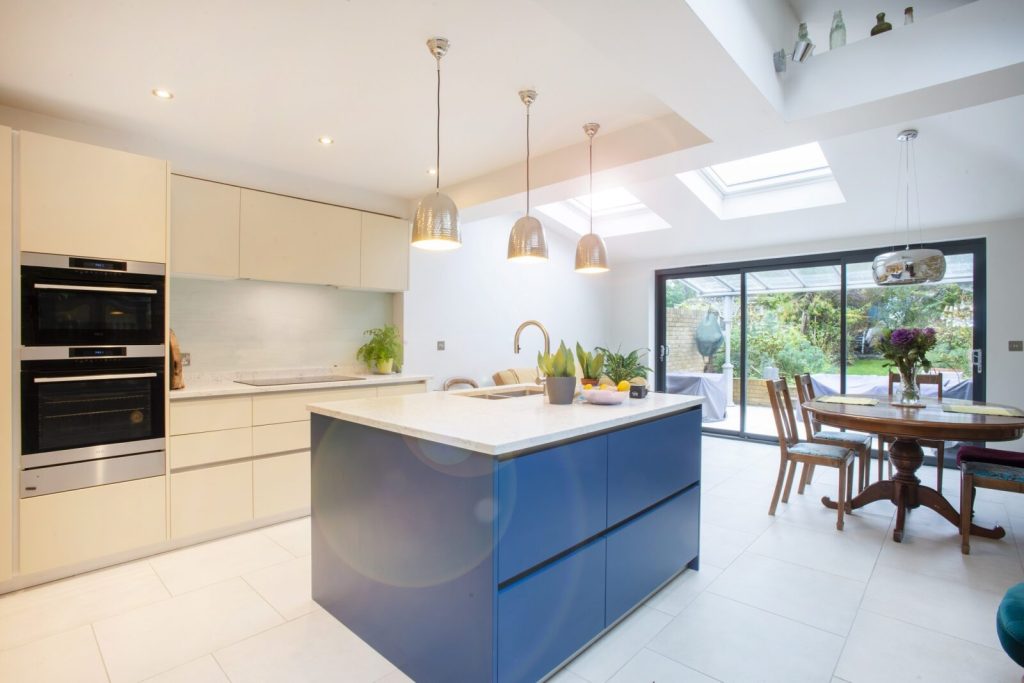
Single-wall kitchen: pros and cons
A single-wall kitchen puts every unit on one wall. It suits small kitchens and long open-plan rooms where you want the units to fade into the background. The downside is limited worktop, so in a family kitchen it usually needs an island alongside to work well.
Open-plan and broken-plan kitchens: pros and cons
Open-plan means the kitchen, dining and living areas share one room, which is what most rear and side return extensions create. It’s sociable, bright and makes the most of the garden view. The downsides are cooking smells, noise and having the kitchen on show at all times.
Broken-plan keeps the openness but adds gentle divisions: a glass screen, open shelving or a change in floor level. A walk-in larder or small scullery behind the main kitchen hides mess and small appliances. Tall larder units in place of wall cupboards also free up wall space for windows.
Which kitchen layout suits a London terrace extension?
The shape of the extension usually narrows the choice. A side return extension creates a long, fairly narrow room, so an L-shape, galley or slim peninsula tends to work best. A wraparound extension gives more width, which opens up U-shaped, G-shaped and island layouts.
In a long side return, a runway layout often works best. One long run sits along the party wall, sometimes with a slim island beside it, leading the eye to the garden doors. Keep tall units, the fridge and the larder against the party wall or in the darker middle of the plan. Put them beside the glazing and they block the light you’ve paid for.
Many homeowners worry they’ll lose the dining table to a bigger kitchen. The answer is usually to pull the cooking zone deeper into the plan and put the table or a sofa by the garden doors. That keeps the best light for the space you sit in, and leaves a clear line of sight from the front of the house to the garden.
Kitchen layout FAQs
What is the best kitchen layout for a small extension?
An L-shape or galley is usually best for a small kitchen extension. Both use wall space efficiently and leave floor free for circulation. Add a slim peninsula if you want seating without the space an island needs.
Does a U-shaped kitchen work in an open-plan room?
Yes, if one arm is open to the living area as a breakfast bar or low run. That keeps the cook connected to the room. It needs enough width that the facing runs don’t feel cramped.
Should I choose a peninsula or an island?
Choose a peninsula if your room is narrow and an island if you have space to walk around it on all sides. A peninsula gives similar worktop and seating while taking less floor area.
Book a free consultation to test kitchen layouts for your extension.